An Army Waiting Beneath the Earth
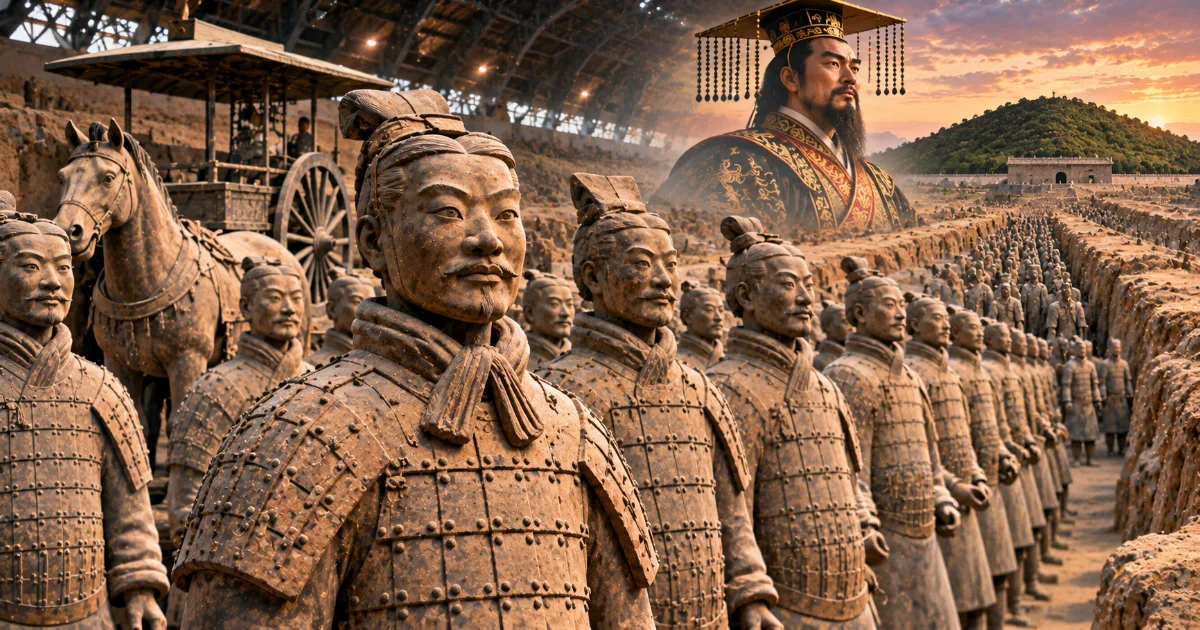
In March 1974, farmers digging a well near the city of Xi'an in China's Shaanxi Province made an extraordinary discovery. Beneath the dry earth, they encountered fragments of ancient pottery and what appeared to be parts of human figures. Further investigation revealed something far more remarkable: thousands of life-sized terracotta soldiers, arranged in military formations and buried underground for more than two thousand years.
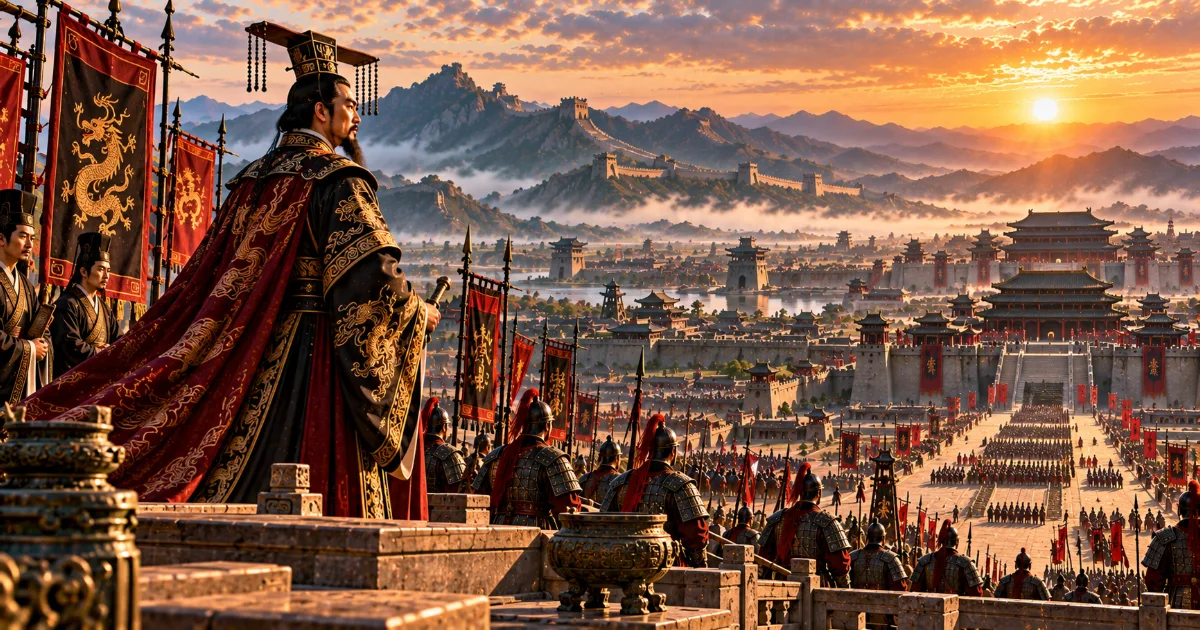
The discovery became one of the most significant archaeological finds of the twentieth century. The figures were part of an enormous funerary complex created for Qin Shi Huang, the ruler who unified China in 221 BCE and became its First Emperor. The underground army was designed to accompany him into the afterlife, providing symbolic military protection and reflecting the extraordinary power he had exercised during his lifetime.
The Terracotta Army is remarkable not simply because of its size, but because of the craftsmanship, organization, and historical information preserved within it. The soldiers represent different military ranks and roles. They include infantrymen, archers, cavalrymen, charioteers, and other figures associated with an organized imperial army. Their facial features, hairstyles, uniforms, and equipment display considerable variation, offering valuable insights into the military and artistic culture of the Qin period.
However, the Terracotta Army represents only one part of a much larger archaeological landscape. The First Emperor's mausoleum complex covered an extensive area near Mount Li. It included burial pits, associated structures, administrative and service installations, and other discoveries that reveal the scale of the imperial funerary project.
Continue Reading
Behind this extraordinary undertaking was Qin Shi Huang's deep concern with death and immortality. The emperor had unified rival kingdoms, established a centralized government, undertaken enormous construction projects, and sought to create an empire that would endure. Yet political power could not protect him from the natural limits of human life.
Ancient Chinese beliefs about the afterlife, spirits, cosmic forces, and the possibility of extending life influenced the way rulers prepared for death. Qin Shi Huang surrounded himself with objects and structures intended to preserve his authority beyond the grave. His mausoleum became a symbolic underground world in which the emperor could continue to exercise power.
The story of the Terracotta Army therefore connects archaeology, military history, ancient religion, political ambition, art, and the human desire to overcome mortality. It reveals how one of history's most powerful rulers prepared for a future he could neither fully understand nor control.
1. Qin Shi Huang: The Emperor Behind the Army
Qin Shi Huang was born in 259 BCE as Ying Zheng, the son of the ruler of the Qin state. He became king of Qin while still a child, at a time when China was divided among powerful kingdoms competing for territory and political supremacy.
The period was known as the Warring States era. Rival states maintained large armies, developed administrative systems, and introduced reforms intended to strengthen their military and economic capabilities. Warfare was frequent, and political survival depended upon the ability to organize resources and defeat competing powers.
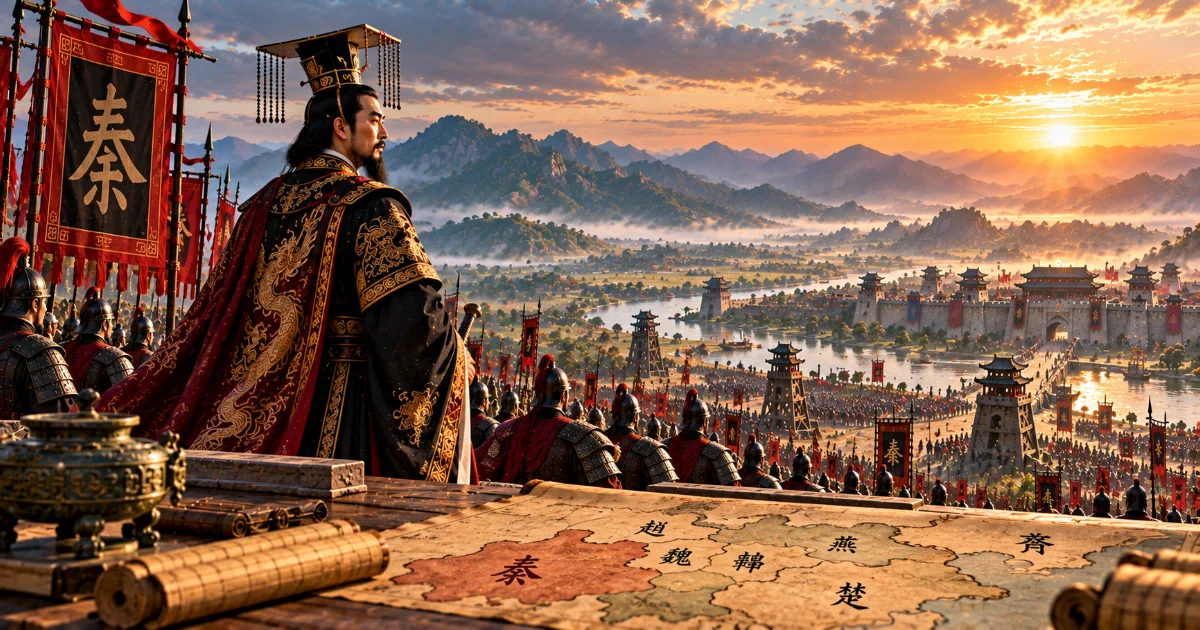
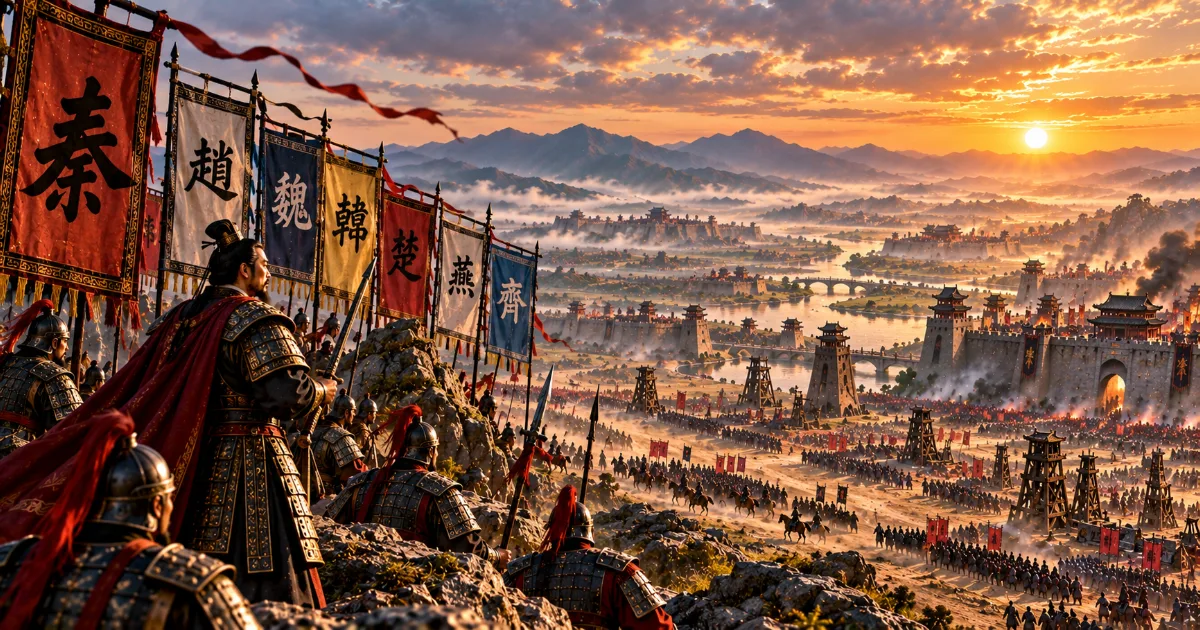
Qin gradually emerged as the strongest state. Its military organization, agricultural policies, administrative reforms, and strategic leadership gave it important advantages over its rivals. Ying Zheng consolidated his authority and directed campaigns that defeated the remaining independent kingdoms.
In 221 BCE, Qin completed the unification of the major Chinese states. Ying Zheng adopted the title Qin Shi Huang, commonly translated as First Emperor of Qin. The title expressed his ambition to establish a new political order that would surpass the authority of earlier kings.
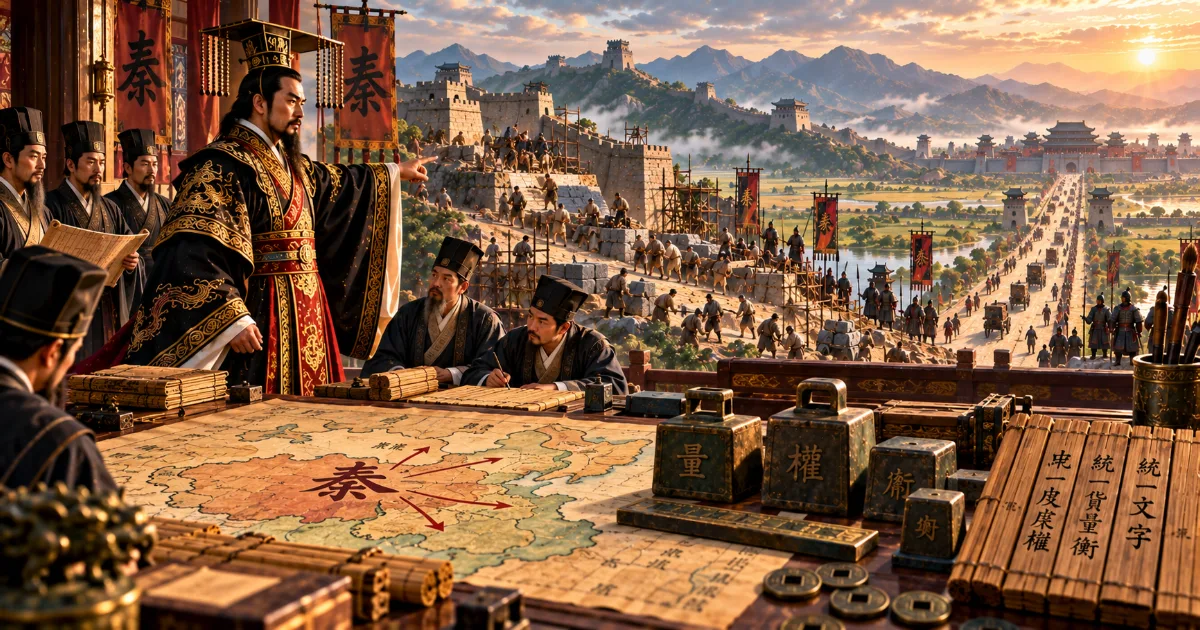
His government introduced major reforms in administration, writing, currency, weights, measures, transportation, and territorial organization. These measures helped create a more centralized empire, although the harshness of Qin policies and the demands placed upon the population contributed to widespread dissatisfaction.
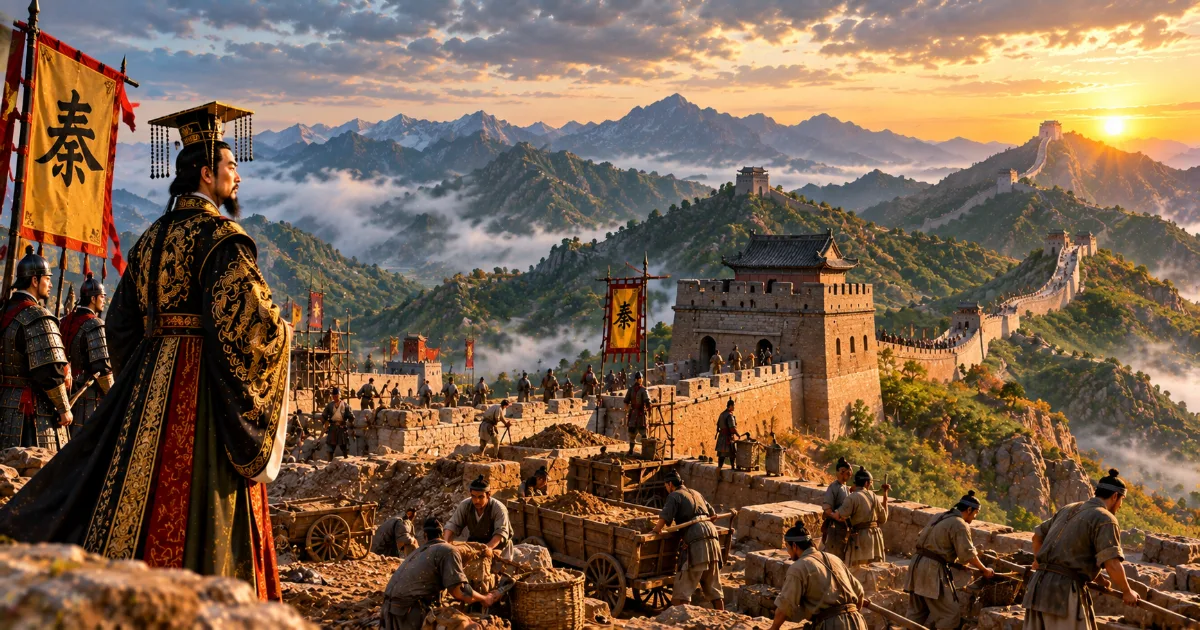
Qin Shi Huang also pursued ambitious construction projects. The imperial capital region was transformed through the construction of palaces and administrative facilities. Roads and defensive works were developed, while an enormous mausoleum complex was created near Mount Li.
The emperor's achievements were extraordinary, but his ambition extended beyond political rule. He wanted his authority to continue after death. The Terracotta Army was part of this wider vision.
For Qin Shi Huang, death did not necessarily mean the complete end of personal existence. Ancient Chinese religious and philosophical traditions included different understandings of spirits, ancestors, and the world beyond life. Burial practices reflected the belief that the deceased might require possessions, servants, protection, and other forms of support.
The First Emperor's mausoleum translated these ideas into an enormous imperial project. It was designed to preserve his status and provide an elaborate environment for his existence after death.
2. Ancient Chinese Beliefs About Death and the Afterlife
To understand the Terracotta Army, it is important to understand the religious and cultural environment of ancient China. Death was not always viewed as a simple disappearance from the world. Many ancient communities believed that the deceased retained a spiritual existence and could continue to influence or interact with the living.
Ancestor veneration was an important feature of early Chinese society. Families honoured deceased relatives through rituals, offerings, and commemorative practices. Ancestors were believed to remain connected to their descendants, and maintaining appropriate relationships with them was considered important for family and social stability.
Burial practices reflected these beliefs. The dead could be buried with pottery, weapons, tools, ornaments, food vessels, and other objects. The contents of graves varied according to period, region, social status, and the resources available to the family.
For powerful rulers, burial arrangements could become extraordinarily elaborate. A king or emperor might be provided with objects representing the wealth, authority, and responsibilities of earthly life. The tomb could function as a symbolic residence for the deceased.
The development of funerary practices also reveals changing ideas about the spiritual world. Some traditions associated the dead with ancestral spirits, while others included ideas about multiple aspects of the human soul and its relationship with different realms of existence. These beliefs evolved over time and should not be treated as one single, unchanging religious system.
During the period of Qin Shi Huang, the afterlife was understood through a combination of inherited religious traditions, ritual practices, and emerging philosophical ideas. The emperor's tomb reflected the belief that imperial status and authority could be represented beyond death.
The Terracotta Army was therefore not simply an artistic decoration. It was part of a funerary arrangement intended to reproduce important elements of the emperor's earthly world. Instead of burying thousands of living soldiers, the Qin court created clay figures that could symbolically fulfil military functions in the afterlife.
This approach also reflected a broader transformation in burial customs. Earlier elite tombs sometimes included human sacrifices or the burial of living attendants and servants. The use of manufactured figures provided an alternative means of representing people and objects that the deceased might require.
The Terracotta Army demonstrates how funerary art could combine religious belief with political power. It transformed the emperor's desire for continued protection into one of the most extraordinary archaeological creations in human history.
3. The Location of the Imperial Mausoleum
The mausoleum of Qin Shi Huang is located near Mount Li, east of present-day Xi'an in Shaanxi Province. The region was strategically important during the Qin period and offered a suitable setting for an enormous imperial burial complex.
The landscape around Mount Li includes hills, valleys, and fertile areas connected to the wider Guanzhong region. The location was not chosen merely for its natural beauty. It also held political and symbolic importance.
The mausoleum was constructed on an enormous scale. Archaeological surveys have revealed that the burial complex extended across a vast area, containing numerous pits, structures, and associated remains. The underground army is only one part of this larger arrangement.
Ancient historical accounts describe the emperor's burial as an extraordinary undertaking involving extensive labour and resources. Archaeological discoveries support the general picture of a highly organized project, although some dramatic details in later historical accounts cannot be independently verified.
The mausoleum was designed to represent a world appropriate to the emperor's status. Its layout included different zones and installations, suggesting that the burial complex was not simply a single underground chamber. It was an extensive funerary landscape containing symbolic representations of military, administrative, and ceremonial life.
The location also connected the emperor's tomb with the natural environment. Mount Li and the surrounding landscape became part of the monumental setting, creating a relationship between imperial authority and the physical geography of the region.
The decision to construct such a large burial complex reveals the resources available to the Qin government. Organizing the project required administrators, engineers, craftsmen, labourers, transport systems, and a continuous supply of materials.
The mausoleum was therefore both a religious undertaking and a demonstration of state capacity. It showed that the emperor could mobilize people and resources on a scale that few other rulers could match.
4. The Construction of the Terracotta Army
The creation of the Terracotta Army required an extraordinary combination of artistic skill and administrative organization. Thousands of clay figures had to be produced, assembled, fired, transported, and arranged in carefully planned formations.
The figures were made primarily from terracotta, a type of fired clay. Craftspeople shaped different body parts using moulds and individual techniques, then assembled the components into complete figures. The process allowed for a degree of standardization while also preserving variation in appearance.
Archaeological research indicates that production was organized through workshops and specialized teams. Different craftsmen may have been responsible for particular stages of production, such as shaping bodies, creating heads, producing hands, or adding details to clothing and equipment.
The figures were not all created in precisely the same way. Although repeated moulds helped increase production, artisans added individual details and finishing work. This combination of standardized manufacturing and individual craftsmanship contributed to the distinctive appearance of the army.
The soldiers were generally made at approximately life size. Their height and proportions vary, reflecting differences in military role and rank. Higher-ranking figures can appear taller or more elaborate than ordinary infantrymen.
After assembly, the figures were fired in kilns. The firing process hardened the clay and made the figures durable enough to survive underground for centuries. Their original appearance included painted surfaces, although much of the pigment deteriorated after excavation and exposure to the atmosphere.
The creation of the army required more than the production of individual statues. Each figure had to be placed within a larger military arrangement. The underground pits were carefully organized to represent military formations, suggesting that the designers understood the structure and appearance of an imperial army.
The scale of the work indicates the existence of an extensive production system. The project brought together technical knowledge, artistic traditions, administrative planning, and the ability to coordinate large numbers of workers.
The Terracotta Army is therefore not simply a collection of statues. It is evidence of an organized manufacturing and construction operation carried out under the authority of the Qin imperial state.
5. Why Every Soldier Looks Different
One of the most fascinating features of the Terracotta Army is the apparent individuality of its soldiers. Visitors often notice differences in facial shapes, hairstyles, moustaches, beards, expressions, and other details.
The variation has encouraged many popular claims that every soldier was modelled directly after a real individual. Although the figures display remarkable diversity, it is difficult to establish that every face represents a specific historical soldier.
The most reasonable interpretation is that the artisans combined standardized production methods with individual finishing techniques. Moulds and repeated patterns helped create the large number of figures required, while craftsmen modified facial details and other features to produce variation.
The soldiers also represent different military roles and ranks. Their hairstyles, clothing, armour, and equipment reflect distinctions within the army. These details help archaeologists reconstruct aspects of Qin military organization.
Some figures have elaborate facial hair, while others appear clean-shaven. Hairstyles and headgear also vary. The differences suggest that the designers wanted to represent a diverse military force rather than a group of identical figures.
The variation may also have been intended to create a realistic impression of an organized army. The figures were arranged in formations, and their visual differences helped make the underground military display appear more lifelike.
The craftsmanship demonstrates a high level of technical ability. The artisans understood how to represent human anatomy, clothing, and military equipment in clay. They were able to produce figures with recognizable expressions and distinctive physical characteristics.
The individuality of the soldiers also reminds us that the Terracotta Army was created by human workers. Behind the enormous imperial project were craftsmen whose knowledge and skill transformed raw materials into thousands of complex objects.
6. The Different Types of Soldiers
The Terracotta Army was designed to represent an organized military force rather than a random collection of armed figures. Archaeologists have identified different categories of soldiers and military personnel within the burial pits.
Infantrymen form an important part of the army. They are represented in different clothing and equipment arrangements, suggesting variations in role and rank. Some figures appear to have carried weapons such as spears, while others were associated with crossbows or other military equipment.
Archers are another important group. Some figures are represented in positions associated with standing or kneeling archery. These positions provide information about the way ancient military formations could combine different types of combat personnel.
Cavalry figures reflect the importance of mounted troops in the Qin military system. The use of horses provided speed and flexibility, particularly in operations across open terrain. Cavalry soldiers required specialized equipment and training, and their representation in the tomb reveals the importance of mounted warfare.
Charioteers and chariot units also formed part of the military arrangement. Chariots had been important in earlier Chinese warfare, and their continued presence in the Qin military reflects the long development of military technology.
The pits also contain officers and figures associated with command responsibilities. Their clothing and appearance distinguish them from ordinary soldiers, suggesting a structured military hierarchy.
The organization of the army provides valuable information about Qin military culture. It demonstrates the importance of coordination between different units and the need for specialized roles within a large fighting force.
The figures should not be interpreted as a complete inventory of every type of Qin soldier. They represent a funerary arrangement created for a particular imperial purpose. Nevertheless, the variety of figures offers an extraordinary visual record of military organization during the late third century BCE.
7. The Underground Military Formations
The Terracotta Army was discovered in several large pits located near the emperor's mausoleum. These pits contain different arrangements of figures and military equipment.
Pit One is the largest and most widely known. It contains a substantial formation of infantry figures and chariots arranged in military order. The soldiers are positioned in long rows, creating the impression of an organized force prepared for deployment.
Pit Two contains a more varied arrangement that includes cavalry, archers, infantry, and chariot elements. Its composition suggests a more complex military formation with different types of units operating together.
Pit Three is smaller and is generally interpreted as a command-related or headquarters area. Its figures and layout have led archaeologists to suggest that it may represent an important organizational component of the larger army.
The arrangement of the figures is significant because it demonstrates that the underground army was planned according to military principles. The positions of the soldiers, their equipment, and their relationship with other figures reflect the structure of an organized force.
The pits were not simply places where statues were stored. Their layouts formed part of the symbolic world created for the emperor. The underground formations were intended to represent military strength and protection in the afterlife.
The presence of multiple pits also suggests that the mausoleum project involved a wider design extending beyond one single army formation. Other burial areas contain figures and objects associated with different aspects of imperial life.
The discovery of the pits has transformed historians' understanding of Qin military organization and funerary culture. Before the excavation, much of the knowledge about the Qin army depended upon written accounts and limited archaeological evidence. The Terracotta Army provided an extraordinary material record.
8. Weapons and Military Equipment
The Terracotta Army was originally equipped with real weapons and military objects, many of which were made from bronze. Archaeologists have recovered arrowheads, crossbow components, spearheads, swords, and other equipment associated with the figures.
The weapons provide valuable information about the technology available to the Qin military. Bronze production had a long history in China, and metalworking techniques had become highly sophisticated by the Warring States period.
Crossbows were particularly important in ancient Chinese warfare. They allowed soldiers to deliver powerful projectiles and could be used within coordinated military formations. The presence of crossbow-related equipment in the Terracotta Army reflects the importance of ranged weapons in Qin military organization.
Bronze arrowheads recovered from the site display considerable technical consistency. Some archaeological studies have examined their dimensions and manufacturing characteristics to understand how weapons were produced and supplied.
Swords and other close-combat weapons also formed part of the military equipment. The variety of objects suggests that the Qin army relied upon different types of weapons according to the roles of individual soldiers.
Many of the weapons were originally placed with the figures, although not every soldier retained a complete set of equipment. Some objects have been damaged, lost, or removed during the long period between burial and modern excavation.
The metal objects are especially important because they reveal the relationship between military production and the Qin state's administrative system. The government had developed methods for organizing workshops and monitoring aspects of manufacturing. The weapons in the tomb provide material evidence of these capabilities.
The military equipment also helps historians distinguish between symbolic representation and practical technology. The Terracotta Army was designed for the afterlife, but many of the objects associated with it reflect real military equipment used during the Qin period.
9. The Original Colours of the Terracotta Soldiers
The Terracotta Army is often imagined as a collection of natural clay-coloured figures. However, the soldiers were originally painted in vivid colours.
Archaeological investigations have revealed traces of pigments on the surfaces of the figures. Their original appearance included combinations of red, purple, blue, green, white, and other colours. Clothing, armour, and decorative elements were painted to create a more realistic visual effect.
The pigments were applied after the figures had been fired. In some cases, an additional protective layer was used beneath the paint. This helped produce a finished surface with considerable visual detail.
Unfortunately, the painted layers were extremely vulnerable when the figures were exposed to the atmosphere after being buried for centuries. Changes in humidity and temperature caused many painted surfaces to deteriorate rapidly after excavation.
This created an important challenge for archaeologists. Recovering the figures was only the beginning of the work. Conservators also needed to understand how to stabilize the fragile paint and preserve the remaining colours.
Modern conservation techniques have helped researchers examine pigment remains and develop methods for protecting the figures. Scientific analysis has provided information about the materials and techniques used by ancient craftsmen.
The discovery of colour changed the way historians and visitors understood the army. The figures were not intended to look like unpainted clay statues. They were designed to resemble a living military force, with colourful clothing and detailed equipment.
The original appearance of the Terracotta Army demonstrates the sophistication of Qin artistic traditions. It also reminds us that archaeological objects often look very different after centuries underground than they did when first created.
10. The Emperor's Mausoleum: A Hidden Underground World
The Terracotta Army is only one component of Qin Shi Huang's enormous mausoleum. The central burial mound is surrounded by an extensive complex containing multiple pits and archaeological features.
Ancient historical accounts describe the emperor's tomb as an elaborate underground world. The historian Sima Qian, writing during the Han dynasty, recorded descriptions of a burial chamber containing representations of rivers and seas made with flowing mercury, along with a symbolic sky and other extraordinary features.
These descriptions have attracted considerable attention. Modern scientific investigations have identified elevated mercury levels in soil around the burial mound, providing a reason for further study of the historical accounts. However, the exact contents and condition of the central chamber remain unknown because it has not been fully excavated.
The mausoleum complex also includes burial pits containing figures and objects that represent other aspects of imperial life. Archaeologists have discovered bronze chariots, officials, entertainers, animals, and other objects associated with the emperor's symbolic world.
The bronze chariots are particularly impressive examples of ancient craftsmanship. They were made with intricate details and were accompanied by bronze horses. Their design reflects the importance of transportation and ceremonial display within imperial culture.
The wider mausoleum complex demonstrates that the emperor's preparations for death extended far beyond the military. He sought to reproduce a complete imperial environment, including military protection, administration, transportation, and entertainment.
The burial complex was therefore a symbolic continuation of the emperor's earthly authority. It represented a world in which the First Emperor could retain his status and command after death.
The central tomb remains one of the most significant unexplored archaeological features in China. Its preservation raises important questions about the balance between discovery and conservation.
11. Mercury and the Emperor's Search for Immortality
One of the most intriguing aspects of Qin Shi Huang's mausoleum is the historical description of rivers and seas made from flowing mercury.
Mercury was known in ancient China and was associated with unusual physical properties. Its liquid metallic appearance attracted attention, and it became connected with ideas about transformation, alchemy, and the search for longevity.
Sima Qian's account describes a symbolic landscape inside the emperor's tomb, with rivers and seas represented through mercury. Modern scientific research has identified elevated mercury concentrations in the soil surrounding the burial mound, which has encouraged interest in the historical description.
However, the central chamber has not been opened for full archaeological investigation. The precise arrangement of the burial chamber and the presence of mercury within it therefore remain matters that cannot be confirmed through direct excavation.
Mercury also raises serious conservation and safety concerns. Exposure to mercury vapour can be harmful, and the opening of a sealed burial chamber could release hazardous substances while damaging fragile archaeological materials.
The emperor's association with mercury also connects with his search for immortality. Ancient practitioners sometimes experimented with mineral substances in attempts to produce medicines or elixirs believed to extend life. Some of these substances were toxic.
Historical accounts suggest that Qin Shi Huang became increasingly interested in finding ways to avoid death. His court and advisers were involved in efforts to locate substances or methods that might prolong his life.
It is possible that the emperor's exposure to mercury-containing preparations contributed to his death, although the exact medical circumstances cannot be established with certainty. The traditional account of his final illness remains subject to historical interpretation.
The contrast is striking. A ruler who sought eternal life may have pursued substances that were dangerous to his health. His mausoleum preserved an extraordinary symbolic world, but it could not overcome the biological reality of mortality.
12. Qin Shi Huang's Obsession with Immortality
Qin Shi Huang's desire for immortality is one of the most fascinating aspects of his personality. He had achieved what earlier rulers had failed to accomplish by unifying the major Chinese kingdoms. He possessed immense political authority and commanded resources on an extraordinary scale.
Yet even the First Emperor could not escape death. His search for immortality reflected both personal fear and the broader beliefs of his time.
Ancient Chinese traditions included stories of extraordinary beings, sacred mountains, magical islands, and substances believed to possess life-extending properties. Some traditions described immortals who had escaped ordinary human limitations and existed beyond the reach of death.
The emperor reportedly sent expeditions in search of such places and substances. One famous account concerns Xu Fu, who was associated with a mission to find the legendary islands of the immortals. Later historical narratives describe the expedition as involving a large group of young people, although the details should be treated with caution.
The emperor's interest in longevity also encouraged the activities of court specialists and practitioners who claimed knowledge of unusual substances and techniques. These individuals could offer rituals, medicines, or journeys that promised to extend life.
Such practices were part of a wider ancient search for control over the human body and the natural world. They combined observations of minerals and plants with religious beliefs, speculative theories, and ritual traditions.
Qin Shi Huang's search for immortality reveals an important contradiction in imperial power. He could command armies, reorganize governments, and order enormous construction projects, but he could not command nature to suspend death.
The Terracotta Army offered a different form of continuation. If the emperor could not preserve his physical life, he could at least create a symbolic military and administrative world intended to accompany him after death.
The mausoleum was therefore both an expression of fear and a demonstration of power. It reveals the limits of political authority even as it celebrates the extraordinary resources available to the emperor.
13. The Workers Behind the Mausoleum
The construction of the mausoleum and the Terracotta Army required a vast workforce. The project involved miners, potters, metalworkers, painters, builders, transport workers, administrators, and many other specialists.
The exact number of workers involved is uncertain. Ancient historical accounts describe enormous labour forces, but the figures should not be accepted without qualification. Nevertheless, the archaeological scale of the complex confirms that construction required a major and sustained organizational effort.
Workers had to extract clay and other materials, transport them to workshops, prepare components, assemble figures, fire them in kilns, and move completed objects to the burial site. The process required careful coordination and specialized knowledge.
The creation of the mausoleum also involved the construction of underground pits, chambers, walls, and supporting structures. Engineers and builders had to consider soil conditions, structural stability, ventilation, drainage, and the movement of materials.
The project was connected to the broader Qin system of compulsory labour. The state could demand service from people through legal and administrative obligations. Such demands were part of the government's ability to mobilize resources for major projects.
For ordinary workers, the experience could be difficult. Labourers might be required to work far from home, endure physically demanding conditions, and remain subject to strict supervision. Families could suffer when workers were absent for long periods.
The mausoleum's extraordinary craftsmanship should therefore be understood alongside the human effort that made it possible. The Terracotta Army represents the achievements of artisans, but it also reflects a political system capable of directing large numbers of people toward the ambitions of one ruler.
Many of the individuals who built the complex remain unknown. Their names were not preserved in the same way as those of emperors and senior officials, yet their work created one of the most important archaeological sites in the world.
14. The Discovery in 1974
For more than two thousand years, the Terracotta Army remained underground. Its modern discovery began in March 1974 when local farmers digging a well near Xi'an encountered ancient pottery fragments.
The discovery was reported to local authorities and attracted the attention of archaeologists. Initial investigations revealed that the objects belonged to a large underground funerary complex containing terracotta figures.
Excavation gradually uncovered rows of life-sized soldiers, chariots, and other military objects. The scale of the discovery quickly became clear. What had initially appeared to be fragments of pottery was part of an extraordinary underground army.
The discovery attracted national and international attention. Archaeologists began systematic investigations, and additional pits were identified. Further excavations revealed that the army formed part of the much larger mausoleum complex of Qin Shi Huang.
The site became a major centre of archaeological research. Scholars studied the figures, weapons, manufacturing techniques, pigments, burial arrangements, and relationship between the pits and the central mausoleum.
The discovery also changed public understanding of the Qin dynasty. Written histories had described the power and ambition of the First Emperor, but the Terracotta Army provided physical evidence of the scale of his funerary preparations.
The farmers who encountered the first fragments became associated with one of the most important archaeological discoveries of modern times. Their accidental discovery opened a new chapter in the study of ancient China.
Today, the Terracotta Army is preserved and displayed at the Mausoleum Site Museum of the First Qin Emperor. It attracts visitors from around the world and continues to be studied by researchers.
15. Archaeology and the Challenges of Conservation
Excavating the Terracotta Army is not simply a matter of removing figures from the ground. The process involves complex conservation challenges.
The figures were buried in an environment that protected many of their materials for centuries. Once exposed to air, changes in humidity, temperature, and other environmental conditions could cause damage.
The painted surfaces were particularly vulnerable. Pigments and protective layers could deteriorate rapidly after excavation. Conservators therefore had to develop methods for stabilizing the figures and protecting fragile details.
Wooden structures associated with the pits also presented difficulties. Some underground buildings had collapsed or burned, leaving damaged materials that required careful archaeological interpretation.
The preservation of the central burial chamber presents an even greater challenge. Opening it without adequate conservation technology could damage objects that have remained undisturbed for more than two millennia.
Modern archaeology increasingly recognizes that excavation is a destructive process. Once a sealed archaeological context is opened, its original condition cannot be restored. Researchers must therefore consider whether the information gained through excavation justifies the risks to the site.
Scientific methods such as remote sensing, soil analysis, material testing, and non-invasive imaging can provide valuable information without immediately disturbing the burial chamber.
The Terracotta Army demonstrates why archaeological conservation requires long-term planning. The goal is not merely to reveal ancient objects but to preserve them for future generations and ensure that new discoveries can be studied with appropriate scientific methods.
16. What the Terracotta Army Reveals About Qin Military Power
The Terracotta Army provides an extraordinary opportunity to understand the military culture of the Qin dynasty. Its soldiers, weapons, equipment, and formations reflect the organization of a state that had successfully conquered its rivals.
The Qin military depended upon coordination between different units. Infantry, archers, cavalry, chariots, and commanders performed specialized roles within larger formations. The figures illustrate the importance of organization and hierarchy.
The weapons reveal the technological capabilities of Qin workshops. Bronze equipment, crossbow-related components, and other objects demonstrate the importance of organized production and military supply.
The arrangement of the soldiers also reflects the influence of military planning. The formations were not random. They were designed to represent an organized force capable of defending the emperor in the afterlife.
The army should not be treated as a perfect record of every battlefield practice. It was created for funerary purposes, and its arrangement may have reflected symbolic requirements as well as military realities.
Nevertheless, the site provides valuable evidence that complements historical accounts. It allows researchers to examine objects and visual representations that would otherwise be difficult to reconstruct.
The Terracotta Army also reveals the relationship between military power and political authority. Qin Shi Huang's unification of China depended upon a highly organized military system, and the underground army symbolically preserved that power beyond death.
17. The Terracotta Army as a Masterpiece of Ancient Art
The Terracotta Army is one of the greatest achievements of ancient Chinese funerary art. Its figures combine technical skill, realistic representation, and monumental scale.
The artisans demonstrated an impressive understanding of human anatomy, clothing, hairstyles, facial features, and military equipment. The soldiers were created with recognizable physical characteristics, and their differences helped produce the impression of a diverse military force.
The figures also reveal the relationship between artistic production and state organization. A project of this size could not have been completed through isolated individual effort. It required workshops, specialized craftsmen, production methods, and administrative supervision.
The use of moulds allowed artisans to produce large numbers of components, while individual finishing techniques preserved variation. This combination of standardization and craftsmanship reflects the broader administrative culture of the Qin state.
The painted surfaces added another dimension to the artistic achievement. The original figures were more colourful than the surviving clay appearance suggests. Their appearance would have been much closer to that of a ceremonial or military display than to the bare terracotta objects seen today.
The artistic importance of the Terracotta Army extends beyond its historical period. It demonstrates the sophistication of ancient Chinese sculpture and the ability of artisans to create large-scale works that combine realism with symbolic meaning.
The figures also challenge the idea that ancient art was always highly stylized or abstract. The Qin craftsmen created representations that were individual enough to communicate differences between soldiers while remaining part of a unified visual arrangement.
18. The Political Message of the Underground Army
The Terracotta Army was created for the afterlife, but it also communicated a powerful political message. The emperor's military authority was represented through thousands of soldiers arranged in disciplined formations.
During his lifetime, Qin Shi Huang had defeated the rival kingdoms and established a centralized empire. The underground army symbolically continued this achievement by surrounding the emperor with the military strength that had made his rule possible.
The mausoleum also reproduced elements of imperial administration and ceremonial life. Other figures and objects represented officials, performers, animals, transportation, and different aspects of the emperor's world.
The burial complex therefore presented an image of imperial order. The emperor would not enter the afterlife as an ordinary individual. He would be accompanied by a symbolic representation of the political and military system he had created.
This reflects the relationship between burial practices and political authority in ancient societies. Elite tombs often represented the status and responsibilities of the deceased. The scale of the burial could communicate wealth, rank, and the ability to command resources.
Qin Shi Huang's mausoleum took this principle to an extraordinary level. Its size and complexity demonstrated the resources of the empire and the ambition of the ruler.
Yet the political message also contained an irony. The emperor intended to preserve his authority beyond death, but the Qin dynasty itself collapsed shortly after his passing. The empire he had created did not survive long enough to fulfil his ambition of establishing an enduring line of imperial successors.
The Terracotta Army outlasted the dynasty that created it. Its continued existence has preserved an extraordinary record of the emperor's power, even as the political system behind the project disappeared.
19. The Fall of the Qin Dynasty and the Fate of the Mausoleum
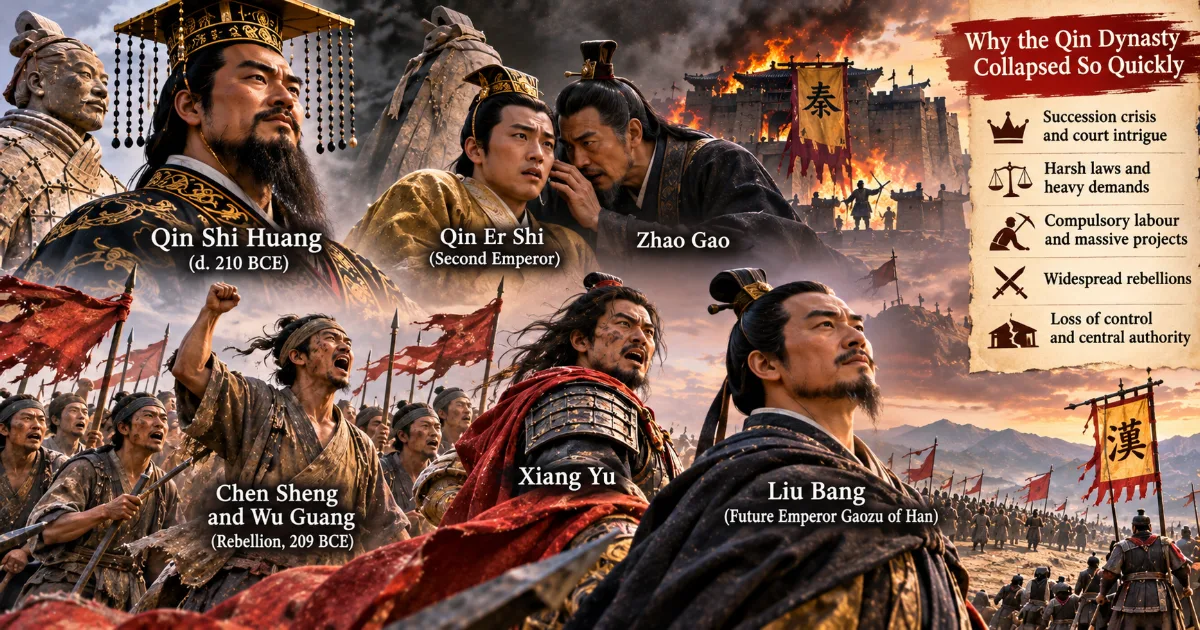
Qin Shi Huang died in 210 BCE during a journey through the eastern regions of his empire. His death created a political crisis because the succession was influenced by powerful court officials and competing interests.
The traditional historical account describes how Zhao Gao and Li Si became involved in events surrounding the succession. The emperor's son Huhai eventually became the Second Emperor, known as Qin Er Shi, but his reign was marked by political instability and growing resistance.
The Qin government continued to impose demanding obligations on the population. Rebellions spread, and different groups challenged the authority of the imperial court. The dynasty rapidly lost control of important territories.
By 206 BCE, the Qin dynasty had fallen. The political system established by Qin Shi Huang survived in modified form under the Han dynasty, but the ruling house itself did not endure.
The mausoleum complex was affected by the political turmoil that followed. Ancient historical accounts describe disturbances and damage associated with the collapse of the dynasty. Some of the Terracotta Army pits show evidence of burning and destruction, while many figures were found damaged or broken.
The exact sequence of events remains a subject of archaeological investigation. It is difficult to reconstruct every episode of damage or determine precisely when individual structures were disturbed.
The destruction and collapse of parts of the complex illustrate the vulnerability of monumental projects during periods of political instability. A structure designed to preserve imperial authority could not protect itself from the consequences of dynastic collapse.
Nevertheless, much of the underground army remained buried and protected by the earth. Its survival allowed modern archaeologists to recover an extraordinary collection of objects more than two thousand years later.
20. Why the Terracotta Army Matters to World History
The Terracotta Army is important because it provides evidence about several aspects of ancient civilization at once. It reveals military organization, manufacturing techniques, artistic skill, religious beliefs, burial practices, political authority, and the administrative capacity of the Qin state.
For historians, the figures offer a visual record of military culture during the late third century BCE. Their equipment and arrangements provide information that complements written accounts.
For archaeologists, the site demonstrates how large funerary complexes were designed and constructed. The relationship between the pits, the central burial mound, and other installations reveals the complexity of Qin funerary planning.
For art historians, the figures represent a major achievement in sculpture and large-scale production. Their individual features and original painted surfaces demonstrate the technical abilities of ancient craftsmen.
For students of religion and culture, the mausoleum provides insight into how ancient Chinese beliefs about death and the afterlife influenced burial arrangements. The emperor's desire to preserve his status beyond death is reflected throughout the complex.
The site also raises questions about the relationship between power and labour. The emperor's mausoleum was made possible by an enormous organizational system, but its construction required resources and human effort on a scale that placed substantial demands on the population.
The Terracotta Army is therefore more than an archaeological attraction. It is a historical record of a society undergoing political transformation and a ruler attempting to preserve his authority beyond the limits of human life.
Its global importance has been recognized through its inclusion within the UNESCO World Heritage property associated with the Mausoleum of the First Qin Emperor, inscribed in 1987. The site is now considered one of the outstanding archaeological and cultural heritage locations in the world.
Conclusion: The Army That Outlived Its Emperor
The Terracotta Army stands as one of the most extraordinary achievements of ancient China. Created more than two thousand years ago for Qin Shi Huang, the First Emperor, it represents the military strength, artistic skill, administrative organization, and religious beliefs of the Qin dynasty.
The thousands of life-sized soldiers were not built to fight a living enemy. They were created to accompany and protect the emperor in the afterlife, forming part of an enormous mausoleum designed to reproduce the imperial world beyond death.
Their individual appearances, military equipment, and carefully planned formations reveal the sophistication of ancient Chinese craftsmanship and military organization. The wider mausoleum complex, including its bronze chariots and other funerary installations, demonstrates the extraordinary resources devoted to the emperor's burial.
The discovery in 1974 transformed modern understanding of the Qin dynasty. Archaeologists uncovered evidence that could be studied directly, providing a remarkable complement to historical texts and traditional accounts.
Yet the story also contains a powerful contradiction. Qin Shi Huang sought immortality and built an underground world intended to preserve his authority. He commanded enormous resources and attempted to establish a dynasty that would last for generations. Nevertheless, he died in 210 BCE, and the Qin dynasty collapsed only a few years later.
The Terracotta Army survived its creator and the empire that produced it. Buried beneath the earth, it preserved the ambitions of a ruler who wanted to defeat the limits of human existence. Today, the soldiers stand as silent witnesses to his achievements, fears, and extraordinary vision of the afterlife.
The next article in the History of China series will explore Article 15: Why the Qin Dynasty Collapsed So Quickly, examining the political instability after Qin Shi Huang's death, the succession crisis, the role of Zhao Gao and Li Si, the major rebellions, and the rise of the Han dynasty.
#HistoryOfChina #TerracottaArmy #QinShiHuang #QinDynasty #AncientChina