How Ancient Chinese Kingdoms Built Frontier Walls, Why Qin Shi Huang Connected Earlier Defences, and How the Great Wall Became a Lasting Symbol of China
Introduction: The Wall That Became a Legend
The Great Wall of China is one of the most recognizable structures in world history. Stretching across mountains, valleys, plateaus, and deserts, its surviving sections represent centuries of military planning, construction, and political ambition. For many people, the wall symbolizes the determination of the Chinese state to defend its territory against invasion. Its history, however, is much more complex than the image of a single emperor ordering one enormous wall to be built.
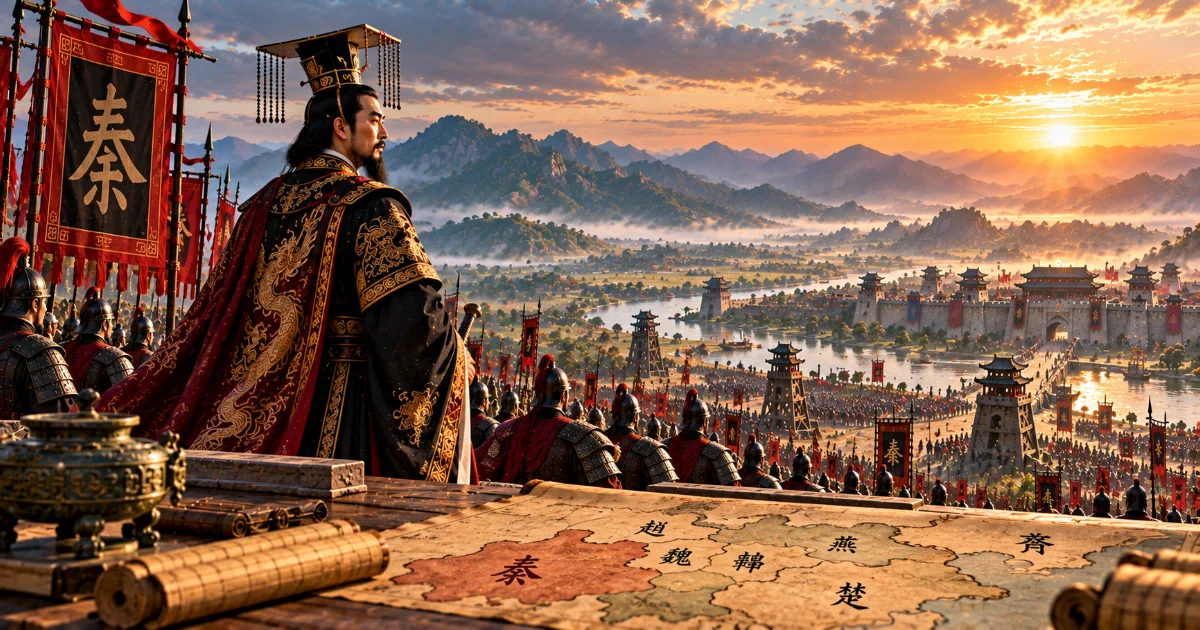
The story of the Great Wall began long before Qin Shi Huang unified China in 221 BCE. During the Warring States period, rival kingdoms constructed defensive walls to protect their borders from neighbouring states and threats beyond their territories. These fortifications reflected a world in which political boundaries were contested and military security was essential to survival.
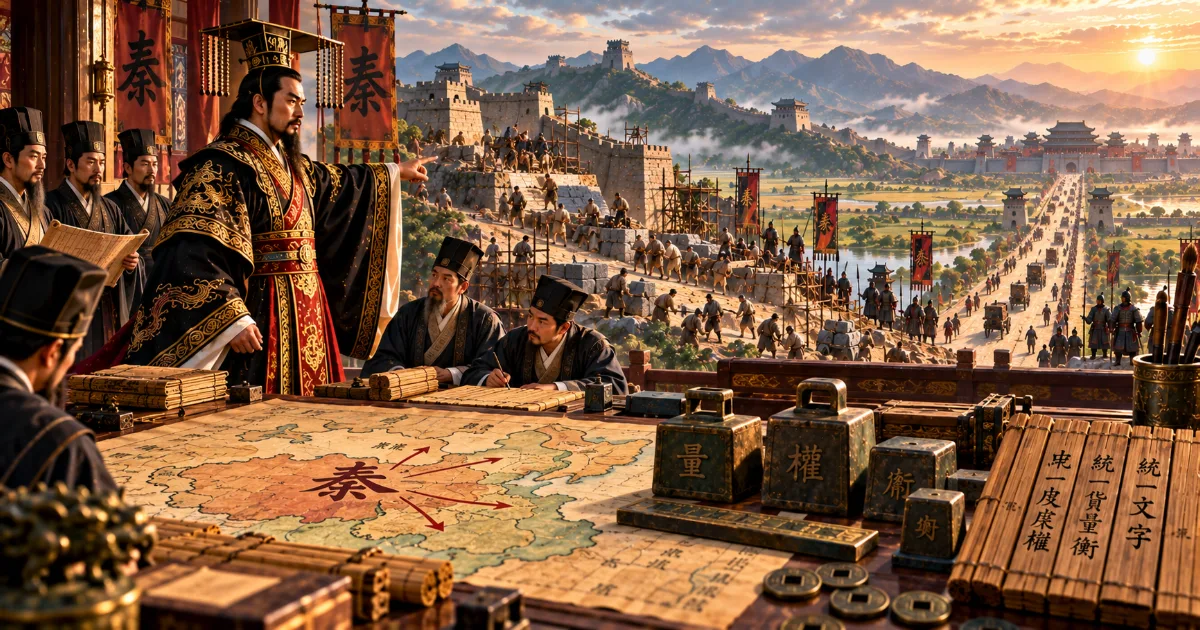
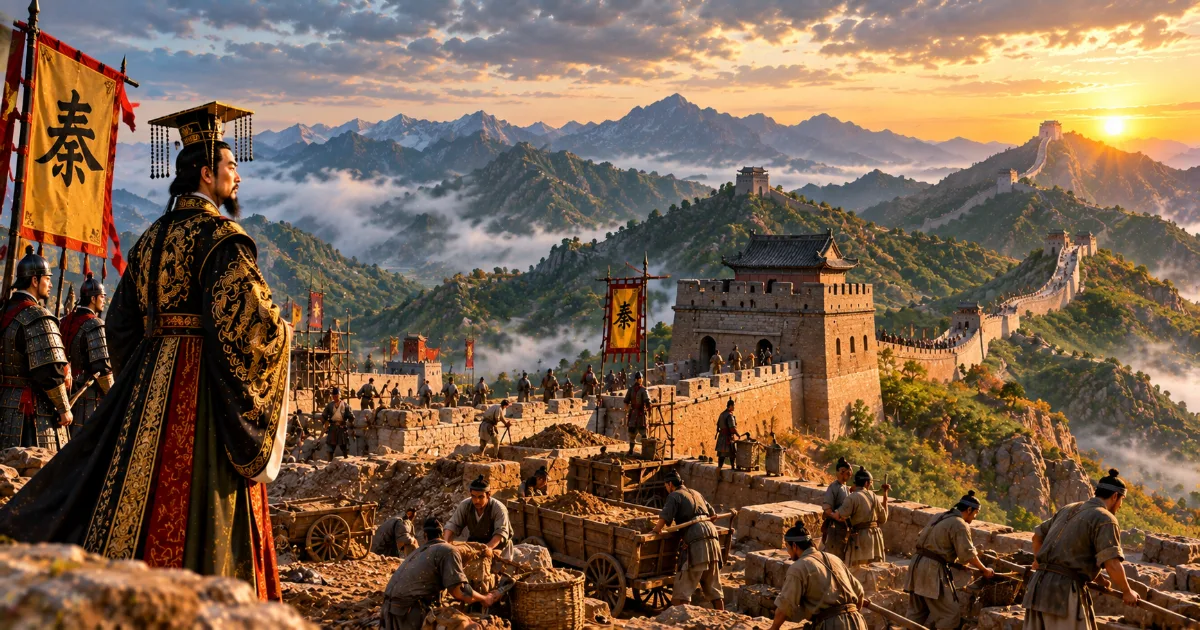
After unification, Qin Shi Huang sought to strengthen the empire's northern frontier. His government connected, extended, or reinforced certain earlier defensive works and organized military campaigns in regions north of the central Chinese territories. General Meng Tian is traditionally associated with these campaigns and with the construction of frontier defences during the Qin period.
The resulting defensive network was not the same structure that visitors see today. Many Qin-era walls were built from rammed earth and other locally available materials. They followed the strategic requirements of their time and were often separate sections rather than one continuous stone barrier. The impressive brick and stone sections commonly associated with the Great Wall largely reflect construction and rebuilding carried out much later, especially during the Ming dynasty from the fourteenth to the seventeenth centuries.
The Great Wall's history also involves the people who built, defended, repaired, and lived around it. Soldiers, conscripted labourers, prisoners, engineers, administrators, and local communities all contributed to frontier defence. Construction could provide military security and support state control, but it also imposed demanding labour obligations on the population.
The wall's purpose changed over time. At different moments, it served as a defensive obstacle, a system of watchtowers, a line of communication, a means of monitoring movement, and a symbol of imperial authority. Its effectiveness depended upon the soldiers stationed along it, the availability of supplies, the condition of the fortifications, and the broader political relationships between Chinese states and their northern neighbours.
To understand the Great Wall, we must therefore look beyond the monument itself. Its history reveals how ancient Chinese governments understood borders, military security, labour, and the relationship between geography and political power. It also shows how later generations transformed a collection of frontier structures into one of the most enduring symbols of Chinese civilization.
1. China Before the Great Wall: A World of Rival Kingdoms
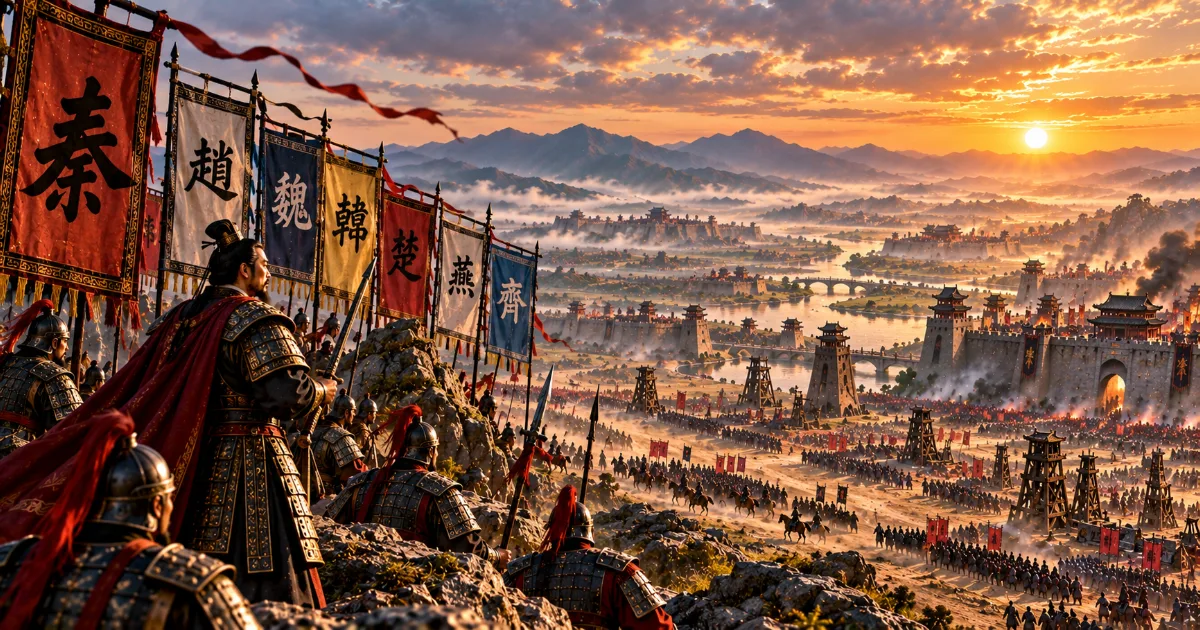
The earliest history of the Great Wall belongs to a period when China was divided among competing states. During the Eastern Zhou period, especially the Warring States era from approximately 475 to 221 BCE, rulers struggled to defend their territories, expand their resources, and prevent rival kingdoms from gaining decisive advantages.
The major states maintained armies, fortified cities, and defensive positions. Their borders were not always clearly defined, and territorial control could change after military campaigns. A kingdom might capture a neighbouring region, lose it in a later war, or construct new fortifications to protect an exposed frontier.
In this environment, walls were practical military structures. They could slow an invading force, protect agricultural communities, control access to strategic routes, and provide defenders with positions from which to observe enemy movements. Their usefulness depended upon location, construction, and the number of soldiers available to defend them.
Different kingdoms built walls according to their own strategic needs. Some defensive lines protected northern or western borders, while others were directed against rival states. These structures were not originally parts of a single national wall. They belonged to separate political systems whose rulers were often enemies.
The materials used in construction reflected the environment. In regions where stone was difficult to transport or timber was scarce, builders could use rammed earth, a technique in which layers of soil were compacted within temporary frames. The method could produce substantial structures when suitable soil and construction techniques were available.
Such walls were often less visually impressive than the stone and brick fortifications associated with later periods, but they could still serve important military purposes. Their effectiveness did not depend solely upon height or appearance. Their placement along strategic routes, their connection with watchtowers, and their relationship with nearby garrisons mattered just as much.
The defensive walls of the Warring States period demonstrate that the idea of using fortifications to protect territory was already well established before Qin Shi Huang came to power. His contribution was to bring aspects of this earlier tradition into the service of a unified empire.
2. The Northern Frontier and the Peoples Beyond It
Ancient China did not exist in isolation. The northern and northwestern frontier connected agricultural states with a range of pastoral and mobile communities whose livelihoods often depended upon herding, seasonal movement, trade, and access to grazing land.
The peoples living in these regions were diverse. They did not form one unchanging group, and their political relationships with Chinese states varied across time and place. Some communities traded with agricultural societies, others competed over resources, and some participated in warfare or entered into political alliances.
The contrast between agricultural and pastoral economies shaped many frontier relationships. Agricultural populations often depended upon settled fields, irrigation systems, and permanent villages. Pastoral communities could move herds across extensive grasslands and respond to seasonal changes in water and grazing conditions. These differences influenced patterns of trade, diplomacy, migration, and conflict.
It would be misleading to describe every northern community as a permanent enemy of China. Frontier relations included cooperation as well as warfare. Chinese states traded for horses, livestock, and other goods, while northern communities acquired agricultural products and manufactured items. Intermarriage, diplomacy, migration, and cultural exchange also formed part of the broader relationship.
Nevertheless, the movement of mounted groups could present military challenges to settled states. Forces capable of travelling quickly across open terrain could raid exposed settlements, threaten supply routes, or withdraw before slower armies could respond. Fortifications offered one way to reduce these risks.
Walls could channel movement toward defended gates, protect important agricultural areas, and provide watchpoints for military communication. They could also make it easier for governments to monitor certain routes and organize patrols.
However, no wall could eliminate the need for diplomacy, mobile forces, intelligence, or effective frontier administration. An enemy could sometimes bypass a fortified section, exploit a weak point, or attack when the defenders were poorly supplied. The wall was one element in a larger military system rather than an independent solution to every security problem.
The northern frontier therefore helps explain why fortifications became important to Chinese states. They were built within a complex world of competing interests, economic exchange, environmental differences, and shifting political relationships.
3. The First Walls: Defensive Lines Built by Separate States
Before Qin Shi Huang unified China, several Warring States kingdoms constructed defensive walls. These included states such as Qin, Zhao, Yan, and others whose territories faced different military threats.
The exact dates and boundaries of many early walls remain difficult to reconstruct. Archaeological remains, ancient texts, and later historical accounts provide evidence, but the surviving structures are often fragmentary. Some walls were repaired or reused by later governments, making it challenging to determine which sections belong to which period without careful investigation.
The general pattern is nevertheless clear. During the Warring States period, walls were constructed to strengthen vulnerable frontiers and protect strategically important territory. They could separate rival states, defend agricultural settlements, and support the control of routes through difficult terrain.
These structures were usually built according to local needs rather than a unified imperial plan. A state might construct a wall to defend against a neighbouring kingdom, while another built fortifications to protect its northern border. The resulting network reflected the fragmented political geography of the period.
The walls also demonstrate the growing importance of state organization. Large construction projects required labour, planning, material supplies, and coordination. Governments had to identify suitable routes, arrange the movement of workers, and maintain defensive positions over time.
Fortifications could also influence the movement of people and goods. Gates and controlled passages provided opportunities to monitor traffic, although the extent of such control varied. Walls could shape the geography of conflict by forcing armies to choose between attacking fortified positions, finding alternative routes, or attempting to disrupt the defenders' supply systems.
The existence of these earlier walls is essential to understanding Qin's contribution. The First Emperor did not invent the concept of frontier fortification. Instead, his government inherited a landscape in which defensive walls had already become a familiar instrument of military policy.
After unification, the political purpose of some walls changed. Fortifications that had once separated rival Chinese states could become less useful as internal borders, while northern defences gained greater importance. The Qin government could therefore redirect resources toward protecting the empire's external frontier.
This transition illustrates how political unification can transform the function of existing infrastructure. Structures built for competition between kingdoms could be incorporated into a broader imperial strategy.
4. Qin Shi Huang's Northern Campaigns
After unifying China in 221 BCE, Qin Shi Huang faced the challenge of defending the new empire's northern territories. Although the major rival kingdoms had been defeated, the frontier beyond the settled agricultural regions remained a source of military concern.
The emperor's government undertook campaigns in northern areas and sought to strengthen defensive positions. These operations were intended to secure territory, reduce the danger of raids, and extend the reach of imperial authority into frontier regions.
General Meng Tian is traditionally associated with the Qin campaigns against northern groups and with the organization of frontier defences. Later historical accounts describe him as commanding a large army and playing a major role in the construction or extension of walls.
The details of these accounts require careful interpretation. Ancient writers often described military achievements through the actions of prominent commanders, while the practical work of construction involved many officials, engineers, soldiers, and labourers. The surviving evidence does not support a simple picture in which one general designed and built every section of the wall.
The northern campaigns also reflected the broader strategic goals of the Qin government. Unification had given the emperor control over the former Warring States territories, but it had not removed every military threat. The government needed to defend newly incorporated regions and prevent frontier insecurity from undermining the stability of the empire.
Military expansion beyond the agricultural heartlands could also create new obligations. Garrisons required food and equipment, roads had to be maintained, and soldiers needed reliable supply routes. A successful campaign could extend imperial influence while increasing the cost of defending the frontier.
The Qin government therefore faced a difficult balance. It needed to protect the empire without committing resources beyond what its administration and population could sustain. The northern defences formed part of an effort to manage this challenge through a combination of military operations and physical fortification.
The legacy of these campaigns became closely associated with the Great Wall, although the wall's development continued long after the Qin dynasty ended.
5. How Qin Connected and Extended Earlier Defences
The traditional account of Qin Shi Huang's contribution to the Great Wall describes the connection and extension of earlier defensive walls. The aim was to strengthen the northern frontier after unification rather than preserve the old defensive lines between rival Chinese states.
Before Qin unification, walls had served different political purposes. Some protected individual kingdoms against their neighbours, while others defended exposed northern territories. Once Qin conquered the major states, many internal borders lost their former military significance.
The government could therefore concentrate on frontier areas that remained strategically important. By linking or extending selected defensive works, Qin sought to create a more coordinated system of protection along parts of the northern boundary.
However, the expression "connecting the walls" should not be interpreted as meaning that Qin constructed one uninterrupted structure running across the entire northern frontier. The geography was too varied, the available resources too limited, and the defensive needs too complex for such a simple description.
The early wall system consisted of sections built in different environments and at different times. Some portions may have been strengthened or incorporated into later defensive networks, while others fell into disuse. The precise extent of the Qin system remains a subject of historical and archaeological investigation.
The construction methods also differed from those associated with later monumental sections. In many locations, builders used compacted earth, sometimes reinforced with other materials. Rammed-earth construction could be effective where suitable soil and labour were available, but it required maintenance and was vulnerable to erosion over time.
The Qin project is best understood as a phase in the long history of northern defence. It brought earlier fortifications into a new political framework and strengthened selected areas according to the needs of the unified empire.
Later dynasties adopted different strategies. Some rebuilt walls, others relied more heavily on military garrisons and diplomacy, and some constructed extensive new fortifications. The Great Wall as a historical system was therefore the product of repeated decisions rather than one construction campaign.
6. Rammed Earth: The Technology Behind Early Walls
The early history of the Great Wall is closely connected with rammed-earth construction. This technique was widely used in ancient China because it could produce substantial structures from locally available materials.
Builders placed soil within wooden frames or other temporary supports and compacted it in successive layers. The process created dense walls that could be strengthened through careful material selection and construction methods. In some locations, additional materials were used to improve stability.
Rammed earth was particularly practical in areas where suitable soil was abundant and transporting large quantities of stone would have been difficult. It also allowed construction teams to work with materials available near the building site, reducing some logistical challenges.
The technique required considerable labour. Workers had to prepare the ground, establish foundations, arrange frames, transport soil, compact each layer, and shape the structure. Long defensive lines demanded coordination across multiple construction sites and the ability to supply tools, food, and other necessities.
The durability of rammed-earth walls depended upon their design and environment. Dry climates could preserve sections for long periods, while heavy rain, flooding, erosion, and neglect could cause substantial damage. Some ancient wall remains have survived because environmental conditions limited deterioration, while others have disappeared almost completely.
The materials used in later Great Wall sections varied considerably. Some famous Ming-era fortifications were built with brick and stone, producing the appearance familiar to modern visitors. These structures should not be confused with every early defensive wall associated with Qin.
The distinction matters because the Great Wall is often imagined as one uniform construction project. In reality, its physical form changed across regions and historical periods. Different governments selected materials and designs according to local geography, military requirements, available technology, and resources.
Rammed-earth construction also illustrates the practical character of ancient statecraft. Qin's defensive projects were not merely symbolic gestures. They were engineering undertakings designed to solve military problems using the materials and methods available to the builders.
7. The Labour Behind the Walls
The construction of Qin's northern defences required large numbers of workers. Soldiers, conscripted labourers, prisoners, and other people subject to state obligations could be involved in frontier construction and related infrastructure projects.
The scale of the work should not be reduced to a single universal figure. Ancient accounts sometimes provide dramatic numbers for workers or soldiers, but such totals are difficult to verify. Construction took place across different areas, and the labour force changed according to the needs of particular projects.
Even without precise totals, the demands were substantial. Workers had to travel to construction sites, receive supplies, prepare materials, and complete tasks in difficult environments. Some worked in remote frontier regions where food, shelter, and transportation were challenging to organize.
The labour burden could affect families and agricultural communities. When people were absent from their homes for extended periods, households might lose workers needed for planting, harvesting, or other essential activities. Compulsory service could therefore have economic consequences beyond the immediate construction site.
The Qin government also required labour for roads, palaces, tomb construction, military installations, and other public projects. These obligations competed for the same human and material resources. A household might face multiple demands over time, while local officials had to organize service according to government requirements.
Later historical accounts often portray Qin as an exceptionally harsh regime, and the labour demands associated with its projects contributed to this reputation. However, historians must distinguish between evidence of compulsory labour and dramatic stories whose details cannot be independently confirmed.
The broader historical point remains important. Large-scale infrastructure was made possible by the state's ability to mobilize people and resources, but that capacity often operated through coercion rather than voluntary employment.
The wall's military purpose did not erase the human cost of construction. Its history includes the experience of workers whose names were rarely recorded and whose contributions were essential to the physical structure.
8. Life on the Frontier: Soldiers, Garrisons, and Supply Lines
A defensive wall could not function effectively without soldiers and supporting infrastructure. Fortifications required garrisons to observe movement, defend vulnerable points, and respond to threats. Watchtowers, signal stations, roads, and supply depots helped connect defensive positions.
The effectiveness of a wall depended upon communication. A watchman who observed suspicious movement needed a way to alert nearby units. A garrison facing an attack required reinforcements, ammunition, food, and other supplies. Without such support, even a strong wall could become an isolated obstacle.
Frontier defence therefore involved much more than construction. The state had to recruit and position soldiers, maintain equipment, organize supply routes, and establish procedures for responding to different threats. The physical wall formed one part of a broader military system.
Soldiers stationed in frontier regions faced difficult conditions. They might serve far from their families, endure extreme weather, and operate in unfamiliar terrain. Their daily work included observation, patrols, maintenance, training, and the management of supplies.
The presence of garrisons could also influence local communities. Military settlements required food and services, while roads and defensive infrastructure affected patterns of movement. In some circumstances, frontier areas became centres of interaction between soldiers, administrators, merchants, and neighbouring populations.
The relationship between the wall and the surrounding environment was equally important. A fortification could protect a valley or control a route, but the terrain might offer alternative paths. Defenders needed to understand local geography and maintain surveillance beyond the immediate structure.
These considerations explain why walls were rarely sufficient on their own. Effective defence required coordination between fortifications, mobile forces, intelligence, diplomacy, and logistical planning.
The same principle applied to later periods of Great Wall history. A wall could delay an attack or direct movement toward defended crossings, but the political and military strength of the state remained decisive.
9. Could the Great Wall Stop Every Invasion?
The Great Wall is often imagined as an impenetrable barrier, but no defensive system can guarantee complete security. Its effectiveness depended upon the length of the frontier, the number of soldiers available, the condition of the fortifications, and the capabilities of potential opponents.
A wall could make direct passage more difficult, especially where it was reinforced by watchtowers and garrisons. It could slow raiding forces, protect strategically important routes, and provide defenders with positions from which to respond. Yet an attacker might cross a weak section, exploit a gap, bribe local officials, or bypass the wall through difficult terrain.
The enormous length of frontier structures created a fundamental challenge. Defending every section continuously required substantial manpower. If soldiers were concentrated at one location, another might become vulnerable. If supplies were delayed, a garrison might be unable to sustain itself during a prolonged emergency.
Military strategy therefore required choices. Governments had to decide which routes were most important, where to station troops, and how to respond when threats emerged. The wall could support these decisions, but it could not replace them.
Diplomacy also mattered. Trade agreements, political alliances, negotiated settlements, and relationships with frontier leaders could reduce the likelihood of conflict. A government that relied exclusively upon fortifications might spend enormous resources while ignoring opportunities to address the political causes of insecurity.
The Great Wall's history includes periods when defensive systems performed useful military functions and periods when they failed to prevent major incursions. These outcomes cannot be explained by the physical structure alone. They depended upon the broader condition of the state, its military organization, and the choices made by political leaders.
The wall should therefore be understood as a strategic instrument rather than an absolute guarantee. It could make some forms of attack more difficult, but the defence of an empire required a combination of military strength, administration, economic resources, and political judgment.
10. The Great Wall and the Politics of Imperial Unity
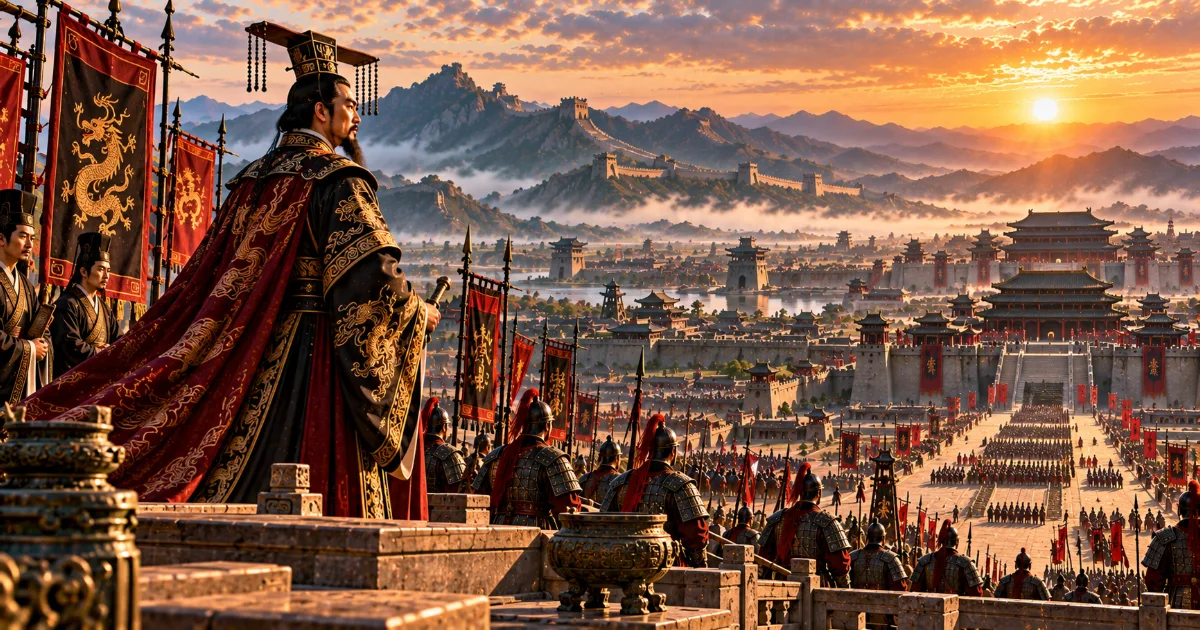
The Great Wall was not only a military structure. It also expressed the authority of the state and the political vision of its rulers. Under Qin Shi Huang, defensive construction formed part of a broader effort to reorganize territory and establish a new imperial order.
The unification of China had eliminated the major rival kingdoms, but the emperor still needed to demonstrate that the new political system could protect its territories. Frontier fortifications provided a visible sign of state power and a practical means of supporting military control.
The construction of the wall also demonstrated the government's ability to mobilize resources on a large scale. Organizing labour, transporting materials, and maintaining frontier positions required coordination across different administrative levels. These activities helped reinforce the central state's presence in distant regions.
The political meaning of the wall changed over time. At different moments, rulers used fortifications to distinguish defended territory from the regions beyond it, regulate movement, protect settlements, or communicate imperial ambition. The wall's significance depended upon the strategic and political circumstances of each period.
It is important not to treat the wall as a timeless symbol with exactly the same meaning throughout Chinese history. Ancient states constructed defensive lines for different reasons, and later dynasties made different choices about whether to build, repair, extend, or abandon them.
The wall's modern symbolic importance developed through centuries of historical memory and cultural interpretation. Today, it is widely associated with Chinese civilization, endurance, and engineering achievement. Yet its history also includes the experiences of frontier communities, the demands of military administration, and the burdens placed upon workers.
The Great Wall therefore represents more than a boundary. It reveals how political authority was expressed through the landscape and how governments attempted to turn territorial ambitions into physical structures.
11. What Remains of the Qin Wall Today?
The surviving remains associated with early Great Wall systems differ considerably from the famous brick and stone sections visited by millions of tourists. Many Qin-era fortifications were built using earth and other materials that have weathered over centuries. In some areas, remnants appear as low ridges or raised earthworks rather than towering walls.
Archaeologists study these remains through field surveys, excavation, mapping, material analysis, and comparisons with historical records. Their work helps identify the routes of ancient defensive lines and distinguish different construction phases where evidence allows.
The process is complicated because walls were often repaired, expanded, or reused by later governments. A structure that appears to be one continuous feature may contain sections built during different periods. Environmental changes, erosion, agriculture, settlement, and modern development can also alter or destroy archaeological evidence.
Dating early walls requires careful analysis. Archaeologists may examine construction techniques, associated objects, soil layers, and other evidence to establish when a section was built or used. Historical texts provide valuable context, but they cannot always identify the exact location or age of every surviving structure.
The distinction between Qin-era remains and later Great Wall sections is particularly important. Many of the best-preserved and most photographed sections date from the Ming dynasty, when large parts of the northern defensive system were rebuilt using brick and stone. These structures reflect military technology and political circumstances that differed substantially from those of the Qin period.
The Great Wall is therefore best understood as a long historical system rather than a single archaeological object. Its surviving remains document the changing priorities of Chinese governments over many centuries.
The study of these structures also reveals the limitations of historical memory. Later generations often attributed major achievements to famous rulers, but the physical evidence shows a more complicated process involving many governments, construction teams, and local communities.
12. How Later Dynasties Changed the Wall
After the fall of the Qin dynasty in 206 BCE, later Chinese governments adopted different approaches to frontier security. Some maintained or extended defensive structures, while others relied more heavily upon military expeditions, diplomacy, trade, or relationships with neighbouring political groups.
The Han dynasty, which followed Qin, expanded Chinese influence into important frontier regions and undertook its own defensive projects. During the Han period, the empire developed extensive military and administrative networks, including routes associated with trade and communication across Central Asia. Frontier security remained important, but the precise balance between walls, garrisons, diplomacy, and expansion varied over time.
Other dynasties also constructed or maintained walls. Their defensive strategies reflected the military conditions of their own eras. Some governments faced powerful mounted forces, while others controlled extensive frontier territories and pursued different methods of securing them.
The Ming dynasty made especially significant contributions to the wall sections familiar today. During the fourteenth to seventeenth centuries, Ming rulers undertook extensive rebuilding and strengthening of northern defences. Brick, stone, watchtowers, gates, and fortified passes created structures that were often more substantial than many earlier earthworks.
The Ming walls were shaped by the military challenges of that period, including conflicts involving Mongol groups and other frontier powers. Their design reflected the availability of materials, the development of fortification techniques, and the strategic priorities of the Ming government.
This long history explains why the Great Wall cannot be attributed entirely to Qin Shi Huang. The Qin period represents an important stage in the development of northern defences, but the wall's modern appearance is largely the result of later construction.
Each dynasty inherited a different political and military environment. Some built new sections, some repaired older works, and some abandoned defences that no longer served their purposes. The Great Wall became the product of repeated adaptation rather than a single unchanging design.
13. The Great Wall as a Cultural Symbol
Over time, the Great Wall acquired meanings that extended beyond military defence. It became associated with the scale of Chinese civilization, the ability of the state to organize large projects, and the determination of communities to protect their homes and territories.
Its physical presence across mountains and valleys made it a powerful image in historical writing, art, and modern national representation. The wall can evoke the ambition of emperors, the skill of builders, the endurance of soldiers, and the relationship between human engineering and the natural landscape.
Yet cultural symbols often simplify complex histories. The popular image of the Great Wall as one continuous barrier built by one emperor overlooks the many states and dynasties that contributed to its development. It also obscures the differences between early rammed-earth fortifications and later brick-and-stone structures.
The wall's symbolism can also emphasize separation, but its history involved interaction as well as defence. Frontier regions were places where people traded, migrated, negotiated, fought, and exchanged ideas. The wall influenced these relationships without completely isolating the communities on either side.
The structure also represents the relationship between state power and human labour. Its scale demonstrates impressive organizational capacity, but the effort required to build and maintain it could be demanding and dangerous. Remembering the workers helps create a fuller understanding of the monument's history.
Today, the Great Wall is a major historical and cultural landmark. Its surviving sections attract visitors, researchers, and historians interested in engineering, military history, archaeology, and the development of Chinese civilization.
Its importance lies not only in its physical size but also in the questions it raises. Why do governments build monumental defences? How do states balance security against economic cost? Can a physical barrier solve political problems? And how does a structure built for military purposes become a symbol of cultural identity?
The Great Wall offers no simple answers, but its long history provides an extraordinary setting in which to explore them.
14. Lessons from Qin's Frontier Strategy
Qin Shi Huang's northern defences reveal several important features of ancient statecraft. First, they show that political unification does not eliminate security challenges. After conquering the rival kingdoms, Qin still had to protect its borders and maintain control over distant territories.
Second, the wall demonstrates the importance of infrastructure in military planning. Fortifications could help control routes, support observation, and delay enemy movement, but their effectiveness depended upon soldiers, supplies, communications, and administrative coordination.
Third, the project illustrates the relationship between state capacity and human cost. A government capable of mobilizing labour across extensive territories could build impressive structures, but compulsory service could place severe burdens on the population.
Fourth, the history of the wall highlights the limits of purely military solutions. Fortifications could reduce certain risks, but they could not replace diplomacy, economic exchange, political negotiation, or the need to understand neighbouring societies.
Finally, the wall's development shows that major historical structures rarely belong to a single moment. The early walls of the Warring States period, the Qin frontier system, the defensive projects of later dynasties, and the Ming structures visible today form different stages in a much longer history.
These lessons remain relevant to the study of political power and infrastructure. Governments often invest in physical structures to address problems of security and control. Such projects can provide real benefits, but their success depends upon the broader political and economic systems in which they operate.
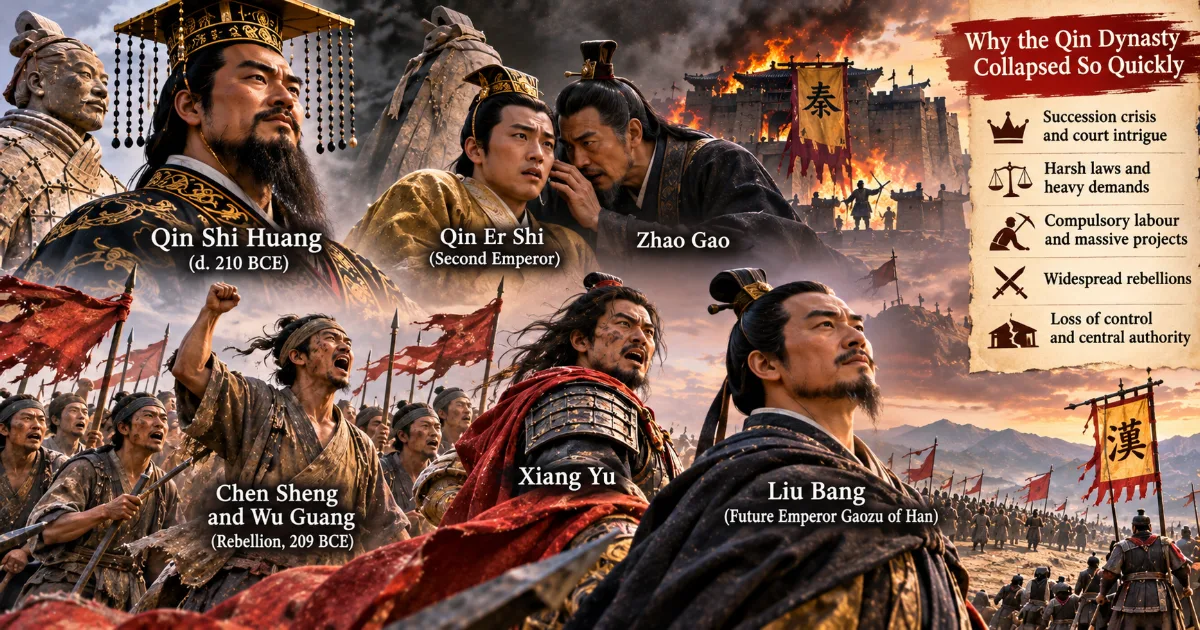
The Great Wall's history reminds us that a structure can outlast the government that built it. Qin's dynasty collapsed within a generation of unification, yet the idea of organized frontier defence continued to influence Chinese rulers for centuries.
Conclusion: A Wall Built Across Centuries
The Great Wall of China was not constructed in one continuous campaign by a single emperor. Its history began with defensive walls built by rival states during the Warring States period. After unification in 221 BCE, Qin Shi Huang's government connected, extended, or reinforced selected northern defences as part of a broader strategy to protect the new empire.
The Qin contribution was important, but it represented one stage in a much longer process. Early walls were often made from rammed earth and followed the strategic needs of their time. Later governments developed different fortifications, and many of the famous brick and stone sections visible today were built or rebuilt during the Ming dynasty.
The wall's military purpose was significant. It could protect vulnerable regions, support observation, channel movement, and delay attacks. However, it could not guarantee complete security. Effective frontier defence also required soldiers, supply networks, intelligence, diplomacy, and the ability to respond to changing political conditions.
The human cost of construction was equally important. Soldiers, labourers, prisoners, engineers, and administrators contributed to the development of the defensive system. Large projects required substantial resources, and compulsory labour could place heavy burdens on communities already affected by taxation and military obligations.
Over centuries, the Great Wall became more than a defensive structure. It developed into a symbol of imperial ambition, engineering achievement, and Chinese cultural identity. Yet its full history is more diverse than the popular image of one emperor building one enormous wall. It reflects the work of many governments and the changing relationships between China and its neighbours.
Qin Shi Huang's legacy lies in his effort to bring earlier defensive traditions into the service of a unified empire. His government helped establish a new phase in the history of northern frontier defence, but later dynasties continued to reshape the system according to their own needs.
The Great Wall therefore stands as a monument to both continuity and change. It reminds us that the history of a civilization is rarely created by one ruler or one generation. It emerges through repeated decisions, accumulated knowledge, human effort, and the changing demands of political life.
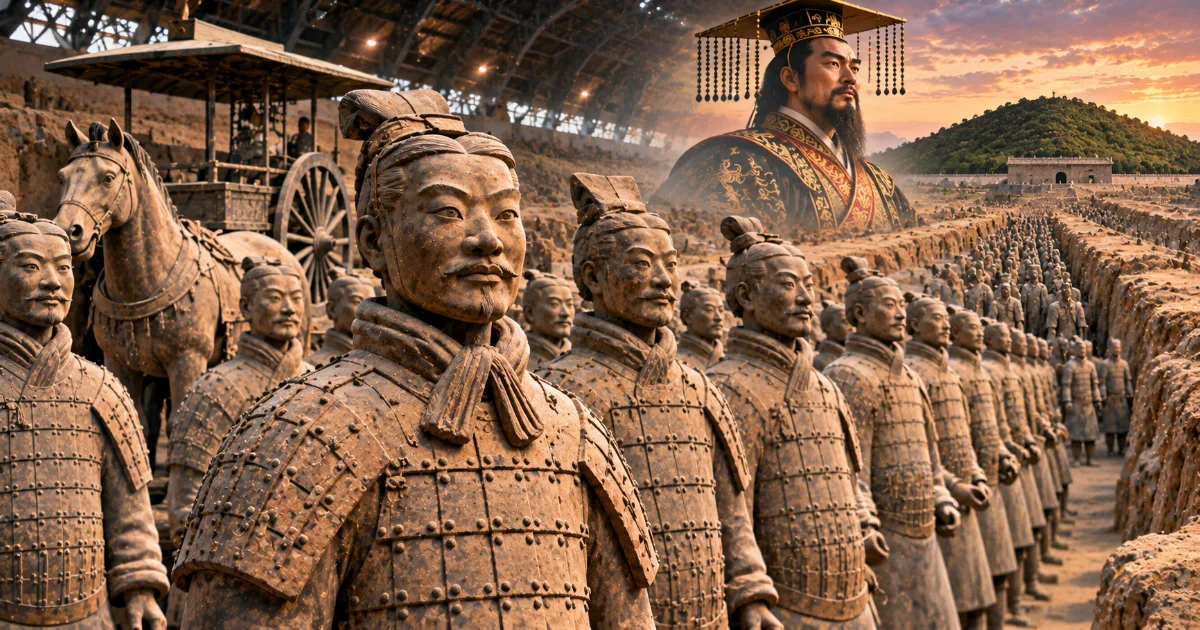
The next article in the History of China series will explore Article 14: The Terracotta Army and the Emperor's Quest for Immortality, examining the extraordinary underground army discovered near Xi'an, the organization of Qin's imperial tomb complex, the craftsmanship behind the clay soldiers, and the beliefs that shaped the First Emperor's preparations for death and the afterlife.
#HistoryOfChina #GreatWallOfChina #QinShiHuang #QinDynasty #AncientChina #ChineseHistory #ChineseCivilization #AncientEngineering #ChineseArchitecture #ImperialChina #HistoryEducation