The Dynasty That Shaped Imperial China
The collapse of the Qin dynasty in 206 BCE brought an end to China's first imperial experiment, but it did not bring an end to the idea of a unified Chinese empire. The political institutions established by Qin Shi Huang had transformed the country's administration, and the next generation of rulers inherited a foundation that would influence Chinese government for centuries.
Out of the conflict that followed the Qin collapse emerged the Han dynasty, one of the most influential periods in Chinese history. Founded by Liu Bang in 202 BCE, the Han dynasty ruled for more than four centuries, with an interruption between its Western and Eastern periods. Its achievements shaped China's political institutions, cultural identity, economic development, technological progress, and international relationships.
The Han period is frequently regarded as one of the formative eras of Chinese civilization. Many traditions that became central to Chinese government and society developed during this time. Confucian learning gained increasing importance within the imperial administration, the civil service system began taking recognizable institutional form, and the state expanded its influence across territories that connected China with Central Asia.
The Han rulers also inherited important lessons from the collapse of Qin. They understood that an empire could not survive through military power and strict laws alone. Political stability required administrative organization, but it also required policies that allowed agricultural communities and local economies to recover. Early Han emperors therefore adopted a more moderate approach in several areas of government while retaining many of the administrative foundations created by Qin.
Continue Reading
One of the most important developments of the Han period was the expansion of China's connections with the wider world. Diplomatic missions, military campaigns, commercial networks, and exchanges across Central Asia helped establish routes that later became known collectively as the Silk Road. These routes connected Chinese territories with Central Asian kingdoms, regions of South Asia, Persia, and eventually the Mediterranean world through a series of commercial and diplomatic networks.
The Silk Road was not a single road running directly from China to Europe. It was a network of routes used by merchants, diplomats, travellers, religious teachers, and military representatives. Silk was among the most valuable commodities associated with these exchanges, but the routes also carried horses, precious metals, textiles, spices, glassware, ideas, technologies, and religious traditions.
The Han dynasty also witnessed remarkable developments in science, medicine, astronomy, mathematics, agriculture, and technology. Paper-making emerged as one of the most influential Chinese innovations, while improvements in iron production, agricultural tools, and engineering supported economic growth.
Yet the Han dynasty was not a period of uninterrupted prosperity. Its history included court struggles, conflicts with powerful aristocratic families, costly military campaigns, political reforms, rebellions, and periods of economic difficulty. The dynasty eventually weakened under the pressure of internal divisions and social unrest, leading to its collapse in 220 CE.
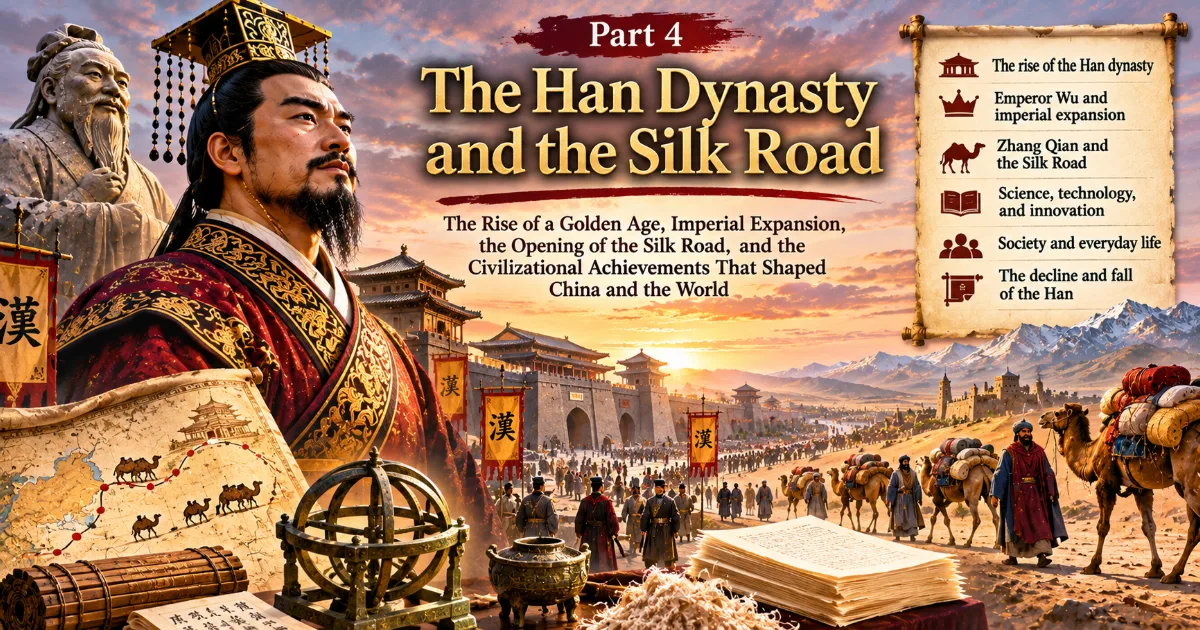
This part of the History of China series explores the rise and development of the Han dynasty, its most influential rulers, the opening of the Silk Road, its achievements in technology and culture, the daily lives of its people, and the political problems that eventually brought the dynasty to an end.
From the Qin Collapse to the Rise of a New Empire
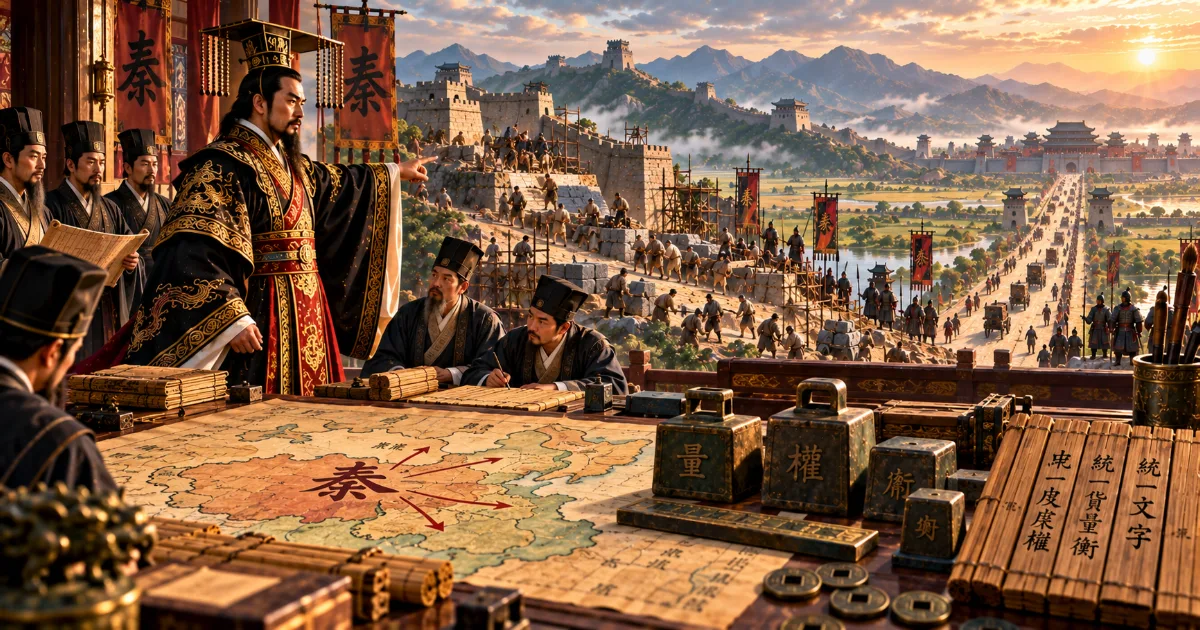
The Qin dynasty had unified China in 221 BCE, but its centralized government proved unable to survive the political crisis following the death of Qin Shi Huang. Rebellions spread across the empire, and rival leaders emerged to challenge imperial authority.
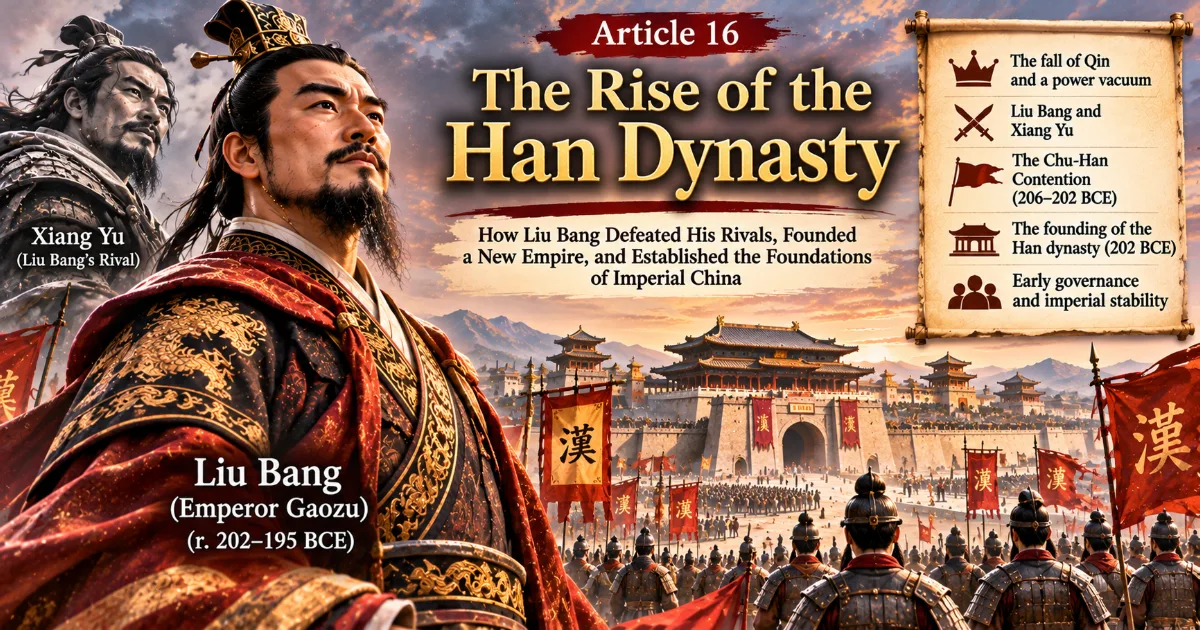
Among the most important figures were Xiang Yu and Liu Bang. Both became powerful during the rebellion against Qin, but their ambitions eventually brought them into conflict with one another.
Xiang Yu was an accomplished military commander who came from a family associated with the former state of Chu. He gained a reputation for courage and battlefield leadership during the struggle against Qin. Liu Bang, by contrast, came from a more modest background and developed his influence through political alliances, administrative ability, and military organization.
After the Qin dynasty fell, the two leaders competed for control of the former empire. Their struggle became known as the Chu-Han Contention, a conflict that lasted from 206 to 202 BCE.
Liu Bang eventually defeated Xiang Yu and established the Han dynasty. His victory marked a turning point in Chinese history because it restored imperial unity while creating a political system that would prove more durable than the short-lived Qin dynasty.
Liu Bang adopted the imperial title Gaozu and established the new government with its capital at Chang'an, near modern Xi'an. The city became one of the most important political and cultural centres in ancient China.
Learning from the Qin Dynasty
The Han rulers understood that the Qin dynasty had created important administrative institutions but had placed excessive pressure on the population. Its strict laws, compulsory labour, military obligations, and large construction projects had contributed to widespread dissatisfaction.
The early Han government therefore adopted a more moderate approach. Certain taxes and labour demands were reduced, and policies were introduced to encourage agricultural recovery. The government sought to restore economic stability after years of warfare.
However, the Han rulers did not completely abandon Qin's administrative achievements. They retained centralized institutions, appointed officials, territorial divisions, and important legal practices. This combination allowed the Han government to preserve the advantages of imperial administration while attempting to avoid the political mistakes associated with the Qin collapse.
The Han dynasty gradually developed a model of government that combined centralized authority with a more flexible approach to local society. This balance became one of the reasons for its long-term influence.
The Growth of Confucian Government
One of the most significant cultural and political developments of the Han period was the increasing importance of Confucian thought.
Confucius had lived centuries earlier, during the late Spring and Autumn period. His teachings emphasized moral responsibility, proper conduct, education, family relationships, respect for social obligations, and responsible government.
During the early Han period, different intellectual traditions continued to influence political debate. Over time, Confucian learning became increasingly important within the imperial administration.
Emperor Wu, who ruled from 141 to 87 BCE, played a major role in strengthening the position of Confucian scholarship at court. His reign encouraged the development of institutions associated with the study of classical texts and the education of officials.
Confucian ideas offered a moral language through which imperial authority could be explained and evaluated. They emphasized that rulers had responsibilities toward their subjects and that good government required more than military strength or strict enforcement of laws.
This did not mean that Han government became purely Confucian in practice. The state continued to rely on administrative discipline, taxation, military power, and legal institutions. Instead, Confucian philosophy increasingly shaped the ideals through which government and social order were discussed.
The relationship between Confucian ethics and imperial administration became a defining feature of later Chinese political culture.
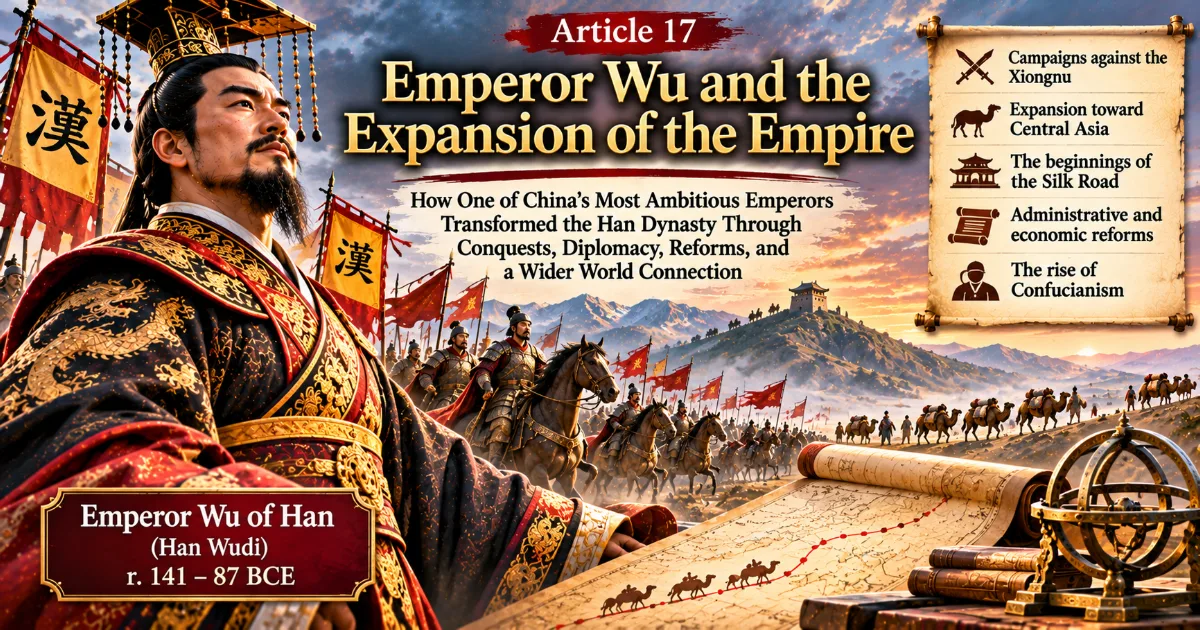
Emperor Wu and the Expansion of Han Power
The Han dynasty reached one of its most influential stages under Emperor Wu, also known as Han Wudi.
His reign was marked by ambitious military campaigns, diplomatic initiatives, territorial expansion, and efforts to strengthen central authority. The Han Empire expanded its influence into regions that connected China with Central Asia and other neighbouring territories.
One of the major challenges faced by the Han government came from the Xiongnu, a powerful confederation of nomadic groups to the north. Relations between the Han court and the Xiongnu included diplomacy, trade, marriage alliances, military confrontation, and periods of unstable peace.
Emperor Wu adopted a more aggressive policy toward the Xiongnu and organized major military campaigns. These campaigns required substantial resources and helped extend Han influence across important frontier regions.
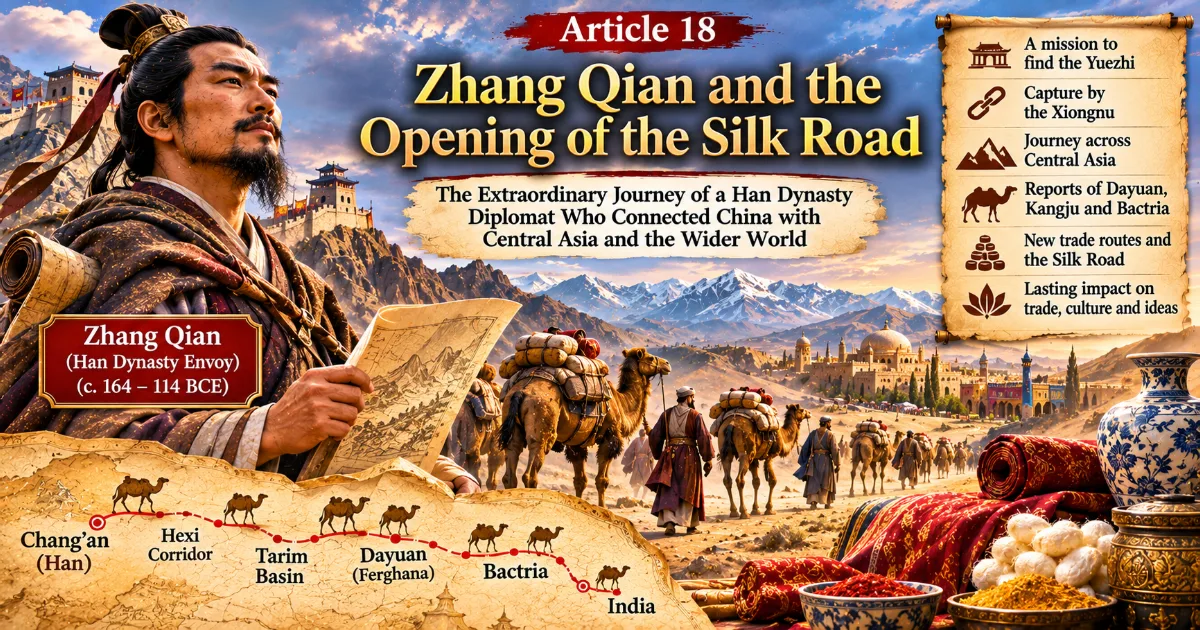
His reign also encouraged diplomatic missions toward Central Asia. One of the most famous missions was led by Zhang Qian, whose travels provided the Han court with valuable information about territories and political powers beyond its western frontier.
These developments helped create the conditions for greater commercial and diplomatic connections across Eurasia.
Zhang Qian and the Opening of the Silk Road
The Silk Road became one of the most important networks of exchange in world history, and the Han dynasty played a major role in the development of its eastern routes.
Zhang Qian was sent west by Emperor Wu during the second century BCE with the aim of establishing contact with the Yuezhi, a people whom the Han court hoped might become allies against the Xiongnu.
His mission was extremely difficult. He was captured by the Xiongnu and remained in their territory for years before eventually escaping and continuing his journey. Although he did not achieve the original diplomatic objective in the way the emperor had intended, his travels produced valuable information about Central Asian societies, geography, political relationships, and commercial possibilities.
Zhang Qian's reports increased Han interest in the regions west of China. They encouraged further diplomatic missions and helped the imperial government understand the wider network of states and communities across Central Asia.
The routes that developed were used by merchants, diplomats, military representatives, and travellers. Chinese silk became a particularly valuable commodity, attracting interest from distant markets.
However, the Silk Road was not simply a route for selling silk. It became a channel through which goods, technologies, ideas, artistic traditions, and religious beliefs moved across different regions.
The network developed gradually and changed over time. Its importance extended far beyond the Han dynasty, connecting societies across Asia and Europe for many centuries.
Science, Technology, and Innovation
The Han dynasty was a period of important technological and intellectual development.
One of the most influential innovations associated with Han China was the development of paper-making. Early forms of paper existed before the Han period, but the technology improved and became increasingly useful during the dynasty. The official Cai Lun is traditionally associated with a major improvement in paper-making around 105 CE.
Paper eventually transformed communication, administration, education, and literature. It provided a practical writing material that could be produced from plant fibres and other materials, helping written knowledge circulate more widely.
Han scholars also made advances in astronomy and mathematics. Court astronomers observed celestial movements, developed calendars, and recorded astronomical events. Mathematical knowledge supported administration, engineering, surveying, taxation, and agricultural planning.
Medical knowledge also developed through the study of plants, the human body, disease, and traditional therapeutic practices. Some texts associated with early Chinese medicine were compiled or developed during this broad historical period.
Agriculture benefited from improvements in tools, irrigation, and iron technology. These developments helped increase productivity in different regions and supported the needs of a growing population.
The achievements of Han China demonstrate that technological progress was connected to practical needs. Government administration, farming, trade, military organization, and intellectual activity all contributed to the development of new methods and ideas.
Society and Everyday Life in Han China
The Han dynasty was home to a complex society made up of farmers, artisans, merchants, officials, soldiers, scholars, landowners, and members of the imperial family.
Agriculture remained the foundation of the economy. Most people lived in rural communities and depended on farming for their livelihoods. Families cultivated crops, raised animals, maintained irrigation systems, and contributed taxes or labour to the state.
The government recognized the importance of agricultural production because food supplies were essential for population stability, military organization, and imperial revenue.
Artisans produced pottery, textiles, metal tools, weapons, furniture, and many other goods. Their work supported both local consumption and wider commercial exchange.
Merchants operated in growing markets and along regional trade routes. Although the social status of merchants was often viewed differently from that of farmers and scholars in official political thought, commercial activity became increasingly important to the economy.
The Han capital of Chang'an was a major urban centre with palaces, markets, administrative offices, workshops, and residential districts. It attracted officials, scholars, traders, diplomats, and visitors from different parts of the empire and beyond.
The archaeological record, including tombs, pottery, household objects, paintings, and written documents, provides valuable information about the daily lives of Han people.
Political Challenges and the Decline of the Han
Despite its achievements, the Han dynasty faced serious political and economic difficulties.
Powerful families accumulated land and influence, while some farmers experienced increasing debt and economic insecurity. Court politics became more complicated as different groups competed for influence over the emperor.
During periods when emperors were young or politically weak, relatives of the imperial family, senior officials, and palace factions could exercise considerable authority.
The influence of eunuchs at court also became an important political issue during the later Han period. Conflicts between court factions weakened the government's ability to respond effectively to wider problems.
Economic pressures, corruption, natural disasters, and social inequality contributed to unrest in different regions. The Yellow Turban Rebellion, which began in 184 CE, became one of the most important uprisings of the late Han period.
The rebellion was suppressed, but the government was weakened further by the military power of regional commanders. Over time, central authority declined as powerful warlords gained control of different territories.
The last Han emperor abdicated in 220 CE, bringing the dynasty to an end and opening the way for the Three Kingdoms period.
Why the Han Dynasty Remains So Important
The Han dynasty is remembered as one of the foundational periods of Chinese civilization.
Its rulers preserved the centralized imperial system developed under Qin while building a more durable political structure. Confucian scholarship became increasingly influential, and administrative institutions developed in ways that shaped later dynasties.
The expansion of diplomatic and commercial networks connected China with Central Asia and distant regions. The development of the Silk Road helped create long-term relationships between different civilizations.
Technological achievements, including improvements in paper-making, metallurgy, agriculture, astronomy, and medicine, contributed to China's intellectual and economic history.
The Han period also became an important reference point for later Chinese identity. The term Han eventually became the name used by the largest ethnic group in China, reflecting the dynasty's enduring cultural influence.
The history of the Han dynasty shows that the development of a civilization is not defined only by conquest and political power. It also depends on institutions, knowledge, commerce, cultural exchange, and the ability of societies to adapt over time.
What This Part of the Series Will Explore
Part 4 of History of China will examine the Han dynasty through six connected historical themes.
The first article will explain how Liu Bang defeated Xiang Yu, founded the Han dynasty, and established a new imperial government after the collapse of Qin.
The second article will focus on Emperor Wu, his military campaigns, diplomatic initiatives, and the expansion of Han influence.
The third article will explore Zhang Qian's journeys and the development of the Silk Road as a network of trade and diplomatic connections across Eurasia.
The fourth article will examine Han contributions to paper-making, science, medicine, astronomy, mathematics, and technological innovation.
The fifth article will explore society, trade, agriculture, urban life, and the everyday experiences of people living in Han China.
The sixth article will investigate the political struggles, rebellions, economic pressures, and military developments that led to the fall of the Han dynasty.
Together, these articles will reveal how the Han dynasty transformed the political and cultural foundations of China and helped establish connections that influenced the wider world.
#HistoryOfChina #HanDynasty #SilkRoad #AncientChina #ChineseHistory