The Beginning of Durga Puja — A Celebration of Shakti, Hope and the Victory of Good Over Evil
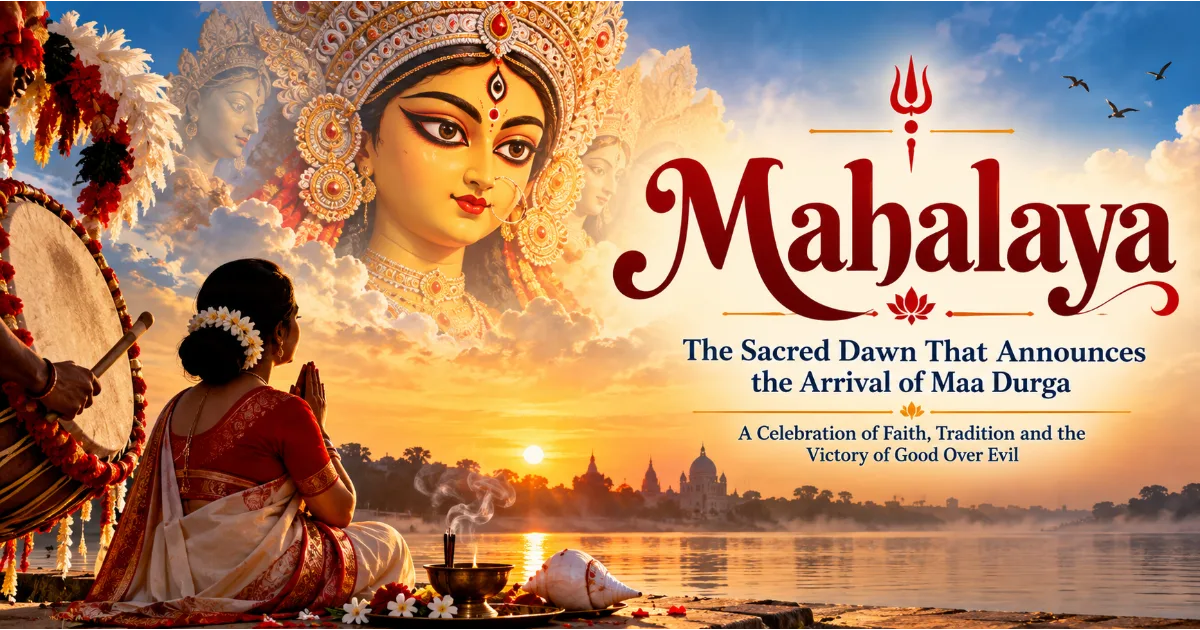
In Bengal and many other parts of India, the arrival of autumn brings a feeling that is difficult to describe in words. The air begins to change, the sound of the dhak slowly fills the atmosphere, and millions of devotees prepare to welcome Maa Durga.
But before the grand celebrations of Durga Puja begin, there is a special morning that holds a deeply emotional and spiritual place in Bengali culture: Mahalaya.
Mahalaya is more than a date on the calendar. It marks the beginning of the countdown to Durga Puja and evokes the anticipation of welcoming the Goddess who symbolizes divine power, courage, protection and the triumph of righteousness.
What Is Mahalaya?
Mahalaya is traditionally observed on the new-moon day, or Amavasya, of the Hindu month of Ashwin, although the exact calendrical observance depends on the lunar calendar.
For many Bengali families, Mahalaya begins before sunrise. People wake early to listen to devotional recitations, prayers and songs associated with the arrival of Maa Durga.
One of the most cherished traditions is listening to Mahishasuramardini, the celebrated Bengali radio presentation associated with Birendra Krishna Bhadra. Its Sanskrit verses, devotional music and dramatic narration have become an enduring part of Mahalaya morning for generations of listeners.
The experience is deeply nostalgic for many people. Families gather around radios or televisions, temples fill with devotees, and the spiritual atmosphere signals that Durga Puja is drawing closer.
The Spiritual Significance of Mahalaya
The word Mahalaya is commonly associated with the invocation of the Goddess and the beginning of the period leading towards her worship.
It is also connected with Pitru Paksha, the traditional period devoted to remembering and honouring ancestors. In many Hindu traditions, Mahalaya Amavasya is an important occasion for ancestral offerings and prayers.
Thus, Mahalaya brings together two meaningful ideas: remembering those who came before us and preparing to welcome the divine mother.
The observances and interpretations can vary across regions and families, but the underlying themes of gratitude, devotion and spiritual renewal remain important.
The Legend of Maa Durga and Mahishasura
At the heart of Durga Puja lies the story of Goddess Durga and Mahishasura.
According to Hindu mythology, Mahishasura was a powerful demon who obtained a boon that made him believe he could not be defeated by a man or a male deity. As his power grew, he began to threaten the heavens and the world.
The gods united their divine energies to create Goddess Durga, who embodied extraordinary strength, wisdom and courage.
Armed with divine weapons and riding a lion, Maa Durga fought Mahishasura in a fierce battle. Ultimately, she defeated him, restoring balance and protecting the world from his tyranny.
This story is celebrated as a powerful reminder that arrogance and injustice cannot prevail forever. Divine feminine energy, known as Shakti, represents the power required to overcome darkness and restore harmony.
Mahalaya brings this story to the forefront of the Durga Puja season, preparing devotees for the celebration of the Goddess's arrival and victory.
Why Is Mahalaya Associated With the Arrival of Maa Durga?
In Bengali tradition, Durga Puja is often understood through the beautiful image of a daughter returning to her parental home.
Maa Durga is affectionately welcomed as a daughter who comes home with her children, bringing happiness, love and celebration to her family.
Mahalaya awakens this anticipation. The Goddess's arrival becomes a deeply personal and emotional experience, especially for Bengali communities whose cultural identity is closely connected with Durga Puja.
In some traditions, Mahalaya is also associated with the beginning of the Goddess's journey towards the mortal world. Rituals connected with the invocation and unveiling of her image vary by community; Mahalaya itself should not be confused with the principal days of Durga Puja.
Mahalaya and the Art of Chokkhu Daan
One of the most evocative traditions associated with the making of Durga idols is Chokkhu Daan, meaning the offering or painting of the eyes.
Artisans carefully paint the eyes of the Goddess as a significant final stage in the creation of her image. This moment is often treated with great reverence because the eyes are understood to give the idol its expressive, living presence.
The timing of this ritual varies according to local customs and the artisan's tradition. Although it is frequently associated with Mahalaya, it is not universally performed on that day.
For devotees, the eyes of Maa Durga express compassion, strength, protection and divine awareness.
The Sounds That Define Mahalaya
Mahalaya is inseparable from its sounds and music.
The recitation of Chandi Path, passages associated with the Devi Mahatmya, devotional songs and the familiar voice of Birendra Krishna Bhadra form an unforgettable cultural experience for countless Bengali households.
The rhythm of the dhak, the ringing of temple bells and the soft glow of lamps deepen the atmosphere of devotion.
Even people who live far from Bengal often preserve this tradition in their homes, carrying a treasured part of their cultural heritage wherever they go.
Mahalaya Beyond Bengal
Although Mahalaya holds exceptional importance in Bengali Durga Puja traditions, its themes connect with a much wider Indian cultural landscape.
Across India, devotees worship the divine feminine in different forms, including Durga, Kali, Lakshmi and Saraswati. Regional traditions, festivals and rituals differ, yet many express reverence for the power that protects life, confronts injustice and restores balance.
Mahalaya therefore offers an opportunity to learn about both the distinctive traditions of Bengal and the broader diversity of India's spiritual heritage.
The Message of Mahalaya for Our Lives
Mahalaya reminds us that every new beginning can be an opportunity for reflection and renewal.
The story of Maa Durga encourages us to face fear with courage, resist injustice, cultivate humility and use our strength responsibly. Remembering our ancestors also teaches gratitude for the sacrifices, knowledge and traditions passed down through generations.
In a world filled with uncertainty, the message of Mahalaya remains meaningful: darkness is not permanent, courage can rise in difficult times, and hope can return when we stand for what is right.
Conclusion: The Dawn of Devotion
Mahalaya is the sacred beginning of a season filled with devotion, artistry, music, family gatherings and cultural pride.
It invites us to remember our roots, honour our ancestors and prepare our hearts to welcome Maa Durga.
As the first sounds of Mahishasuramardini echo through the morning, a familiar feeling returns to millions of people: the Mother is coming home.
শুভ মহালয়া! শুভ মহালয়া!
May Maa Durga bless everyone with strength, wisdom, peace and prosperity.
Let’s Celebrate India's Cultural Heritage Together
What does Mahalaya mean to you? Do you wake up early to listen to Mahishasuramardini, visit a temple, remember family traditions or celebrate in another special way?
Share your memories and traditions in the comments. Let us learn from one another and preserve the beautiful cultural heritage of India.
Cultures of India — Discover our traditions, celebrate our diversity, and keep our heritage alive.
#ShubhoMahalaya #MaaDurga #DurgaPuja2026 #DivineFeminine #Shakti #CulturesOfIndia