Navratri is a sacred Hindu festival dedicated to the worship of Goddess Durga and her nine divine forms, collectively known as Navdurga. Each day of the festival honours a different form of the Goddess and offers devotees an opportunity to understand the spiritual values associated with her.
The fourth day of Navratri is dedicated to Maa Kushmanda, the fourth form of Goddess Durga. She is associated with the creation of the universe, divine energy, vitality, light, and prosperity. According to popular Hindu devotional traditions, Maa Kushmanda brought the universe into existence through her divine smile, illuminating the darkness that existed before creation.
Her name is commonly explained through the Sanskrit words Ku, Ushma, and Anda, which are traditionally interpreted in connection with the cosmic egg and the warmth or energy associated with creation. Although explanations of the name vary, her central significance remains connected with the origin and sustaining energy of the universe.
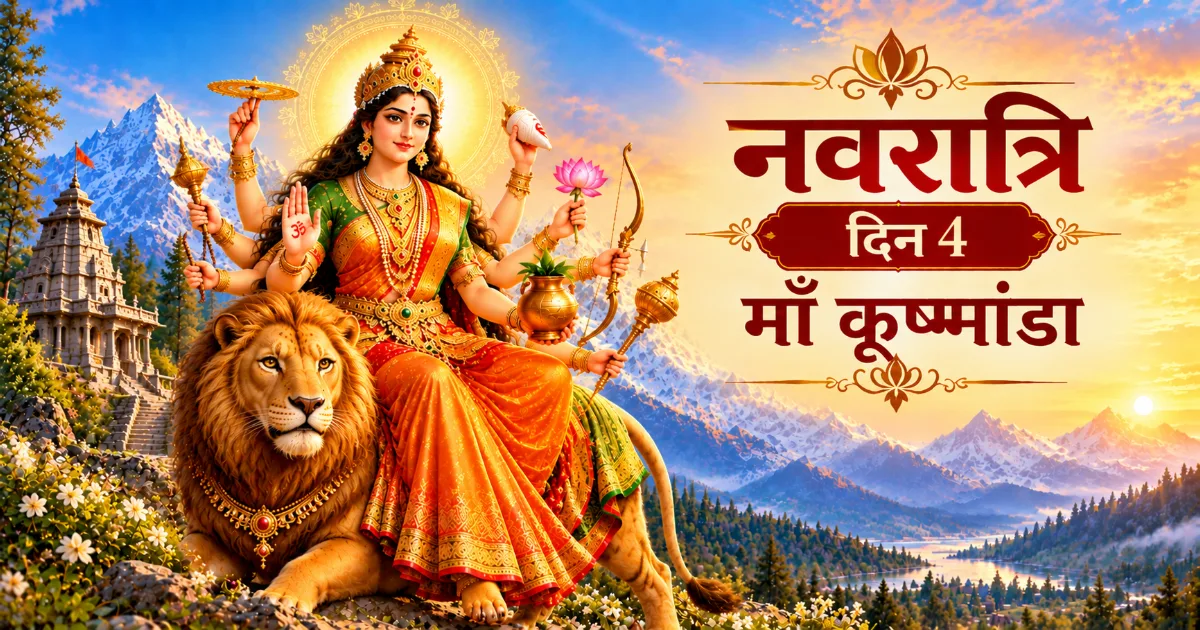
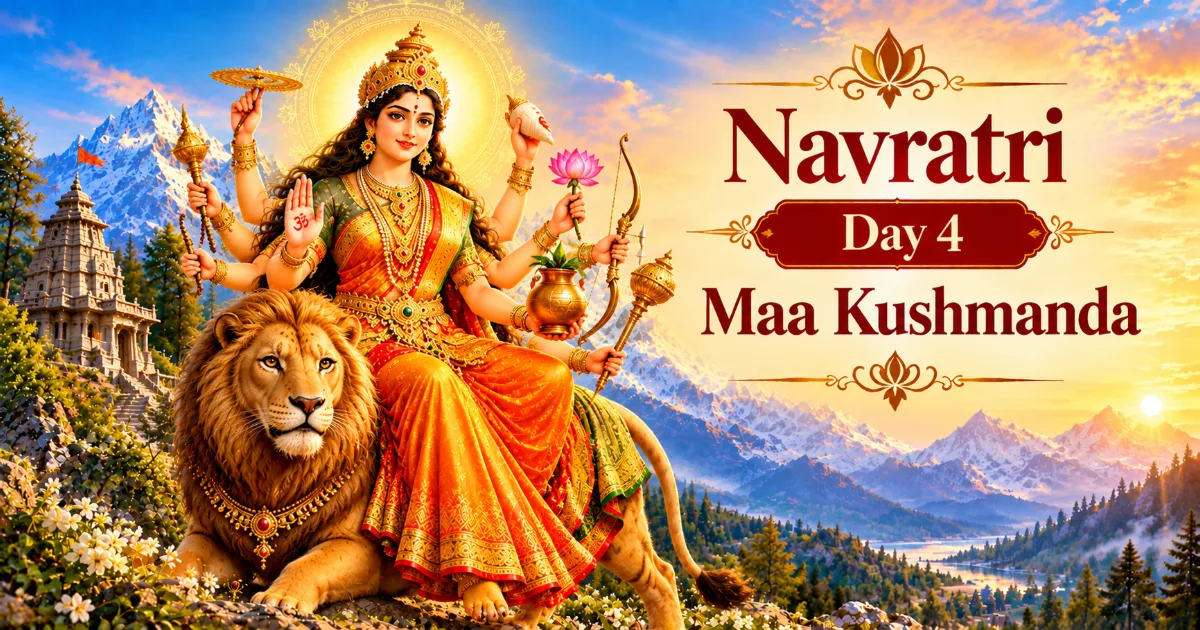
Maa Kushmanda is generally depicted with eight arms, holding various divine objects and weapons. She is therefore also known as Ashtabhuja Devi, meaning the eight-armed Goddess. She is often shown riding a lion, symbolising courage and strength.
Her worship reminds devotees that even a small source of light can make a difference in darkness. Her divine smile represents hope, creativity, and the power to bring new beginnings into existence. Through her form, Maa Kushmanda encourages people to appreciate the energy of life, use their abilities constructively, and bring positivity into the world around them.
Continue Reading
Who Is Maa Kushmanda?
Maa Kushmanda is the fourth manifestation of Goddess Durga worshipped during Navratri. In Hindu devotional traditions, she is revered as the Goddess associated with the creation of the cosmos and the energy that sustains life.
According to popular accounts, before the universe came into existence, darkness prevailed. Maa Kushmanda created the cosmic universe through her divine smile, bringing light and order to what had previously been unmanifest. This story symbolises the emergence of creation from darkness and the presence of divine energy throughout the cosmos.
The Goddess is commonly portrayed with eight arms. Her hands may hold a lotus, bow, arrow, discus, mace, rosary, water pot, and other sacred objects, although the precise arrangement can vary across artistic and devotional traditions. These objects represent different aspects of divine power, spiritual discipline, protection, and well-being.
She is often shown riding a lion, an animal associated with courage, authority, and fearlessness. Her radiant appearance reflects the light and vitality connected with creation.
Maa Kushmanda's significance extends beyond the idea of the universe's origin. She also represents the energy that makes growth and renewal possible. Her worship invites devotees to recognise the creative potential within themselves and to use it with wisdom, kindness, and responsibility.
The Story of Maa Kushmanda
Hindu religious traditions describe Maa Kushmanda as the divine source associated with the beginning of the universe. In popular devotional narratives, there was darkness before creation. The Goddess brought the cosmos into existence through her divine smile, and the universe began to shine with light and energy.
The name Kushmanda is often associated with the cosmic egg, a traditional symbol of the universe in Indian philosophical and religious thought. The cosmic egg represents the origin from which the world and its many forms emerge.
According to popular interpretations, the Goddess's creative energy brought the sun, stars, planets, and other elements of the cosmos into existence. Some devotional traditions associate her with the power of the Sun and the energy required to sustain life.
These descriptions are religious and symbolic accounts rather than scientific explanations of the universe. Their purpose is to express the belief that divine energy is present throughout creation and that life depends on a sustaining source of power.
Maa Kushmanda is also associated with the Sun's radiance in several devotional traditions. Her connection with light represents vitality, knowledge, and the force that enables living beings to grow. Just as sunlight supports life on Earth, her divine energy symbolises the power that sustains the cosmic order.
The story of Maa Kushmanda offers a message of hope. Darkness is not necessarily the end of a journey. A new beginning can emerge when there is energy, purpose, and the willingness to create something meaningful.
Her story also encourages people to recognise their own ability to contribute to the world. A kind action, a creative idea, or a sincere effort may appear small at first, but it can become the beginning of something valuable.
The Meaning of the Name Kushmanda
The name Kushmanda is traditionally interpreted in connection with the cosmic egg and the divine energy of creation. One popular explanation connects the word with Ku, Ushma, and Anda, associating them respectively with a subtle or small form, warmth or energy, and the cosmic egg.
This interpretation is commonly used in devotional explanations of the Goddess's name. The cosmic egg is an ancient symbolic concept in several Indian traditions, representing the universe as a whole and the origin of existence.
Through this symbolism, Maa Kushmanda is understood as the divine power from which creation emerges. Her name reminds devotees that the universe is not merely a collection of separate objects but an interconnected system sustained by energy.
The association with warmth and light also gives her form a life-affirming meaning. Light makes things visible, warmth supports life, and energy allows movement and growth. These ideas help explain why the Goddess is associated with vitality, well-being, and renewal.
The Symbolism of Maa Kushmanda
The traditional image of Maa Kushmanda contains several important symbols. Each one offers insight into the qualities associated with her worship.
Her Radiant Smile: The Beginning of Creation
The most distinctive element in Maa Kushmanda's story is her divine smile. According to popular devotional belief, her smile brought the universe into existence and illuminated the darkness.
The smile symbolises creative power, hope, and the ability to begin again. In everyday life, a positive attitude can help people see possibilities where they previously saw only obstacles.
This does not mean that difficulties should be ignored or that people must always appear cheerful. Rather, the symbolism encourages a hopeful outlook combined with practical effort. Sometimes a fresh idea, a supportive conversation, or a small decision can become the first step toward meaningful change.
Her Eight Arms: Many Forms of Divine Power
Maa Kushmanda is commonly known as Ashtabhuja Devi because she is depicted with eight arms. The number and arrangement of objects in her hands can differ between images, but the overall symbolism reflects the many ways divine power operates.
Her arms may hold weapons, a rosary, a lotus, and other sacred objects. These represent protection, concentration, wisdom, and the ability to overcome difficulties.
The eight-armed form also provides a broader lesson about human abilities. People possess different skills and responsibilities, and these abilities can be used to create, protect, support, and improve the world around them.
The Lion: Courage and Confidence
Maa Kushmanda is often shown riding a lion. The lion represents strength, confidence, authority, and courage.
This symbol encourages devotees to face difficulties without allowing fear to determine every decision. Confidence does not mean believing that success is guaranteed. It means being willing to prepare, act responsibly, and learn from setbacks.
The lion also reminds us that strength should be guided by judgment. Courage becomes valuable when it is used to protect others, fulfil responsibilities, and pursue worthwhile goals.
The Lotus: Purity and Spiritual Growth
The lotus is an important symbol in many Indian religious traditions. It is associated with purity, spiritual growth, and the ability to rise above difficult surroundings.
When represented in the Goddess's hands, it can remind devotees that growth is possible even when circumstances are challenging. A person can learn from difficult experiences without allowing them to destroy their values or sense of purpose.
The lotus also represents the possibility of inner development. Just as a flower grows gradually, wisdom and maturity develop through experience, reflection, and consistent effort.
The Rosary: Discipline and Devotion
A rosary, or japamala, may appear among the sacred objects associated with Maa Kushmanda. It represents prayer, meditation, and regular spiritual practice.
The rosary also suggests the value of consistency. Meaningful progress often comes through repeated effort rather than a single dramatic achievement. Students, professionals, artists, and anyone learning a new skill can benefit from this principle.
The Sun and Divine Radiance: Vitality and Knowledge
Maa Kushmanda is associated in devotional traditions with solar radiance and the energy of life. Light is an important symbol because it makes visibility and understanding possible.
In a spiritual sense, light can represent knowledge that helps people distinguish between right and wrong. It can also represent hope during uncertainty and the energy required to begin again.
Her association with radiance encourages devotees to appreciate the natural world and reflect on the sources of energy that sustain life.
Why Is Maa Kushmanda Worshipped on the Fourth Day of Navratri?
The fourth day of Navratri is dedicated to Maa Kushmanda. In the traditional sequence of Navdurga worship, this day follows the worship of Maa Shailputri, Maa Brahmacharini, and Maa Chandraghanta.
These forms are often understood as representing different stages of spiritual development. After establishing faith, practising discipline, and cultivating courage, devotees turn toward the creative energy and vitality represented by Maa Kushmanda.
Her worship is associated with prayers for good health, strength, prosperity, happiness, and spiritual well-being. Devotees may also seek inspiration to overcome difficulties and bring positive changes into their lives.
The significance of this day is not limited to asking for blessings. It also offers an opportunity to consider how people use their own energy and abilities. Creating something useful, helping others, caring for the environment, and making thoughtful choices can all reflect the constructive qualities associated with the Goddess.
How Do Devotees Worship Maa Kushmanda?
Worship practices differ across regions, temples, and families. Many devotees begin the fourth day of Navratri by bathing, preparing a clean place for worship, and offering prayers to Maa Kushmanda.
A picture or idol of the Goddess may be placed in the prayer area. Flowers, fruits, incense, a lamp, and other offerings may be presented according to family customs. Devotees may recite prayers, chant mantras, read devotional texts, or spend time in quiet meditation.
A widely recited mantra for Maa Kushmanda is:
ॐ देवी कूष्माण्डायै नमः॥
Om Devi Kushmandayai Namah.
This mantra is a respectful salutation to Maa Kushmanda. Devotees recite it as an expression of reverence and a prayer for strength, vitality, and spiritual well-being.
Some families observe fasting during Navratri, while others follow different forms of worship. Practices vary by region and personal circumstances. Religious observances should be followed in ways that respect individual health and family traditions.
Acts of kindness and service are also meaningful expressions of devotion. Helping someone in need, sharing food, caring for plants, reducing waste, and treating people with respect can reflect the life-supporting and creative values associated with Maa Kushmanda.
Spiritual Lessons We Can Learn from Maa Kushmanda
The teachings associated with Maa Kushmanda can be applied to many aspects of daily life. Her story encourages people to create, renew, and use their abilities constructively.
1. Every New Beginning Starts Somewhere
The story of the Goddess bringing light into darkness reminds us that meaningful change often begins with a small step.
A student may begin by studying one chapter, an entrepreneur may start with a simple idea, and someone facing a personal difficulty may begin by asking for help. These first steps may appear insignificant, but they can create the foundation for progress.
Instead of waiting for perfect circumstances, people can begin with what they have and improve gradually.
2. Use Your Energy for Positive Purposes
Maa Kushmanda represents the energy associated with creation and life. Her symbolism encourages people to think about how they use their time, attention, and abilities.
Energy can be spent on resentment and unnecessary conflict, or it can be directed toward learning, useful work, relationships, and service. Choosing constructive activities can improve both personal well-being and the lives of others.
This does not mean that people must remain productive every moment. Rest and recovery are also important. The lesson is to use one's resources thoughtfully and in ways that support meaningful goals.
3. Hope Helps People Move Forward
The imagery of light emerging from darkness carries a strong message of hope. Difficult periods can make the future appear uncertain, but circumstances can change.
Hope becomes especially useful when it is combined with realistic planning. A person who faces a setback can review what went wrong, seek guidance, and try a different approach rather than giving up immediately.
Maa Kushmanda's symbolism encourages people to recognise possibilities without denying the challenges they face.
4. Creativity Can Make a Difference
Creation is central to the Goddess's traditional significance. This can inspire people to value creativity in everyday life.
Creativity does not belong only to artists or inventors. It can appear in the way a teacher explains a lesson, a parent solves a family problem, a student approaches a difficult subject, or a community develops a useful initiative.
A creative idea becomes more valuable when it addresses a real need or brings something beneficial into the lives of others.
5. Prosperity Includes More Than Money
Maa Kushmanda is associated with well-being and prosperity in devotional traditions. Prosperity, however, can be understood more broadly than financial wealth.
Good health, supportive relationships, useful knowledge, a peaceful home, and the ability to help others are also important forms of well-being.
Her worship provides an opportunity to reflect on what makes life genuinely fulfilling. Material goals can be valuable, but they are most meaningful when balanced with health, integrity, and concern for others.
6. Care for the World That Sustains Life
The Goddess's association with creation encourages reflection on the natural world. Air, water, sunlight, plants, animals, and healthy ecosystems support life in countless ways.
Caring for the environment can be a practical expression of gratitude for the world we inhabit. Conserving water, avoiding unnecessary waste, planting trees where appropriate, and treating animals responsibly are simple actions that contribute to a healthier environment.
Maa Kushmanda and the Importance of Positive Energy
The term positive energy is often used in everyday conversation to describe enthusiasm, hope, and a constructive attitude. In the religious symbolism of Maa Kushmanda, divine energy has a deeper meaning connected with creation and the sustaining power of the universe.
The two ideas can be connected thoughtfully without confusing spiritual belief with scientific explanation. Her story can inspire people to approach life with hope, make room for creativity, and contribute positively to their surroundings.
A positive attitude alone cannot solve every problem. Difficult situations may require practical planning, cooperation, professional advice, or changes in behaviour. However, hope and determination can help people take the first step and continue when progress is slow.
Maa Kushmanda's symbolism reminds devotees that life involves both receiving and giving energy. People depend on family, communities, nature, and many unseen forms of support. In return, they can contribute through kindness, responsible choices, and work that benefits others.
The Cultural Significance of the Fourth Day of Navratri
Navratri is celebrated in different ways across India. Regional customs include temple worship, devotional singing, community gatherings, fasting, traditional food, and cultural performances.
The fourth day offers an opportunity for families and communities to discuss the themes of creation, renewal, vitality, and prosperity. Through stories about Maa Kushmanda, younger generations can learn about Hindu religious traditions and the symbols used to communicate spiritual ideas.
These stories also encourage reflection on the relationship between people and the world around them. Creation can be understood not only as a cosmic concept but also as an invitation to build, nurture, and protect what is valuable.
Religious rituals and cultural celebrations help preserve traditions across generations. They bring people together, provide space for shared devotion, and allow families to pass on stories that have shaped their cultural identity.
Maa Kushmanda's form is particularly meaningful because it connects the idea of divine creation with everyday experiences of hope, energy, growth, and renewal.
Conclusion: Bring Light, Hope and Creativity into Your Life
Maa Kushmanda, the fourth form of Goddess Durga worshipped during Navratri, is associated with creation, divine energy, vitality, and prosperity. Her story describes the emergence of the universe from darkness through divine creative power.
Her eight-armed form, lion mount, and radiant presence symbolise strength, wisdom, protection, and the energy that sustains life. Through these symbols, devotees are encouraged to use their abilities responsibly, remain hopeful during difficult periods, and create something meaningful in the world.
On the fourth day of Navratri, people can honour Maa Kushmanda through prayer and traditional worship while also reflecting on the values she represents. Beginning a worthwhile task, supporting someone in need, caring for nature, and approaching problems with creativity are practical ways to bring her message into everyday life.
The enduring lesson of Maa Kushmanda is that creation begins with energy and purpose. Even a small act of kindness or a simple positive decision can become the beginning of something valuable.
May Maa Kushmanda bless everyone with good health, strength, prosperity, happiness, and the wisdom to bring light into the lives of others.
Jai Maa Kushmanda!
#ShubhoMahalaya #MaaDurga #DurgaPuja2026 #DivineFeminine #Shakti #CulturesOfIndia