Navratri is a sacred Hindu festival that celebrates the nine divine forms of Goddess Durga. Each day is dedicated to a different manifestation of the Goddess, representing qualities that guide people towards a life of courage, wisdom, devotion, and righteousness.
The sixth day of Navratri is dedicated to Maa Katyayani, the sixth form of Navdurga. She is widely revered as a powerful goddess who destroys evil, protects the innocent, and restores the balance between good and evil. Her divine presence reminds devotees that courage is not simply the absence of fear. True courage is the willingness to stand for what is right, even when the path is difficult.
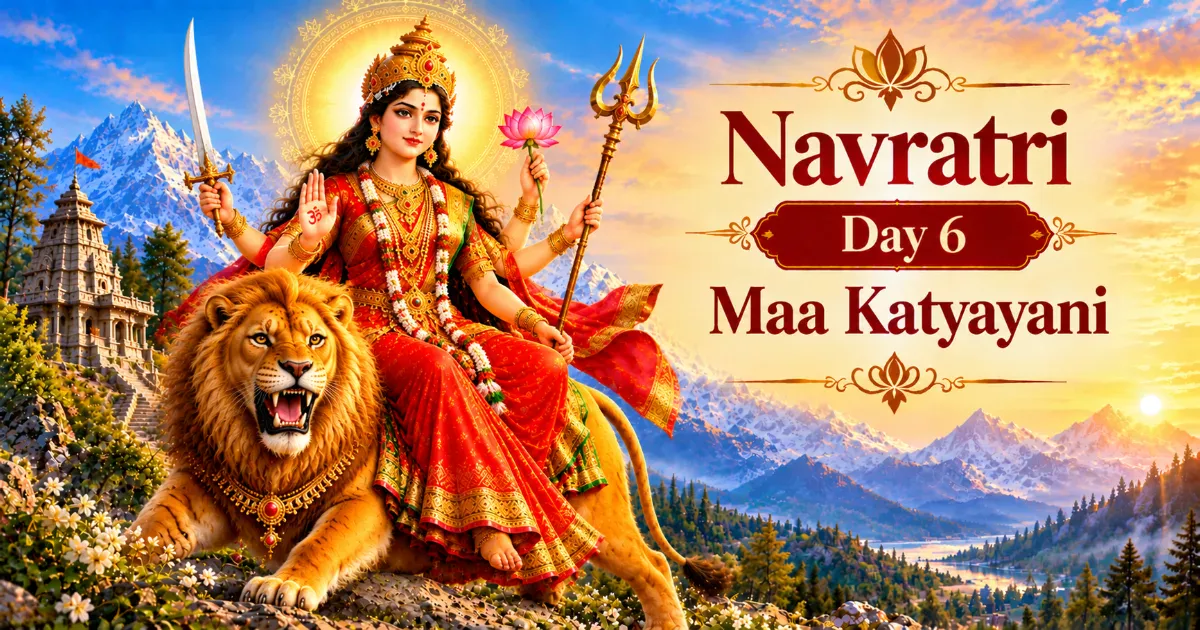
Maa Katyayani is often depicted with four or more arms, riding a lion and carrying divine weapons. Her powerful appearance represents her readiness to confront negative forces, while her compassionate nature reflects her role as a protector of her devotees.
For millions of people, worshipping Maa Katyayani during Navratri is an opportunity to seek strength, overcome personal difficulties, develop self-confidence, and renew their commitment to truth and justice.
The Story and Origin of Maa Katyayani
According to Hindu tradition, Maa Katyayani received her name from Sage Katyayana, a revered sage who performed intense penance to seek the Goddess's blessings. In a widely known account, the Goddess manifested in his family and came to be known as Katyayani.
Her appearance is also associated with the battle against the buffalo demon Mahishasura. According to the Devi Mahatmya tradition, Mahishasura had become powerful and threatened the gods and the cosmic order. The divine powers of the gods united to manifest Goddess Durga, who confronted the demon and ultimately defeated him.
In traditions that specifically describe Maa Katyayani's role, she is associated with the fierce battle against Mahishasura and the restoration of righteousness. Her victory represents the triumph of divine power over arrogance, cruelty, and destructive ambition.
This story has remained an important part of Hindu religious imagination because it teaches that evil may appear powerful for a time, but strength without righteousness cannot sustain itself forever. The Goddess's victory symbolizes the restoration of harmony and the protection of those who cannot defend themselves.
The Divine Appearance and Symbolism of Maa Katyayani
Maa Katyayani is commonly portrayed as a radiant goddess with a majestic appearance. Her traditional imagery contains several meaningful symbols.
1. The Lion: Courage and Fearlessness
Maa Katyayani is frequently shown riding a lion. The lion represents courage, authority, confidence, and the ability to face danger without surrendering to fear.
Its symbolism also offers a personal lesson. Every person faces challenges, whether in family life, education, work, relationships, or society. The lion reminds devotees to meet difficulties with determination rather than allowing fear to control their decisions.
2. Divine Weapons: The Power to Defend Righteousness
In many depictions, Maa Katyayani holds weapons such as a sword and a trident, while her other hands may display gestures of blessing or protection. The precise arrangement varies across artistic and devotional traditions.
These weapons represent the power to confront injustice, overcome harmful tendencies, and protect the vulnerable. They can also be understood symbolically as the wisdom and discipline needed to cut through confusion, anger, greed, and dishonesty.
The Goddess's strength is not a message encouraging unnecessary conflict. Rather, it reminds people that peace sometimes requires firm boundaries and the courage to resist wrongdoing.
3. Her Radiant Presence: Confidence and Determination
Maa Katyayani's powerful appearance symbolizes confidence, determination, and an unwavering commitment to righteousness. Her image encourages devotees to recognize their own capacity to act responsibly and face difficult situations with a clear mind.
Her presence also teaches that strength and compassion can exist together. A person can be firm without being cruel, confident without being arrogant, and courageous without becoming reckless.
Why Is Maa Katyayani Worshipped on the Sixth Day of Navratri?
The sixteenth? No, the sixth day of Navratri is traditionally associated with Maa Katyayani in the Navdurga sequence. Devotees worship her to seek courage, protection, confidence, and the strength to overcome obstacles.
Her worship is especially meaningful for people who are facing uncertainty, struggling to make difficult decisions, or seeking the determination to pursue a righteous goal.
In Hindu devotional traditions, Maa Katyayani is also associated with marriage and the desire for a suitable life partner. A well-known story in the Bhagavata Purana describes the young unmarried gopis of Vrindavan worshipping Katyayani to pray for Krishna as their husband. This tradition is especially significant in some regions and devotional communities.
The story highlights the role of sincere devotion, faith, and a heartfelt spiritual aspiration. It should not be understood as a guarantee that a particular prayer will produce a specific result. Rather, it illustrates how devotion can give people hope, direction, and a deeper connection with the divine.
Maa Katyayani Mantra
One of the mantras commonly recited while worshipping Maa Katyayani is:
ॐ देवी कात्यायन्यै नमः॥
Transliteration: Om Devi Katyayanyai Namah.
Meaning: Salutations to Goddess Katyayani.
Devotees may chant this mantra during morning prayers, meditation, or Navratri worship. Many people believe that repeating a sacred mantra with sincerity helps calm the mind, strengthen devotion, and encourage a more disciplined approach to life.
The value of prayer lies not only in the words being recited but also in the sincerity, attention, and good intentions with which they are offered.
How Is Maa Katyayani Worshipped on Navratri Day 6?
Worship practices differ across regions, families, and Hindu traditions. However, many devotees observe the sixth day with prayer, offerings, devotional songs, and the recitation of sacred texts.
1. Begin the Day with Cleanliness and Prayer
Devotees often wake early, bathe, and prepare a clean space for worship. An image or idol of Maa Katyayani may be placed on the prayer altar.
The worshipper begins with a prayer asking for wisdom, courage, and protection from harmful thoughts and actions.
2. Offer Flowers and Traditional Prasad
Red flowers are commonly offered to Maa Katyayani in many devotional practices. Fruits, sweets, and other traditional offerings may also be presented according to family customs.
Offerings are an expression of gratitude and devotion. Their significance comes from the spirit in which they are offered rather than their monetary value.
3. Chant the Katyayani Mantra
Devotees may recite the mantra dedicated to Maa Katyayani or listen to devotional hymns in her praise. Quiet chanting and meditation can provide an opportunity to reflect on personal responsibilities and the courage required to fulfil them.
4. Read or Listen to Sacred Stories
Reading stories about Goddess Durga and her victories over destructive forces helps devotees understand the moral and spiritual significance of the festival.
These stories can encourage reflection on how to respond to injustice, control harmful impulses, and contribute positively to one's family and community.
5. Practise Kindness and Responsible Action
Worship can also extend beyond the prayer room. Helping someone in need, speaking honestly, protecting a vulnerable person, or standing against unfair treatment can become meaningful expressions of the values associated with Maa Katyayani.
The exact rituals followed may vary. Devotees should follow their family or community traditions according to their beliefs and circumstances.
The Spiritual Lessons of Maa Katyayani
The significance of Maa Katyayani extends beyond religious rituals. Her story offers practical lessons that remain relevant in everyday life.
Courage Means Doing What Is Right
Courage is not always dramatic. Sometimes it means admitting a mistake, speaking honestly, defending someone who is being mistreated, or refusing to participate in something dishonest.
Maa Katyayani inspires devotees to choose integrity even when doing so requires effort or sacrifice.
Strength Must Be Guided by Wisdom
Power alone does not make a person great. Strength becomes meaningful when it is guided by wisdom, responsibility, and concern for others.
The Goddess's battle against evil can remind us that anger and aggression are not substitutes for justice. Difficult situations require thoughtful decisions, proportionate responses, and a clear understanding of what is right.
Stand Against Injustice
Maa Katyayani is associated with the destruction of harmful forces and the protection of righteousness. Her symbolism encourages people not to remain indifferent when others face unfair treatment.
Standing against injustice does not always require confrontation. It may involve supporting a victim, reporting wrongdoing through appropriate channels, offering help, or refusing to spread harmful rumours.
Believe in Your Inner Strength
Many people doubt themselves when facing examinations, career decisions, financial difficulties, family responsibilities, or personal setbacks.
The image of Maa Katyayani reminds devotees that difficulties do not automatically mean defeat. With preparation, patience, support, and determination, people can find ways to move forward.
Combine Confidence with Compassion
True strength does not require humiliating others. A courageous person can protect personal boundaries while treating others with dignity.
Maa Katyayani's role as both a powerful warrior and a divine protector reflects this balance between firmness and compassion.
Maa Katyayani and the Importance of Women's Strength
Maa Katyayani holds special significance as a powerful female form of the divine. Her image challenges the idea that women must always be passive or dependent. She represents leadership, confidence, protection, and the ability to confront injustice.
Her symbolism can inspire respect for women's choices, education, independence, safety, and participation in public life. It also reminds families and communities that supporting women means creating environments in which they can develop their abilities and make decisions without fear.
Celebrating the Goddess's strength becomes more meaningful when these values are reflected in everyday behaviour. Respect, equal opportunity, personal dignity, and freedom from violence are important expressions of the principles associated with her worship.
The Relevance of Maa Katyayani in Modern Life
Although Navratri is rooted in ancient religious traditions, the qualities represented by Maa Katyayani remain relevant today.
Students may draw inspiration from her courage when preparing for examinations or facing competition. Professionals may find encouragement in her symbolism when making difficult ethical decisions. Parents and caregivers may reflect on the importance of protecting children and teaching them the difference between confidence and aggression.
Communities can also learn from her story. When people work together to address discrimination, dishonesty, exploitation, or violence, they contribute to a society built on greater fairness and mutual respect.
The modern meaning of Maa Katyayani is not limited to defeating an external enemy. It can also involve confronting harmful habits within ourselves, such as jealousy, dishonesty, prejudice, impatience, and uncontrolled anger.
Recognizing these tendencies requires honesty. Changing them requires discipline. The Goddess's symbolism encourages people to approach both tasks with courage.
Conclusion: May Maa Katyayani Bless You with Courage and Wisdom
Maa Katyayani, the sixth form of Goddess Durga, represents courage, determination, protection, and the victory of righteousness over destructive forces. Her story reminds devotees that strength becomes truly meaningful when it serves a just and compassionate purpose.
As we celebrate the sixth day of Navratri, we can reflect on the values she represents. We can choose honesty over deception, courage over helplessness, responsibility over indifference, and compassion over cruelty.
May Maa Katyayani inspire us to face challenges with confidence, make wise decisions, protect those in need, and stand firmly for what is right.
Jai Maa Katyayani!
#ShubhoMahalaya #MaaDurga #DurgaPuja2026 #DivineFeminine #Shakti #CulturesOfIndia

