Understanding the History, Religious Significance, Traditions and Cultural Importance of Dhantrayodashi
The Beginning of India's Grand Diwali Celebrations
India is a land of festivals, where every celebration carries stories, beliefs, traditions and values that have been passed down through generations. Among the many festivals celebrated across the country, Diwali holds a special place in the hearts of millions of people. However, the celebrations of Diwali do not begin on the main festival day. They start with Dhanteras, also known as Dhantrayodashi, which marks the beginning of the five-day Diwali festival in many Indian traditions.
Dhanteras is celebrated on the thirteenth lunar day, known as Trayodashi, during the Krishna Paksha of the Hindu month of Kartik. It generally falls two days before Diwali. The word Dhanteras is formed from two Sanskrit-derived words: Dhan, meaning wealth, and Teras, referring to the thirteenth day. The festival is therefore closely associated with wealth, prosperity, health and well-being.
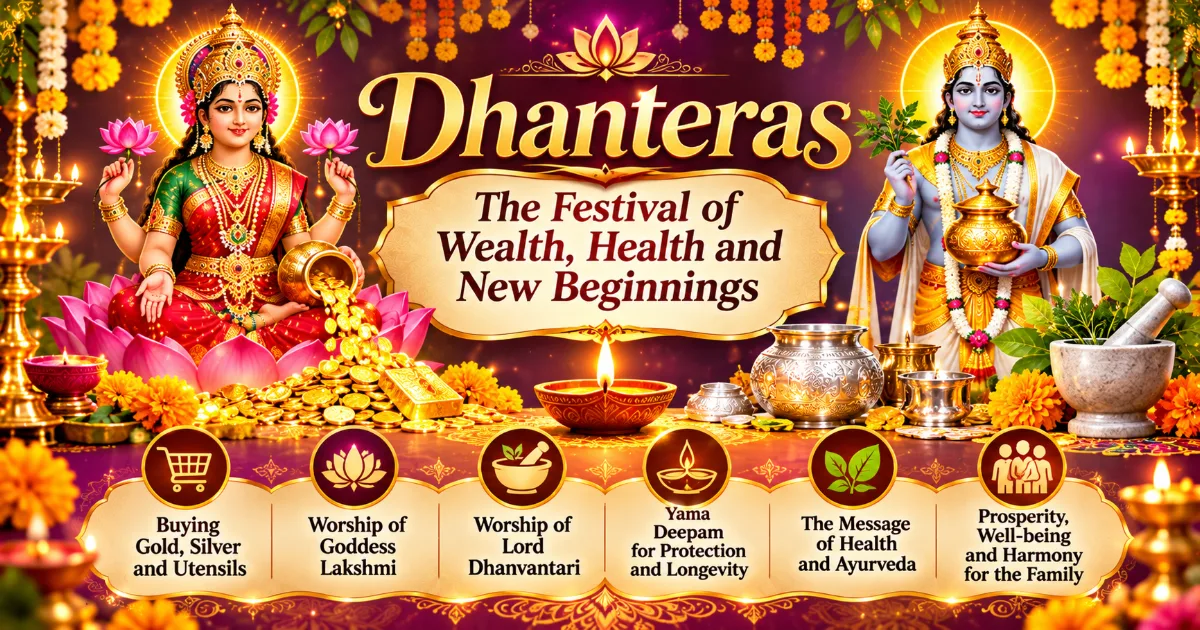
On this day, homes and shops are cleaned and decorated, traditional lamps are lit, prayers are offered to Goddess Lakshmi and Lord Dhanvantari, and many families purchase gold, silver, utensils or other household items. In several regions, people also observe Yama Deepam, a tradition of lighting a lamp in honour of Yama, the deity associated with death.
Continue Reading
Although buying precious metals has become one of the most recognised customs of Dhanteras, the festival has a much deeper meaning. It reminds people that true prosperity is not limited to financial wealth. Good health, happiness, peace, family well-being, knowledge and the ability to live with dignity are equally valuable.
Dhanteras is therefore not merely a shopping occasion. It is a celebration of gratitude, prosperity, health and the hope of beginning a new chapter with positivity.
1. The Meaning and Significance of Dhanteras
Dhanteras is one of the most important occasions in the Hindu festive calendar because it brings together two essential aspects of life: material prosperity and physical well-being.
In Indian traditions, wealth has traditionally been understood in a broader sense than money alone. A prosperous life includes financial stability, good health, supportive relationships, wisdom, peace of mind and the ability to fulfil one's responsibilities.
The association of Dhanteras with Goddess Lakshmi reflects the importance of wealth and abundance. Goddess Lakshmi is worshipped as the divine embodiment of prosperity, fortune and well-being. Families pray for financial stability, success in their work, harmony at home and the ability to use their resources wisely.
The association with Lord Dhanvantari gives the festival another important dimension. Lord Dhanvantari is revered as the divine physician and is associated with Ayurveda, the traditional Indian system of medicine. His worship highlights the importance of health, healing and longevity.
Together, these traditions communicate a valuable message: wealth without health cannot bring complete happiness, and prosperity becomes meaningful when it contributes to the well-being of individuals, families and society.
Dhanteras encourages people to begin the Diwali season by expressing gratitude for what they have and praying for a future filled with health, happiness and prosperity.
2. The Story of Lord Dhanvantari and Samudra Manthan
One of the most important mythological associations of Dhanteras is the appearance of Lord Dhanvantari during Samudra Manthan, the churning of the cosmic ocean.
According to Hindu mythology, the Devas and Asuras once joined forces to churn the ocean of milk in search of Amrit, the divine nectar of immortality. The churning was performed with Mount Mandara serving as the churning rod and the serpent Vasuki serving as the rope. Lord Vishnu supported the mountain in his Kurma, or tortoise, incarnation.
The churning of the ocean produced several extraordinary objects and divine beings. Among the treasures that emerged were Goddess Lakshmi, the divine horse Uchchaihshravas, the celestial elephant Airavata and many other remarkable gifts.
During this cosmic event, Lord Dhanvantari appeared carrying a pot of Amrit. He is revered as the divine physician and is traditionally associated with the origin and preservation of Ayurvedic knowledge.
This story gives Dhanteras its association with health and healing. It reminds people that good health is among life's greatest blessings and that the knowledge of medicine and healing deserves respect.
In many traditions, Dhanvantari is worshipped on Dhanteras, and the day is also observed as Dhanvantari Jayanti. People offer prayers for the health of their families, the well-being of society and the continued development of medical knowledge.
The story of Samudra Manthan also carries a symbolic meaning. The churning represents the struggles and efforts through which valuable things emerge. Just as the Devas and Asuras had to work together to obtain Amrit, meaningful achievements in life often require patience, discipline and sustained effort.
3. Goddess Lakshmi and the Celebration of Wealth
Goddess Lakshmi is one of the central deities worshipped during Dhanteras. She is revered as the goddess of wealth, fortune, abundance and prosperity.
According to Hindu mythology, Goddess Lakshmi emerged from the ocean during Samudra Manthan. Her appearance is celebrated as a symbol of divine abundance, beauty and auspiciousness. She is often depicted seated on a lotus, holding lotus flowers and surrounded by symbols of prosperity.
For many Hindu families, Lakshmi Puja is an essential part of Dhanteras celebrations. Homes are cleaned and decorated, entrances are adorned with rangoli, and lamps are placed around the house. Devotees prepare offerings and perform prayers seeking blessings for prosperity and harmony.
In business communities, Dhanteras holds particular importance. Shopkeepers, traders, entrepreneurs and business owners may worship their accounts, cash boxes, shops and workplaces. Some people begin new financial records or make plans for the coming year.
The worship of Goddess Lakshmi also carries an important lesson about the responsible use of wealth. Prosperity is not simply about accumulating money. It also involves generosity, honesty, discipline and consideration for others.
The festival encourages people to value their earnings, avoid wastefulness, support those in need and use their resources for meaningful purposes.
4. Why Do People Buy Gold, Silver and Utensils on Dhanteras?
One of the most familiar traditions of Dhanteras is purchasing gold, silver, utensils and other household items. Markets across India become lively as shops display precious metals, decorative objects, kitchenware and festive collections.
For many families, buying something new on Dhanteras is considered an auspicious way to welcome prosperity into the home. Gold and silver are traditionally associated with wealth, stability and good fortune. Purchasing these metals may also represent long-term savings and financial security.
The custom of purchasing utensils is equally significant in many households. New kitchen vessels are considered useful additions to the home and can symbolise abundance, nourishment and the ability to provide for the family.
In different regions, people purchase items according to their family traditions, financial circumstances and personal preferences. Some buy gold jewellery or silver coins, while others choose steel utensils, brass vessels, kitchen equipment or practical household necessities.
In recent years, the tradition has expanded to include electronic appliances, vehicles, furniture and other useful products. The underlying idea remains the same: welcoming something new into the household as part of the festive season.
However, the deeper message of Dhanteras is not that everyone must make an expensive purchase. The festival should not create financial pressure. A small utensil, a silver coin, a useful household item or even a symbolic offering can be meaningful when purchased within one's means.
The spirit of the festival lies in gratitude and thoughtful celebration, not in the amount of money spent.
5. Yama Deepam: Lighting a Lamp for Protection and Longevity
Another important tradition associated with Dhanteras is Yama Deepam, also known in some regions as Yamadeepdaan.
According to traditional beliefs, a lamp is lit in honour of Yama, the deity associated with death. The ritual is performed with the intention of seeking protection from untimely death and praying for the longevity and well-being of family members.
In many households, an earthen lamp is placed outside the home, often near the main entrance or in a designated outdoor area. The lamp may be positioned facing south, a direction traditionally associated with Yama.
One popular story connected with this tradition concerns a young prince whose horoscope predicted that he would die from a snakebite on the fourth night after his marriage.
His wife, determined to protect him, gathered gold and silver ornaments and placed them in a heap near the entrance. She lit numerous lamps and kept her husband awake throughout the night by singing songs and telling stories.
When Yama arrived in the form of a serpent, the brightness of the lamps and the heap of ornaments prevented him from entering easily. He remained outside, listening to the wife's songs, and eventually left without harming the prince.
The story is traditionally remembered as an explanation of the protective symbolism associated with lighting lamps on Dhanteras.
Although the story is understood differently across regional traditions, its central message celebrates devotion, courage and the power of love and determination.
Yama Deepam reminds families to value life, express gratitude for the health of their loved ones and pray for their continued well-being.
6. How Dhanteras Is Celebrated Across India
Dhanteras is celebrated across India, but its customs vary according to regional traditions, family practices and local beliefs. The festival brings together religious observances, shopping traditions, community activities and family celebrations.
North India
In many parts of North India, Dhanteras marks the beginning of the Diwali festivities. Homes are thoroughly cleaned, entrances are decorated with rangoli and flowers, and traditional lamps are lit.
People visit jewellery shops, markets and utensil stores to purchase auspicious items. In several households, Lakshmi Puja and prayers to Lord Dhanvantari form an important part of the celebrations.
Yama Deepam is also observed in many families, with lamps lit outside homes in remembrance of Yama.
Maharashtra
In Maharashtra, Dhanteras is observed with prayers for prosperity and well-being. Families may purchase gold, silver, utensils or other household items according to their traditions.
The worship of Lord Dhanvantari is also significant, particularly because of the festival's association with health and Ayurveda.
The celebrations are often accompanied by cleaning, decorations, lamps and preparations for the main Diwali festivities.
Gujarat
Gujarat celebrates Dhanteras with enthusiasm, especially among business and trading communities. Many people consider the day favourable for purchasing precious metals and beginning financial activities.
Shops and business establishments are decorated, and prayers are offered for prosperity and success. The festival also marks the beginning of preparations for Gujarati New Year celebrations, which follow Diwali.
Rajasthan
In Rajasthan, Dhanteras is celebrated with traditional enthusiasm. Families clean and decorate their homes, purchase new household goods and offer prayers for prosperity.
Gold, silver, traditional ornaments and utensils are commonly purchased as part of the festivities. Markets become especially lively during this period.
South India
In southern India, Dhanteras is observed in different ways depending on local customs. In some communities, the day is associated with Dhanvantari and prayers for health. Families may also clean their homes, light lamps and make preparations for the upcoming Diwali celebrations.
In several southern traditions, Ayudha Puja and associated observances around Navratri and Vijayadashami are also important. The broader festive season reflects respect for knowledge, work, tools and prosperity.
These regional variations demonstrate that Indian festivals are not always celebrated through identical rituals. Each community brings its own history, beliefs and customs to the celebration while sharing the broader spirit of devotion and well-being.
7. Dhanteras and Ayurveda: The Importance of Health
One of the most meaningful aspects of Dhanteras is its connection with Ayurveda through Lord Dhanvantari.
Ayurveda is an ancient Indian system of medicine that focuses on maintaining health, preventing illness and supporting the balance of the body and mind. Its traditional approach places importance on diet, lifestyle, daily routines, seasonal practices and individual well-being.
The worship of Lord Dhanvantari on Dhanteras provides an opportunity to reflect on the importance of health in everyday life.
In modern society, people often associate prosperity with financial achievements, property, possessions and professional success. While these things can contribute to stability, they cannot replace physical and mental well-being.
A person may have considerable wealth but still experience difficulties if health is neglected. Similarly, good health gives people the strength and opportunity to work, learn, support their families and enjoy life.
Dhanteras reminds us to take health seriously. It encourages us to appreciate doctors, healthcare workers, caregivers, researchers and everyone involved in the service of healing.
The festival also offers a good opportunity for families to reflect on healthy habits, balanced eating, physical activity and the importance of seeking appropriate medical care when needed.
Its association with Ayurveda is a cultural reminder that health deserves the same attention and respect as wealth.
8. Traditional Food and Preparations During Dhanteras
Food plays an important role in Indian festivals, and Dhanteras is no exception. Families prepare sweets, savoury dishes and traditional meals as part of the Diwali celebrations.
The specific dishes vary across regions and households. Some families prepare laddoos, kheer, halwa, barfi and other sweets. Others make regional snacks and special meals that are shared with family members and guests.
In many homes, the kitchen is cleaned and organised before the festival. New utensils purchased for Dhanteras may be used during the festive season or kept for special occasions.
Food offerings may also be prepared for Lakshmi Puja and other religious observances according to family traditions.
Sharing sweets and meals strengthens family relationships and creates an atmosphere of happiness and togetherness.
The tradition of preparing food also connects the festival with gratitude for nourishment. It reminds people that prosperity includes the ability to feed their families, share with others and appreciate the everyday resources that support life.
9. The Role of Markets, Businesses and Local Communities
Dhanteras is not only a household festival. It also has a significant social and economic impact across India.
Jewellery shops, utensil stores, clothing businesses, electronic retailers, local markets and small traders experience increased activity during the festive period.
For many shopkeepers and artisans, Dhanteras and the wider Diwali season represent an important time of the year. Families purchase gifts, household necessities, decorative items and traditional products.
Local craftspeople and small businesses also contribute to the festive atmosphere by producing earthen lamps, decorative items, handmade ornaments, rangoli materials and traditional goods.
The festival therefore provides an opportunity to recognise the importance of local businesses, artisans and workers who help preserve India's cultural traditions.
Consumers can make their celebrations more meaningful by supporting local sellers, choosing products thoughtfully and avoiding unnecessary purchases.
The economic activity associated with Dhanteras demonstrates how religious and cultural festivals can also strengthen community relationships and support livelihoods.
10. Dhanteras in Modern India
The way people celebrate Dhanteras has evolved with changing lifestyles, technology and economic conditions. Traditional customs continue to be followed, but modern celebrations include several new practices.
Many people now purchase gold and silver online, invest in digital gold or explore financial products during the festive season. Others buy electronic devices, vehicles, household appliances and home improvement products.
Businesses use the occasion to introduce festive offers and special collections. Social media has also become an important platform for sharing greetings, photographs, family celebrations and festival messages.
Despite these changes, the central ideas of Dhanteras remain relevant.
People continue to seek financial stability, good health, family happiness and positive beginnings. The festival provides a moment to reflect on these aspirations and recognise the importance of balancing material progress with personal well-being.
Modern celebrations can also become more responsible by reducing unnecessary waste, choosing locally made products, avoiding excessive spending and using resources carefully.
The true meaning of prosperity should not be measured only by the things a person owns. It should also be reflected in how they live, how they treat others and how they contribute to society.
11. Lessons We Can Learn from Dhanteras
Dhanteras offers several valuable lessons that remain relevant beyond the festival itself.
Health is true wealth: The worship of Lord Dhanvantari reminds us that good health is one of life's most precious blessings. Financial success has limited meaning when physical and mental well-being are ignored.
Prosperity comes with responsibility: Goddess Lakshmi represents abundance, but wealth should be earned honestly and used thoughtfully. Generosity and responsible financial habits are important parts of a prosperous life.
Gratitude brings contentment: The festival encourages people to appreciate their homes, families, work, health and the resources available to them.
New beginnings require preparation: Cleaning homes, decorating entrances and purchasing useful items symbolise readiness to welcome a new phase of life.
Traditions connect generations: Family rituals, prayers, stories and shared celebrations help younger generations understand and preserve cultural heritage.
Celebration should be responsible: A meaningful festival does not require unnecessary expenditure. People can celebrate according to their financial circumstances while respecting the environment and supporting local communities.
These lessons show that Dhanteras is not only about welcoming wealth. It is also about developing a balanced and thoughtful approach to life.
12. How Families Can Celebrate Dhanteras Meaningfully
Families can make Dhanteras meaningful by combining traditional practices with simple actions that encourage gratitude and togetherness.
Begin by cleaning and organising the home. Decorate the entrance with rangoli, flowers and traditional lamps. If you follow the religious customs, offer prayers to Goddess Lakshmi and Lord Dhanvantari according to your family traditions.
Purchase something useful or auspicious within your budget, without feeling pressured to spend beyond your means. The value of the celebration lies in the intention behind the purchase rather than its price.
Families can also discuss the importance of health, financial responsibility and helping others. Parents can explain the stories of Goddess Lakshmi and Lord Dhanvantari to children, helping them understand the cultural and spiritual meaning of the festival.
Lighting a lamp in remembrance of Yama, sharing sweets with neighbours, supporting local artisans and helping people in need are other ways to make the occasion meaningful.
Most importantly, use the festival as an opportunity to spend time with loved ones and appreciate the blessings that are often taken for granted.
Conclusion: True Prosperity Is a Balance of Wealth, Health and Happiness
Dhanteras marks the beginning of India's beautiful Diwali celebrations. Through the worship of Goddess Lakshmi and Lord Dhanvantari, the festival brings together the values of wealth, health, gratitude and well-being.
The traditions of purchasing precious metals, lighting lamps, decorating homes and offering prayers reflect the hope of welcoming prosperity into life. The stories of Samudra Manthan and Yama Deepam add deeper spiritual meaning to the occasion.
However, the greatest lesson of Dhanteras is that prosperity cannot be measured by money or possessions alone. A truly prosperous life is one in which financial stability exists alongside good health, peaceful relationships, wisdom, kindness and happiness.
As we celebrate Dhanteras, let us remember to value our health, respect our work, use our wealth responsibly and share our happiness with others.
May Goddess Lakshmi bless every home with prosperity, may Lord Dhanvantari bless everyone with good health, and may this festive season bring peace, happiness and new opportunities.
Happy Dhanteras! Shubh Dhanteras! May your life be filled with Dhan, Arogya, Sukh and Samriddhi.
#Dhanteras #Dhantrayodashi #Diwali #Deepavali #GoddessLakshmi