The Day Before Diwali
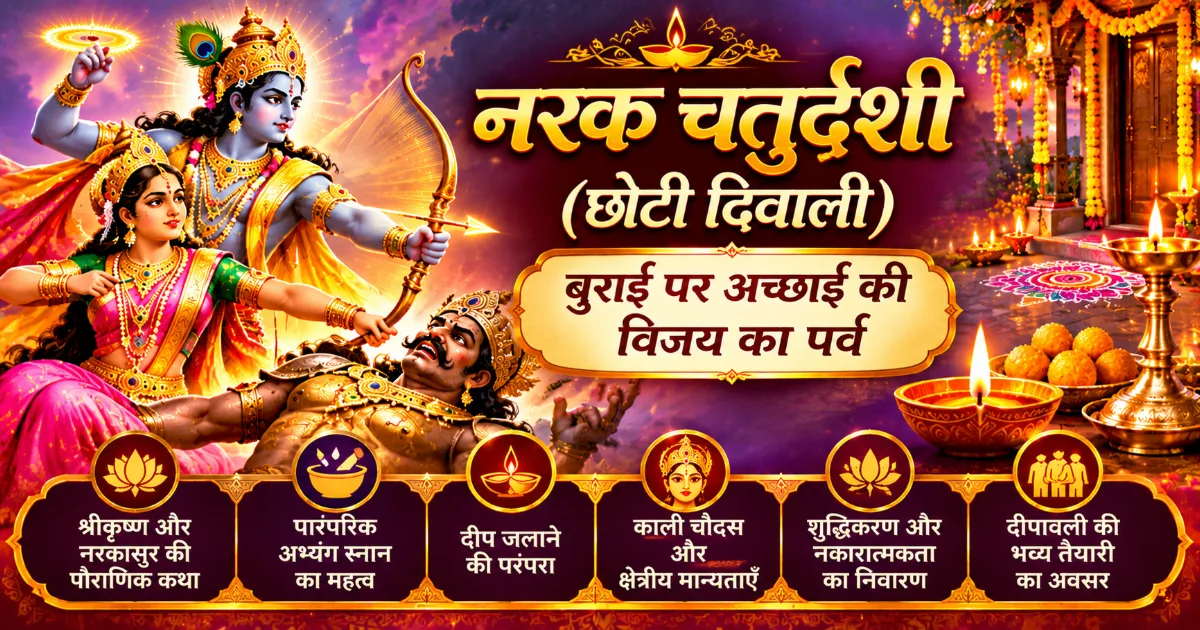
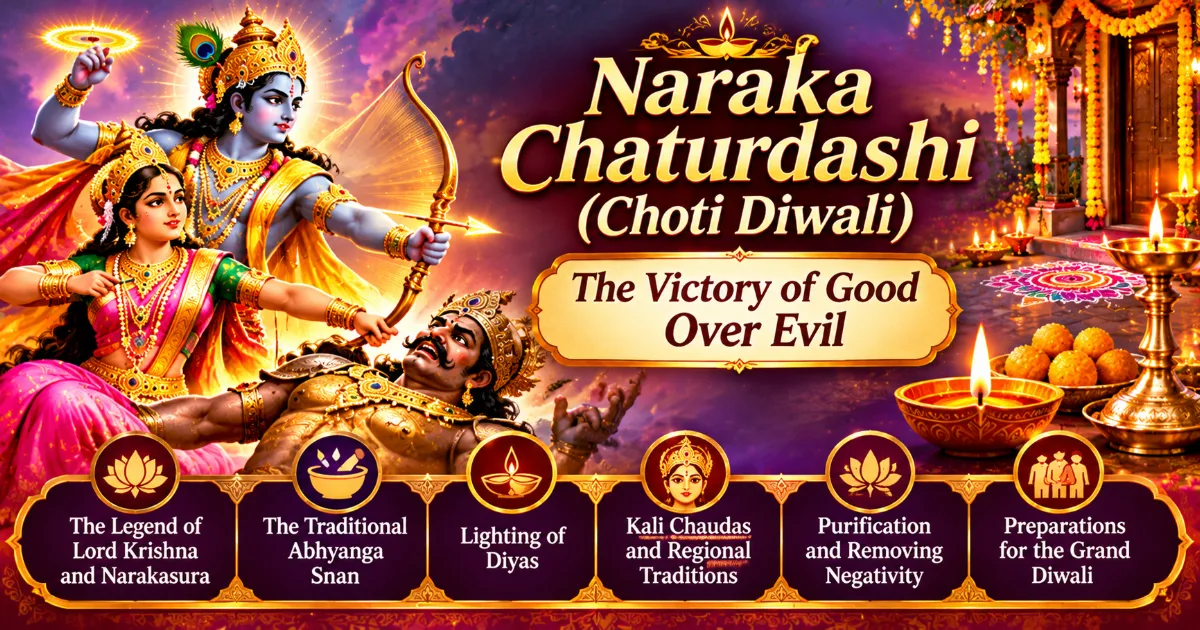
Naraka Chaturdashi, popularly known as Choti Diwali, is an important Hindu festival celebrated on the fourteenth day of Krishna Paksha in the Hindu month of Kartik. It falls one day before the main celebration of Diwali and forms an essential part of the five-day Deepavali festival. The day is associated with the victory of Lord Krishna over the demon king Narakasura and symbolises the triumph of righteousness over evil, knowledge over ignorance, and light over darkness.
Although the festival is commonly called Choti Diwali in many parts of India, its religious significance extends far beyond being a smaller celebration before Diwali. It carries stories of courage, divine protection, liberation, purification, and the restoration of peace. Homes are cleaned and decorated, oil lamps are lit, people wake up early for traditional baths, and families prepare for the grand celebration of Deepavali.
The customs of Naraka Chaturdashi differ across regions. In some places, the day is celebrated as Kali Chaudas, while in others it is known as Roop Chaudas or Naraka Nivaran Chaturdashi. Each regional tradition adds a distinct cultural meaning to the festival, but the central message remains the same: evil must be confronted, darkness must be removed, and goodness must be allowed to flourish.
Continue Reading
The Meaning and Religious Significance of Naraka Chaturdashi
The word Naraka refers to suffering or the realm of punishment, while Chaturdashi means the fourteenth day of the lunar fortnight. Naraka Chaturdashi is traditionally understood as the day associated with the destruction of Narakasura, a powerful demon whose actions had brought suffering to many.
The festival reminds devotees that arrogance, cruelty, greed, and misuse of power eventually lead to destruction. Narakasura possessed immense strength, but he used his power to trouble others. His defeat represents the restoration of justice and the protection of innocent people.
The celebration also carries a personal message. Narakasura can be understood symbolically as the negative qualities that exist within human beings. Anger, jealousy, selfishness, hatred, pride, and ignorance can become obstacles to a peaceful life. Just as the defeat of Narakasura brought relief to the world, overcoming these qualities can bring clarity and harmony into our own lives.
For this reason, Naraka Chaturdashi is not only a celebration of an ancient victory but also an occasion for self-reflection and inner purification.
The Legend of Lord Krishna and Narakasura
One of the most widely remembered stories associated with Naraka Chaturdashi is the victory of Lord Krishna over Narakasura.
According to Hindu mythology, Narakasura was a powerful demon king who ruled the kingdom of Pragjyotishapura, traditionally associated with the region of present-day Assam. He was believed to be the son of Bhudevi, the Earth Goddess, and Varaha, an incarnation of Lord Vishnu, in certain traditional accounts.
Narakasura initially possessed great strength and authority. However, as his power increased, he became arrogant and cruel. He began disturbing sages, defeating powerful rulers, and troubling celestial beings. His actions created fear and suffering across different realms.
One of the most troubling aspects of his rule was the imprisonment of many women. Traditional accounts describe that he had captured thousands of women and kept them confined in his palace. He also seized valuable possessions, including the divine earrings of Aditi, the mother of the gods.
Unable to tolerate his oppression, the celestial beings approached Lord Krishna for help. Krishna decided to confront Narakasura and restore peace.
The Battle Between Lord Krishna and Narakasura
According to popular versions of the legend, Lord Krishna travelled to Narakasura's kingdom accompanied by his wife Satyabhama. A fierce battle followed between Krishna and the demon king.
Narakasura had built strong defences around his kingdom and was protected by powerful warriors. Krishna overcame these obstacles and fought against the demon's forces. During the battle, Satyabhama also played an important role.
In one widely known version of the story, Narakasura possessed a boon that he could be killed only by his mother, Bhudevi. Satyabhama is regarded in this tradition as an incarnation or manifestation of Bhudevi. When Krishna appeared to be injured during the battle, Satyabhama took up the fight and struck Narakasura, bringing an end to his rule.
Other traditional tellings emphasise Krishna's divine power and describe his role in defeating the demon. The details vary across religious texts and regional traditions, but the central message is consistent: Narakasura's tyranny ended, and those who had suffered under his rule were liberated.
The captured women were freed, the possessions taken by the demon were restored, and peace returned to the kingdom.
The day of this victory came to be commemorated as Naraka Chaturdashi.
Why Is Naraka Chaturdashi Celebrated Before Diwali?
Naraka Chaturdashi is observed immediately before the main day of Diwali because the two celebrations are closely connected through the themes of victory, liberation, and the arrival of light.
The defeat of Narakasura represents the removal of oppression and darkness. Diwali, celebrated the following day in many Hindu traditions, symbolises the victory of light, prosperity, knowledge, and righteousness.
The sequence creates a meaningful progression. Naraka Chaturdashi reminds people that negative forces must be overcome, while Diwali celebrates the happiness and renewal that follow.
In many households, preparations for Diwali are already underway on Naraka Chaturdashi. People complete cleaning, decorate entrances, arrange lamps, prepare sweets, and organise items for Lakshmi Puja. The festival therefore acts as both a religious observance and a cultural preparation for the main celebration.
The Tradition of Early Morning Abhyanga Snan
One of the most important customs of Naraka Chaturdashi is Abhyanga Snan, a traditional bath performed early in the morning before sunrise.
The ritual usually involves applying oil to the body, allowing it to remain for some time, and then bathing with water. In several traditions, people use fragrant oils, herbal preparations, and natural bathing ingredients.
The bath is associated with physical cleanliness, purification, and the removal of negativity. It is traditionally believed that observing Abhyanga Snan on Naraka Chaturdashi helps devotees receive blessings and protection from suffering.
In Maharashtra and parts of western India, the ritual is especially significant. Families often wake up before dawn, apply fragrant oil and a traditional herbal preparation called ubtan, and take a ceremonial bath. Children and adults participate together, making it an important family tradition.
In some households, the ritual is accompanied by the application of a symbolic bitter ingredient, such as karit, which represents the destruction of Narakasura and the removal of bitterness from life.
The practice is not simply about physical cleanliness. It encourages people to begin the festival with discipline, purity, and a positive state of mind.
The Significance of Lighting Diyas
Lighting oil lamps is another important part of Naraka Chaturdashi. Small earthen lamps are placed at entrances, balconies, courtyards, windows, and around the home.
The diya represents the victory of light over darkness. Its small flame carries a powerful symbolic meaning: even a little light can remove darkness from a large space.
On Naraka Chaturdashi, lamps are often lit to remember the defeat of evil and to welcome positivity into the household. The practice also creates a connection with the main Diwali celebration, when homes and streets are illuminated with rows of lamps.
Traditional clay diyas are especially meaningful because they reflect India's long-standing craft heritage. Local potters prepare thousands of lamps for the festival, and purchasing them supports traditional artisans and small businesses.
Lighting diyas can also become a moment of family togetherness. Children learn how to arrange lamps safely, elders explain the stories behind the rituals, and families decorate their homes together.
Naraka Chaturdashi as Kali Chaudas
In Gujarat and certain parts of western India, Naraka Chaturdashi is widely observed as Kali Chaudas.
The word Kali is associated with Goddess Kali, while Chaudas refers to the fourteenth lunar day. The observance is connected with the worship of Goddess Kali and the belief that divine power protects devotees from negative forces.
Some communities perform special prayers and rituals seeking protection from evil, fear, and harmful influences. Traditional practices may include lighting lamps, visiting temples, and offering prayers.
Kali Chaudas has its own regional identity, and its customs may differ from the celebrations associated with Naraka Chaturdashi elsewhere in India.
The broader message remains connected to the victory of divine power over destructive forces. Goddess Kali represents the strength required to destroy evil and protect righteousness.
Roop Chaudas: The Festival of Beauty and Purification
In several parts of India, Naraka Chaturdashi is also associated with Roop Chaudas.
The word Roop means beauty or appearance. The day is traditionally connected with personal care, cleansing, and the preparation of the body and mind for Diwali.
People may apply herbal pastes, fragrant oils, and natural beauty preparations before taking a bath. These practices are often linked with traditional ideas of wellness and purification.
Roop Chaudas also offers an opportunity to reflect on the meaning of beauty. Physical appearance is only one aspect of a person's identity. Kindness, honesty, compassion, humility, and good conduct are equally important.
The day encourages people to move beyond external decoration and pay attention to inner qualities. A beautiful home becomes more meaningful when it is filled with peace, respect, and affection.
Regional Celebrations Across India
Naraka Chaturdashi is celebrated throughout India, but the rituals and local names vary from one region to another.
Maharashtra
Maharashtra observes Naraka Chaturdashi with enthusiasm and distinctive family customs. Many households begin the day before sunrise with Abhyanga Snan. Family members apply fragrant oil and ubtan before taking a ceremonial bath.
Traditional snacks and sweets are prepared, and families often wear new clothes after completing the morning rituals. In some households, the symbolic ritual involving karit represents the defeat of Narakasura.
The celebration is an important part of the Diwali festivities in Marathi households.
Gujarat
In Gujarat, Naraka Chaturdashi is commonly known as Kali Chaudas. Devotees may worship Goddess Kali and perform traditional rituals seeking protection from negative influences.
The day is also connected with preparations for Diwali and the Gujarati New Year, which follows in the festive calendar. Markets become busy, homes are decorated, and families prepare sweets and traditional foods.
Goa
In Goa, Naraka Chaturdashi is celebrated through the dramatic tradition of Narakasura effigy burning.
Large effigies representing Narakasura are prepared by local groups and displayed in neighbourhoods. On the night before Diwali or according to local celebration schedules, these effigies are burned to symbolise the destruction of evil.
The tradition is especially popular among young people and community groups. Competitions may be organised to recognise creatively designed effigies.
The celebration combines mythology, artistic expression, community participation, and festive excitement.
Karnataka
In Karnataka, Naraka Chaturdashi is an important part of the Deepavali celebrations. Many families observe an early morning oil bath and wear new clothes.
Traditional sweets and savoury dishes are prepared, and homes are decorated with lamps and colourful rangoli. In several households, prayers and family gatherings mark the beginning of the festival.
Tamil Nadu
In Tamil Nadu, Deepavali celebrations are strongly associated with the story of Narakasura's defeat. The day is often celebrated with an early morning oil bath, new clothes, traditional sweets, and prayers.
Families prepare special food items and exchange greetings. Children often look forward to festive treats and the excitement of celebrating with relatives.
The observance reflects the importance of family customs and the preservation of traditional practices.
Andhra Pradesh and Telangana
In Andhra Pradesh and Telangana, Naraka Chaturdashi forms part of the wider Deepavali celebrations. Families may observe early morning baths, decorate their homes, prepare festive dishes, and light lamps.
Traditional sweets and savoury snacks are shared among family members and neighbours. In many households, the rituals are passed from one generation to another.
North India
In several parts of North India, Naraka Chaturdashi is celebrated as Choti Diwali. Homes are cleaned and decorated, lamps are lit, and families prepare for Lakshmi Puja on the following day.
The festival is also connected with the broader Diwali narrative of removing darkness and welcoming prosperity. The scale of celebration may vary, but the day remains an important part of the festive calendar.
Traditional Food and Festive Preparations
Food is an essential part of Indian festivals, and Naraka Chaturdashi is no exception.
Families prepare a variety of sweets and savoury dishes according to their regional traditions. These may include laddoos, chakli, karanji, shankarpali, murukku, mixture, halwa, and other homemade delicacies.
In Maharashtra, families often prepare an assortment of Diwali faral, which includes both sweet and savoury snacks. In South India, traditional sweets and snacks are made and shared with relatives. In other regions, local festive foods form an important part of the celebration.
The preparation of food is often a family activity. Older members teach younger generations how to prepare traditional recipes, while children participate in simpler tasks. These shared moments preserve culinary heritage and strengthen family relationships.
Offering food during prayers and sharing it with neighbours also reflects the spirit of generosity associated with Indian festivals.
The Cultural Importance of Naraka Chaturdashi
Naraka Chaturdashi demonstrates how mythology, religious beliefs, family traditions, and regional customs come together in Indian culture.
The story of Narakasura's defeat is remembered through prayers, symbolic rituals, traditional bathing practices, lamps, and community celebrations. These customs help preserve cultural knowledge and provide opportunities for younger generations to understand the stories behind their festivals.
The regional diversity of the festival is particularly significant. Maharashtra's Abhyanga Snan, Goa's Narakasura effigies, Gujarat's Kali Chaudas, and the Deepavali traditions of South India show how a shared religious theme can develop into different cultural expressions.
Festivals also support local economies. Potters, flower sellers, sweet makers, artisans, textile merchants, and small businesses experience increased activity during the festive season. Traditional crafts and regional food preparations receive greater attention.
Celebrating Naraka Chaturdashi therefore contributes not only to religious life but also to the preservation of India's cultural and economic traditions.
Naraka Chaturdashi in Modern India
Modern lifestyles have changed how many families celebrate festivals, but Naraka Chaturdashi continues to hold cultural importance.
People living in cities may have limited time for elaborate rituals because of work, education, and other responsibilities. Some families celebrate through a simple morning bath, prayers, lighting diyas, and preparing traditional food.
For people living away from their hometowns, video calls and online greetings help maintain connections with relatives. Community events, cultural programmes, and local celebrations also provide opportunities to participate in traditional festivities.
Environmental awareness has influenced some modern celebrations as well. Families are choosing clay lamps, reusable decorations, natural rangoli materials, and locally prepared sweets. Some communities also promote safer and more responsible celebrations.
The essential meaning of the festival does not depend on the size of the celebration. Even a simple observance can preserve its message of courage, purification, and the victory of goodness.
Lessons We Can Learn from Naraka Chaturdashi
Naraka Chaturdashi offers several meaningful lessons that remain relevant in everyday life.
The first lesson is that power must be used responsibly. Narakasura's strength became destructive because he allowed arrogance and cruelty to control his actions. True strength should protect others rather than create fear.
The second lesson is that evil should not be accepted simply because it appears powerful. The legend reminds us that injustice can be challenged and that courage is necessary to protect what is right.
The third lesson is the importance of inner purification. The traditional morning bath symbolises removing negativity and beginning again with a clear mind. It encourages people to examine their behaviour and work towards becoming better human beings.
The fourth lesson is that light can begin with small actions. A diya may be small, but its flame can illuminate a dark room. Similarly, kindness, honesty, patience, and compassion can make a meaningful difference in families and communities.
Finally, the festival reminds us to value freedom and dignity. The liberation of those imprisoned by Narakasura represents the importance of protecting people from oppression and treating every individual with respect.
How Families Can Celebrate Naraka Chaturdashi Meaningfully
Families can celebrate Naraka Chaturdashi by beginning the day with traditional practices and spending time together.
An early morning bath can be observed according to family customs and personal circumstances. Homes can be decorated with rangoli, flowers, and traditional clay diyas. Families can offer prayers and explain the story of Lord Krishna and Narakasura to children.
Preparing traditional sweets and snacks together can make the occasion more memorable. Sharing food with neighbours, relatives, and people in need adds a spirit of generosity to the celebration.
Families can also use the day to reflect on negative habits they wish to overcome. This may include anger, dishonesty, jealousy, impatience, or unnecessary conflict. Making a conscious effort to improve these qualities gives the festival a personal meaning.
It is also important to celebrate responsibly. Lamps should be placed safely, fireworks should be avoided or used with great care, and unnecessary waste should be reduced. Supporting local artisans by purchasing traditional diyas and decorations can make the celebration more meaningful.
Conclusion: Let Goodness Overcome Darkness
Naraka Chaturdashi is much more than the day before Diwali. It is a celebration of courage, liberation, purification, and the victory of righteousness over evil.
The legend of Lord Krishna and Narakasura reminds us that cruelty and arrogance cannot create lasting peace. The traditional oil bath symbolises renewal, while the lighting of diyas represents the removal of darkness from our surroundings and our minds.
Across India, the festival is celebrated through different customs, including Abhyanga Snan, Kali Chaudas, Roop Chaudas, and the burning of Narakasura effigies. These traditions demonstrate the richness and diversity of Indian cultural heritage.
As families prepare for the main celebration of Diwali, Naraka Chaturdashi offers an important opportunity to reflect on the values that make life meaningful. It encourages us to reject negativity, stand against injustice, care for others, and bring light into our homes and communities.
May this Naraka Chaturdashi inspire everyone to overcome inner darkness and welcome peace, happiness, and positivity.
Wishing everyone a very Happy Naraka Chaturdashi and Choti Diwali!
Hashtags
#NarakaChaturdashi #ChotiDiwali #KaliChaudas #RoopChaudas #Deepavali