In our previous lesson, we explored how banking crises develop, why banks sometimes fail and how financial problems can spread throughout an economy. We learned that modern banking depends heavily on public confidence, responsible lending, sufficient liquidity and effective regulation. But this raises an important question: who helps maintain stability in the banking system, manages the supply of money and influences the cost of borrowing across the economy?
The institution at the centre of this process is the central bank.
Every modern economy needs a monetary authority that helps manage its currency and financial system. Central banks influence interest rates, regulate or supervise parts of the banking system, manage monetary policy and respond to financial instability. Their decisions can affect everything from the interest paid on a home loan to the price of food, the value of a country's currency and the pace of economic growth.
In India, this responsibility is primarily carried out by the Reserve Bank of India, commonly known as the RBI. In the United States, it is handled by the Federal Reserve. In the United Kingdom, it is the Bank of England, while the European Central Bank manages monetary policy for the euro area.
Although these institutions operate under different legal and economic arrangements, they share a central purpose: maintaining monetary and financial stability while supporting the broader objectives established by their respective legal frameworks.
Continue Reading
To understand economics properly, it is important to understand how central banks work, why they exist and how their decisions influence everyday economic activity.
What Is a Central Bank?
A central bank is a public institution responsible for managing important aspects of a country's monetary and financial system. It is different from a commercial bank because its primary purpose is not to maximise profits by accepting deposits from ordinary customers and issuing personal loans.
Instead, a central bank performs functions that support the entire economy. It generally issues or manages the country's currency, conducts monetary policy, holds foreign exchange reserves, supports payment systems and acts as a banker to the government and the banking system.
One of its most important responsibilities is maintaining price stability. This means keeping inflation under control so that money retains a reasonably stable purchasing power over time. When prices rise too rapidly, households lose purchasing power, businesses face uncertainty and long-term economic planning becomes more difficult.
Central banks also work to maintain financial stability. This involves reducing the risk that problems within banks and financial markets will disrupt the wider economy. They may provide emergency liquidity to financial institutions, supervise banks directly or work alongside other regulatory authorities.
A central bank therefore acts as a key institution connecting money, banking, government finance and the wider economy.
Why Do Economies Need Central Banks?
Imagine an economy without a central bank. Different financial institutions would still accept deposits, provide loans and facilitate payments, but there would be no single monetary authority responsible for conducting national monetary policy or performing the full range of central banking functions.
The absence of such an institution could make it more difficult to coordinate monetary policy, manage currency issuance, provide emergency liquidity and maintain confidence during periods of financial stress.
Historically, many countries experienced financial instability before modern central banking systems developed. Banking panics, currency problems and disruptions in payments demonstrated the importance of institutions capable of supporting the financial system during difficult periods.
Central banks emerged in different countries at different times, and their responsibilities evolved as economies became more complex. Today, they play a central role in modern economic management.
Consider what happens when inflation rises sharply. If prices increase faster than wages, households find that their income buys fewer goods and services. Businesses may struggle to plan because the costs of raw materials, wages and financing keep changing. People may also lose confidence in the purchasing power of their savings.
A central bank can respond by tightening monetary policy, usually through higher interest rates and other measures that reduce excessive demand and influence financial conditions.
Now consider the opposite situation. An economy may experience weak demand, falling investment and rising unemployment. A central bank may respond by reducing interest rates or using other supportive measures to encourage borrowing, spending and investment.
Central banks therefore help manage the economic consequences of changing financial conditions. They cannot eliminate every economic problem, but they provide tools that can influence the direction of the economy.
Monetary Policy: The Central Bank's Most Important Tool
Monetary policy refers to the actions taken by a central bank to influence interest rates, credit conditions and the availability of money in the economy.
Its main purpose is generally to maintain price stability, although many central banks also consider employment, economic growth and financial stability within their legal responsibilities.
There are two broad directions of monetary policy: expansionary and contractionary.
Expansionary monetary policy is generally used when economic activity is weak and demand needs support. The central bank may reduce policy interest rates, making borrowing less expensive for banks and potentially for households and businesses. Lower financing costs can encourage consumption, investment and economic activity.
Contractionary monetary policy is generally used when inflation is too high or demand is growing faster than the economy's ability to produce goods and services. The central bank may increase policy interest rates, making borrowing more expensive and encouraging households and businesses to reduce some spending and investment.
These policies influence the economy through several channels. Their effects are not immediate, and the strength of their impact depends on the condition of the financial system, expectations, household behaviour and business confidence.
This is why monetary policy is often described as a process of influencing economic conditions rather than directly controlling every price or financial decision.
How Central Banks Influence Interest Rates
Interest rates are among the most powerful instruments through which central banks influence economic activity.
To understand this, imagine that a central bank increases its policy interest rate. Commercial banks may face higher costs when obtaining certain forms of short-term funding. Market interest rates can also adjust in response to expectations about future monetary policy.
Banks may then increase the interest rates they charge on some loans. Home loans, business loans and other forms of borrowing can become more expensive, depending on their terms and how quickly they respond to changes in market rates.
When borrowing becomes more expensive, some households may postpone purchasing homes or vehicles. Businesses may delay expansion plans because financing machinery, factories or new projects now costs more.
As spending and investment growth slow, demand across the economy may gradually moderate. This can help reduce inflationary pressure.
The reverse can happen when a central bank reduces interest rates. Lower borrowing costs may encourage households to take loans and businesses to invest. Increased spending can support production, employment and economic growth.
However, the relationship is not automatic. Commercial banks consider their own funding costs, liquidity, competition, credit risk and regulatory requirements when setting lending rates. Therefore, a reduction in the central bank's policy rate does not guarantee that every borrower will immediately receive a lower interest rate.
The RBI and Monetary Policy in India
In India, the Reserve Bank of India plays the central role in monetary policy.
One of the key instruments used by the RBI is the policy repo rate. In simple terms, the repo rate is the rate at which eligible banks borrow short-term funds from the RBI against specified securities under the applicable framework.
When the RBI increases the repo rate, it generally signals tighter monetary conditions. This can influence market interest rates and the cost of borrowing throughout the financial system.
When the RBI reduces the repo rate, it generally signals an attempt to make financial conditions more supportive of economic activity.
India follows a flexible inflation-targeting framework. Under this arrangement, the government sets the inflation target in consultation with the RBI, and the Monetary Policy Committee is responsible for deciding the policy rate required to achieve that target.
The committee considers a range of economic indicators, including inflation, economic growth, food prices, global conditions, exchange rates and financial developments.
India's inflation-targeting framework uses the Consumer Price Index as its inflation measure. The framework has a target of 4 per cent inflation, with a tolerance band of 2 per cent to 6 per cent. This means the central bank aims to keep inflation close to 4 per cent over time rather than treating every short-term movement as a reason for immediate policy changes.
The RBI's role is particularly important because India is a large and diverse economy. Food prices, energy costs, monsoon conditions, global commodity markets and domestic demand can all influence inflation.
Monetary policy must therefore account for a wide range of economic factors rather than focusing on a single indicator.
The Central Bank as the Banker's Bank
Commercial banks serve households and businesses, but they also need a financial institution that supports certain aspects of their own operations. That institution is the central bank.
Commercial banks maintain accounts with the central bank and use these accounts for settlement and other banking operations. When money moves between customers of different banks, the final settlement of payments often involves balances held at the central bank.
For example, imagine that a customer of Bank A transfers ₹50,000 to someone who maintains an account with Bank B. The payment may involve adjustments to the deposit liabilities of the two commercial banks and a corresponding settlement between their accounts at the central bank.
This system helps make payments between banks reliable and efficient.
Central banks may also provide short-term liquidity to eligible banks when they face temporary funding difficulties. This function is especially important during periods of financial uncertainty because a bank that cannot access liquidity may struggle to meet its payment obligations.
The central bank's role as the banker's bank therefore supports confidence in the wider financial system.
The Lender of Last Resort
One of the most important responsibilities of a central bank is acting as a lender of last resort.
As we learned in our previous lesson, banks can experience liquidity problems when many depositors withdraw their money or when financial markets stop providing funding. Even a bank with valuable long-term assets may face difficulty meeting immediate payment obligations.
In certain circumstances, the central bank can provide emergency liquidity to prevent temporary financial stress from developing into a wider banking crisis.
This support is important because the failure of one major bank can affect other financial institutions, businesses and households. A sudden disruption in banking services can damage the entire economy.
However, emergency lending must be handled carefully. If banks believe that the central bank will always rescue them regardless of the risks they take, they may become less cautious. This creates a problem known as moral hazard, where protection from the consequences of risky behaviour encourages even greater risk-taking.
The purpose of lender-of-last-resort support is therefore to protect financial stability, not to guarantee the survival of every poorly managed institution.
A central bank must distinguish between a temporary liquidity problem and a deeper solvency problem. An institution that is fundamentally insolvent may require restructuring, resolution or additional capital rather than simply receiving more loans.
Managing Foreign Exchange Reserves
Central banks also play an important role in managing a country's foreign exchange reserves.
Foreign exchange reserves are assets held by a monetary authority, usually including foreign currencies, gold, reserve positions with the International Monetary Fund and other internationally accepted reserve assets.
These reserves help a country meet external financial needs and support confidence in its ability to manage international payments.
For example, if a country experiences pressure on its currency because demand for foreign currency rises sharply, its central bank may use foreign exchange reserves to buy its domestic currency or otherwise manage market conditions, depending on its policy framework.
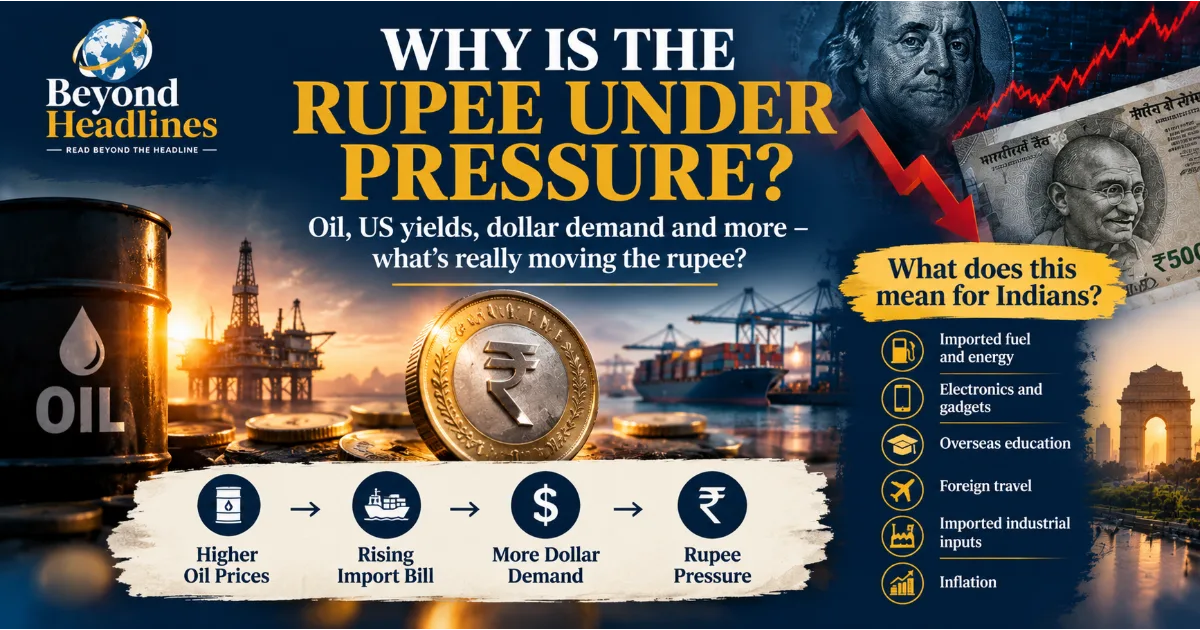
The RBI manages India's foreign exchange reserves and may intervene in the foreign exchange market to reduce excessive volatility.
However, central banks generally cannot permanently control exchange rates without considering underlying economic conditions. A country's currency is influenced by trade, investment flows, interest rate differences, inflation, expectations and global financial conditions.
Foreign exchange reserves provide an important buffer, but they are not unlimited. Their use must be managed carefully because they also serve as protection against external financial shocks.
Currency Issuance and the Supply of Money
Central banks are generally responsible for issuing currency or managing the process through which currency enters circulation.
In India, the RBI issues banknotes, with the exception of the one-rupee note, which is issued by the Government of India. Coins are also issued by the government and circulated through the banking system.
But currency notes and coins are only one part of the money supply. Most money used in modern economies exists as bank deposits rather than physical cash.
As we discussed in our earlier lessons, commercial banks create deposit money when they issue loans. The central bank influences the conditions under which this lending takes place through monetary policy, liquidity arrangements and regulatory frameworks.
It is therefore important to understand that a central bank does not simply print money whenever the economy needs it. The amount of money circulating in the economy is influenced by commercial bank lending, repayments, government transactions, central bank operations and the public's demand for different forms of money.
The relationship between central bank money and commercial bank deposits is more complex than a simple process in which every additional unit of central bank money automatically produces a fixed multiple of new loans.
The Central Bank and Government
Central banks also perform important services for governments.
They may act as the government's banker, maintain government accounts, facilitate payments and support the management of public debt. In many countries, they also serve as advisers on monetary and financial matters.
However, central banks are not simply departments of the government. Many have legally established independence in conducting monetary policy so that decisions about interest rates and monetary stability are not driven entirely by short-term political considerations.
This independence matters because governments may sometimes face incentives to pursue policies that create immediate economic benefits but contribute to higher inflation or financial instability later.
A central bank that can make monetary policy decisions within a clear legal framework is better positioned to focus on longer-term price stability.
At the same time, central bank independence does not mean that the institution operates without accountability. Its responsibilities are defined by law, and its decisions are subject to transparency, reporting and institutional oversight.
Why Central Banks Cannot Solve Every Economic Problem
Central banks have considerable influence over financial conditions, but their powers have limits.
They can influence interest rates and credit conditions, but they cannot directly build roads, improve schools, create skilled workers or solve every structural weakness in an economy.
For example, suppose food inflation rises because poor rainfall reduces agricultural production. Increasing interest rates may reduce overall demand, but it cannot immediately produce more wheat, rice or vegetables. The problem requires improvements in supply, storage, transportation, agricultural productivity or other relevant areas.
Similarly, if unemployment is high because workers lack the skills required by growing industries, reducing interest rates alone may not solve the problem. Education, training, infrastructure and labour market reforms may also be necessary.
This is why monetary policy must work alongside other economic policies. Governments use fiscal policy, including taxation and public spending, to influence economic activity and provide public services. Central banks use monetary policy to influence financial conditions and maintain monetary stability.
Both are important, but they serve different purposes.
The Challenges Facing Central Banks
Central banks constantly face difficult decisions because economic conditions are uncertain and policies often involve trade-offs.
One of the most challenging situations occurs when inflation is high but economic growth is weak. Raising interest rates may help reduce inflation, but it can also make borrowing more expensive and slow investment. Keeping interest rates low may support growth, but it could allow inflationary pressures to persist.
Another challenge is that monetary policy works with delays. A change in interest rates today may take months or longer to influence household spending, business investment and inflation. Central banks must therefore make decisions based not only on current economic conditions but also on expectations about the future.
Global developments create additional difficulties. Changes in oil prices, international interest rates, geopolitical tensions and capital flows can affect domestic inflation and financial stability. Even a well-managed domestic economy cannot completely isolate itself from global economic shocks.
Central banks must also maintain public confidence. If households and businesses stop believing that inflation will remain under control, their expectations can influence wages, prices and spending decisions in ways that make inflation more difficult to manage.
The effectiveness of monetary policy therefore depends not only on the instruments available to a central bank but also on the credibility of its decisions.
Final Thoughts: The Institution Behind Monetary Stability
Central banks are among the most influential institutions in modern economies. They manage important aspects of the monetary system, influence interest rates, support payment infrastructure, maintain foreign exchange reserves and help protect the financial system during periods of stress.
Their decisions affect the cost of borrowing, the purchasing power of money, business investment, household spending and the stability of financial institutions.
However, central banks do not control the entire economy. Their policies work through financial markets, commercial banks, businesses and households, and their effects depend on how people respond to changing economic conditions.
Understanding central banking helps us understand why interest rates change, why inflation becomes a policy concern and why financial stability matters to everyone, not just bankers and investors.
In our next lesson, we will examine the institutions that interact most directly with households and businesses: The Role of Commercial Banks: How They Accept Deposits, Provide Loans, Create Money and Keep the Economy Moving.
#EconomicsExplained #CentralBank #MonetaryPolicy #RBI #Macroeconomics