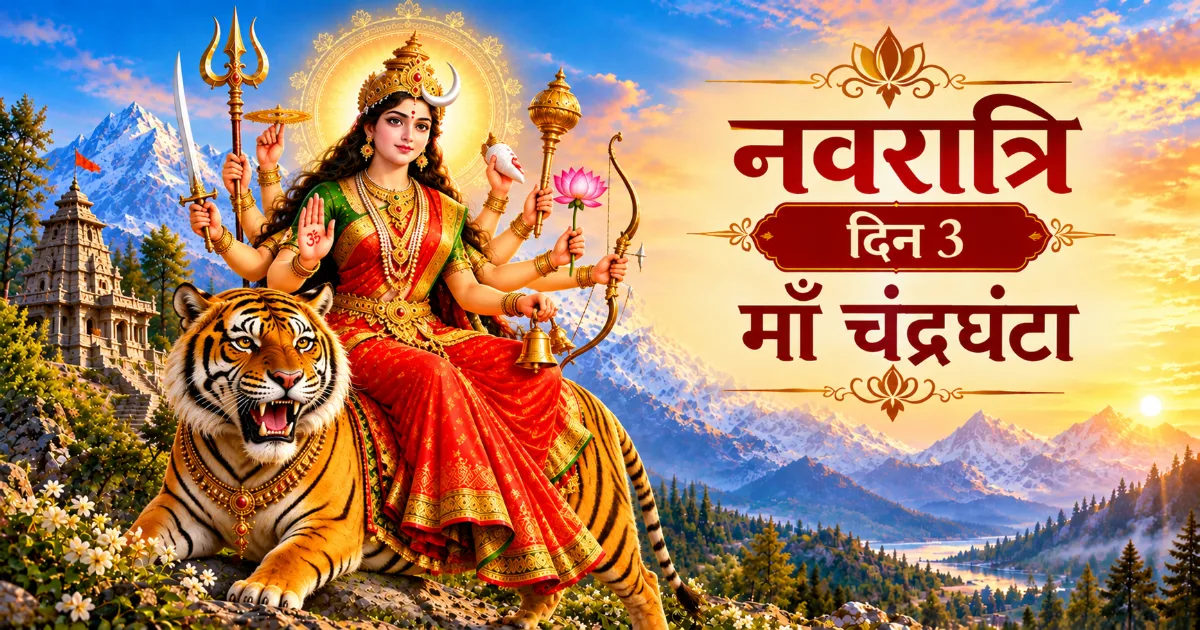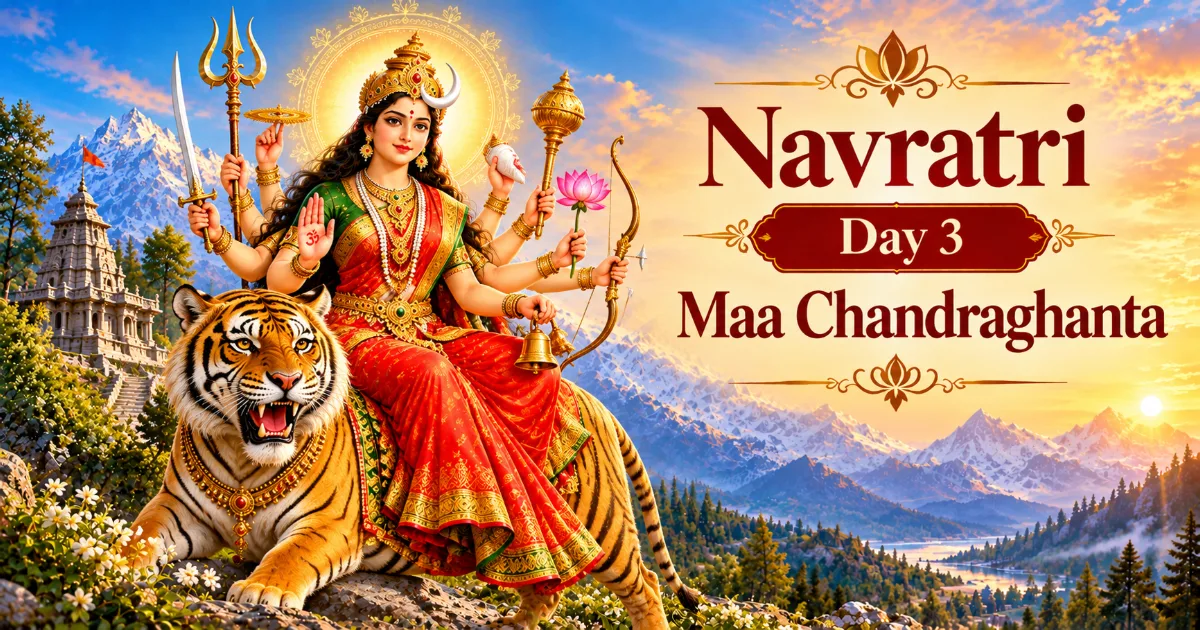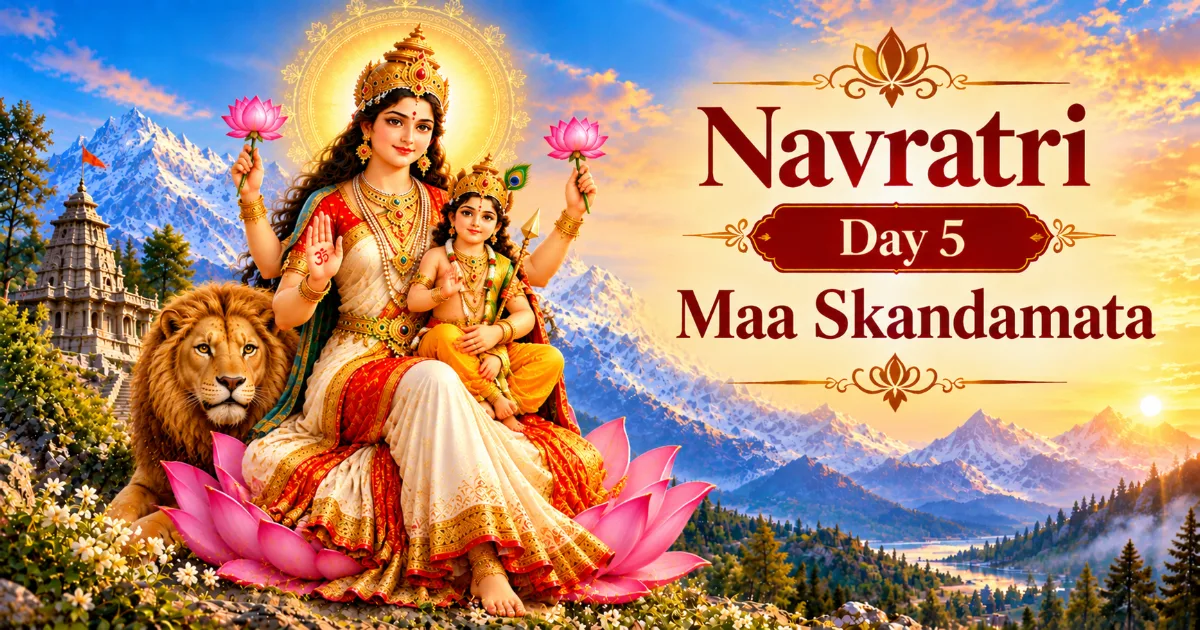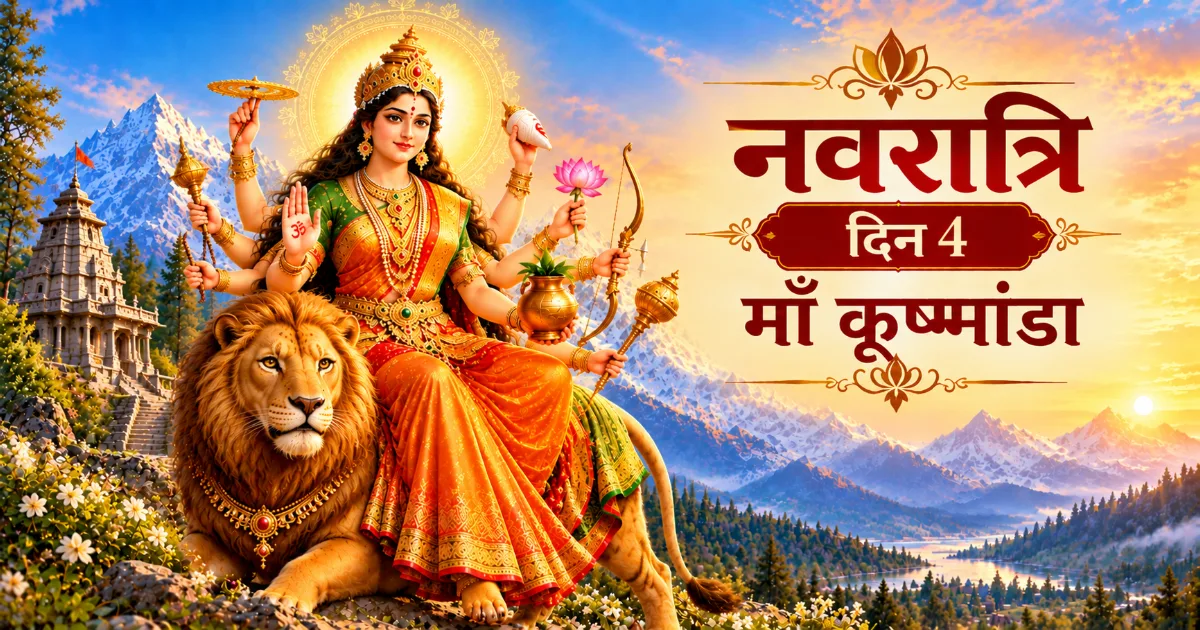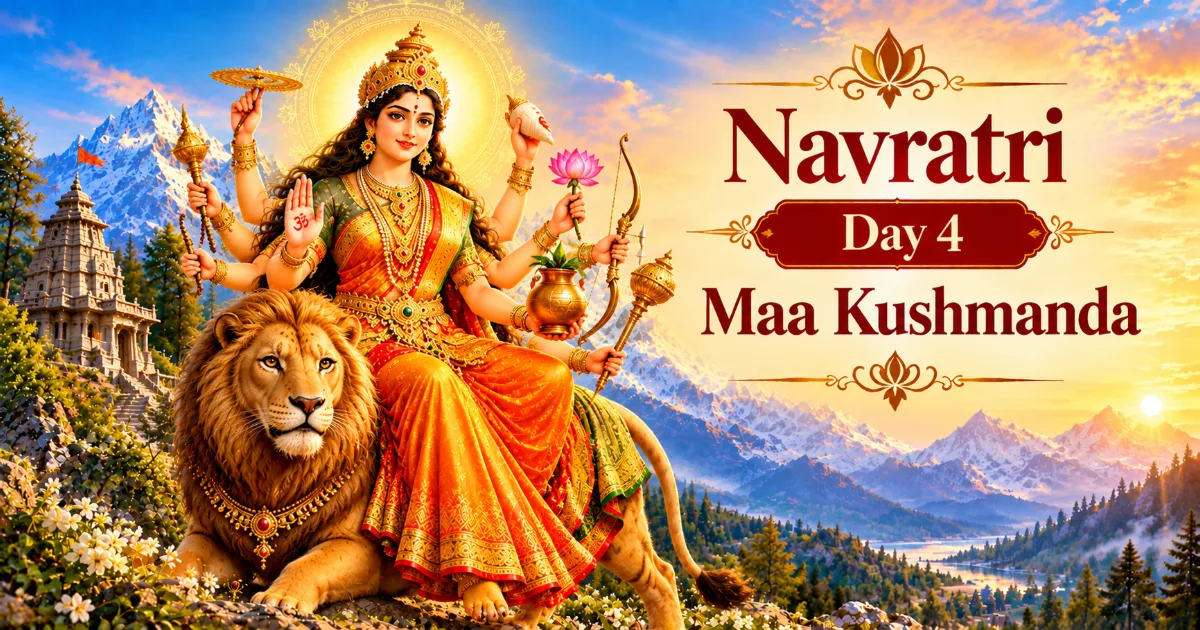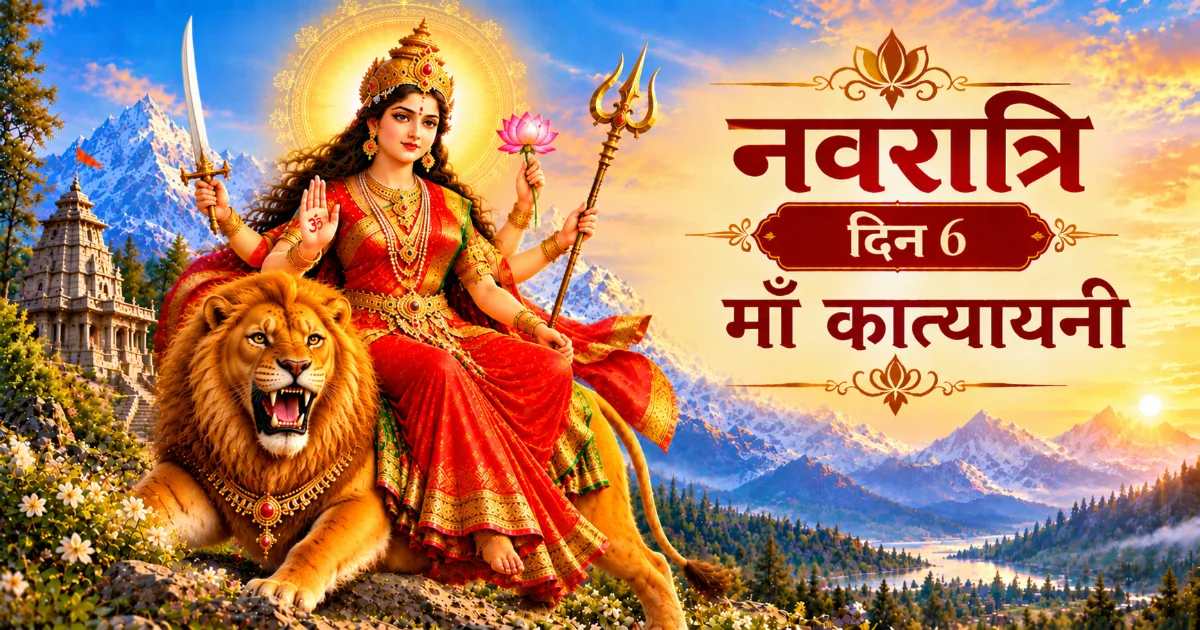
Navratri is a sacred Hindu festival dedicated to the nine forms of Goddess Durga, collectively known as Navdurga. Each day celebrates a different manifestation of the Divine Mother and offers spiritual lessons about courage, discipline, devotion, compassion, and the victory of good over evil.
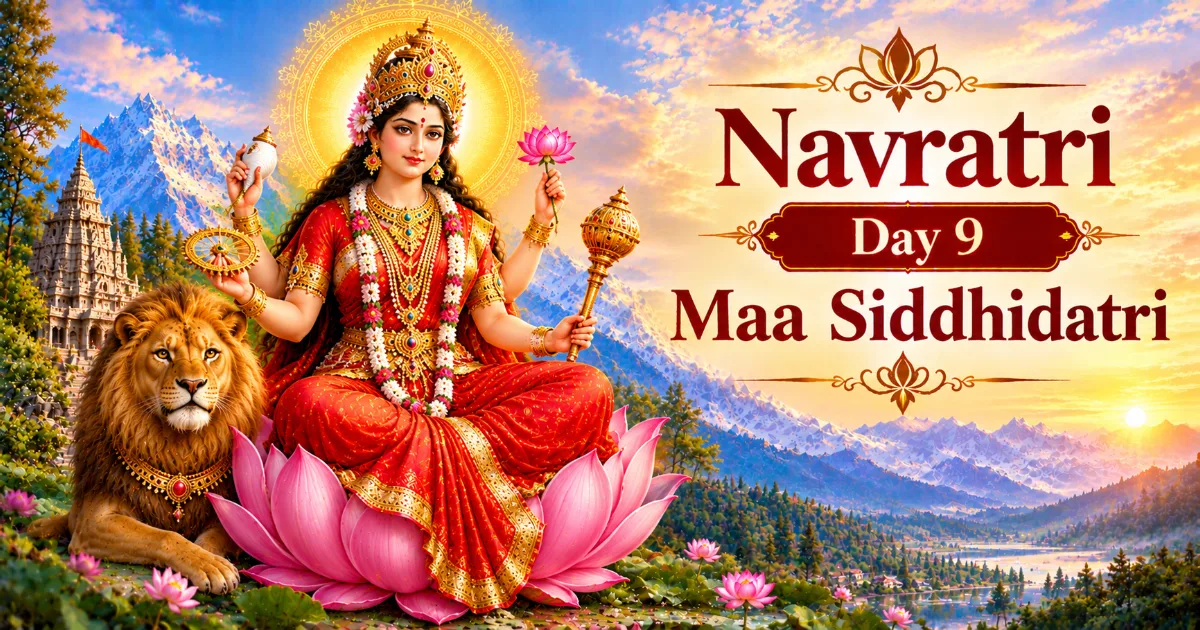
The ninth day of Navratri is dedicated to Maa Siddhidatri, the ninth and final form of Navdurga. She is associated with spiritual accomplishments, divine wisdom, fulfilment, and the blessings that help devotees progress on their spiritual journey. Her name combines the Sanskrit words Siddhi, meaning accomplishment or spiritual attainment, and Datri, meaning the giver. Thus, Siddhidatri is understood as the Goddess who grants siddhis, or spiritual attainments.
Maa Siddhidatri is traditionally depicted seated on a lotus or riding a lion. She is commonly shown with four arms, holding a lotus, a conch, a discus, and a mace. These symbols represent spiritual growth, the sacred sound of creation, the power to protect righteousness, and the strength to overcome obstacles.
The ninth day carries special significance because it brings the nine-day journey of Navratri towards its completion. After reflecting on the courage of Maa Shailputri, the devotion of Maa Brahmacharini, the strength of Maa Chandraghanta, and the qualities represented by the other forms of Navdurga, devotees turn to Maa Siddhidatri for wisdom, spiritual fulfilment, and divine grace.
Her message reminds us that the purpose of personal and spiritual growth is not simply to gain power or recognition. It is to become wiser, more compassionate, more disciplined, and more responsible in the way we live.
Continue Reading
The Meaning Behind the Name Maa Siddhidatri
The name Siddhidatri is derived from two Sanskrit words. Siddhi refers to accomplishment, perfection, or a special spiritual attainment, while Datri means giver or bestower.
In Hindu spiritual traditions, siddhis may refer to extraordinary spiritual abilities described in sacred texts and devotional literature. The concept is especially associated with advanced spiritual practice, meditation, and divine grace.
However, the significance of Maa Siddhidatri extends beyond the idea of extraordinary powers. Her symbolism can also be understood through the everyday accomplishments that require wisdom, patience, discipline, and self-awareness.
Learning to control anger, developing a habit of honesty, showing compassion during difficult times, overcoming selfishness, and remaining committed to a meaningful purpose are all important forms of personal growth.
Maa Siddhidatri reminds devotees that genuine accomplishment is not simply about achieving more than others. It is about developing the wisdom to use one's abilities responsibly and the humility to recognize that there is always more to learn.
The Story and Divine Significance of Maa Siddhidatri
Hindu devotional traditions describe Maa Siddhidatri as a divine source of spiritual attainments and blessings. She is revered by devotees seeking wisdom, fulfilment, and progress on the path of spiritual realization.
One well-known account appears in the Devi-related Puranic tradition, which associates the Goddess with the eight major siddhis. These spiritual attainments are described in Hindu religious literature as extraordinary powers or forms of perfection associated with advanced spiritual accomplishment.
The eight siddhis commonly named in this tradition are Anima, Mahima, Garima, Laghima, Prapti, Prakamya, Ishitva, and Vashitva. Their interpretations vary somewhat across texts, but they are generally associated with ideas such as minuteness, vastness, heaviness, lightness, attainment, fulfilment of will, lordship, and mastery or control.
These concepts belong to religious and spiritual traditions. They should not be treated as scientifically established abilities. Their value within devotional practice lies in the spiritual ideas they communicate about divine power, discipline, and the possibilities of inner transformation.
Another important tradition connects the Goddess with Lord Shiva. According to a well-known account, through the grace of the Divine Mother, Shiva attained the eight siddhis. This association is sometimes linked with the form of Ardhanarishvara, in which Shiva and Shakti are represented as two inseparable aspects of a single divine reality.
Ardhanarishvara symbolizes the complementary relationship between masculine and feminine principles in Hindu philosophy. It expresses the idea that creation and existence involve interconnected forces rather than isolated powers.
Through these traditions, Maa Siddhidatri is understood as a source of divine grace, completeness, and spiritual wisdom. Her story encourages devotees to approach achievement with humility and recognize the importance of balance in life.
The Divine Appearance and Symbols of Maa Siddhidatri
Maa Siddhidatri is commonly portrayed with a calm expression, radiant appearance, divine ornaments, and four arms. Her imagery contains several symbols associated with spiritual understanding and the responsible use of power.
1. The Lotus: Purity and Spiritual Growth
The lotus is one of the most recognizable symbols associated with Maa Siddhidatri. In Hindu religious traditions, the lotus represents purity, beauty, spiritual awakening, and the ability to rise above difficult circumstances.
A lotus grows in muddy water yet produces a beautiful flower. This natural process has long served as a metaphor for the human journey. People may experience hardship, disappointment, or uncertainty, but these circumstances do not have to determine the quality of their character.
The lotus reminds devotees to remain connected to their values while continuing to grow through life's challenges.
2. The Conch: The Sacred Sound and Awakening
Maa Siddhidatri is often depicted holding a conch, known in Sanskrit as shankha. The conch has an important place in Hindu worship and is frequently sounded during religious ceremonies.
Its sound is associated with auspicious beginnings, spiritual awakening, and the call to turn one's attention towards the divine.
The conch can also be understood as a reminder to use speech carefully. Words can encourage, comfort, and inspire, but they can also hurt others when used without thought.
Maa Siddhidatri's symbolism encourages devotees to speak truthfully, communicate respectfully, and use their words to create understanding rather than conflict.
3. The Discus: Protection and the Power of Righteousness
The discus, or chakra, is a traditional symbol of divine protection and the preservation of righteousness. It is associated with the power to confront harmful forces and maintain cosmic order.
At a personal level, the discus can represent clear thinking and the ability to recognize when a decision or behaviour is leading us away from our values.
It reminds devotees that wisdom is not simply the ability to collect information. Wisdom also involves knowing how to apply knowledge responsibly, make fair decisions, and correct mistakes when necessary.
4. The Mace: Strength and Responsibility
The mace, known as gada, represents strength, authority, and the ability to overcome obstacles. In Maa Siddhidatri's imagery, it can be understood as a symbol of the power required to protect what is valuable and uphold what is right.
Strength becomes meaningful when it is guided by responsibility. A person who holds a position of authority should use it fairly, while someone with knowledge or influence should use those abilities to support others rather than exploit them.
The mace reminds devotees that achievement and power carry responsibilities.
5. Her Peaceful Expression: Wisdom and Inner Balance
Maa Siddhidatri's calm expression represents spiritual maturity, clarity, and inner balance.
A peaceful mind does not mean that a person never faces problems or experiences strong emotions. It means developing the ability to respond thoughtfully instead of reacting impulsively.
Her serene appearance encourages devotees to combine ambition with patience, knowledge with humility, and determination with compassion.
Why Is Maa Siddhidatri Worshipped on the Ninth Day of Navratri?
The ninth day of Navratri is traditionally dedicated to Maa Siddhidatri, the final form in the Navdurga sequence. This day is often observed as Maha Navami or Durga Navami, depending on regional customs and the religious calendar.
Devotees worship Maa Siddhidatri to seek wisdom, spiritual growth, fulfilment, and divine blessings. Her worship provides an opportunity to reflect on the lessons of the preceding eight days and consider how those values can be carried into everyday life.
The journey through Navratri can be understood as a gradual movement towards greater awareness. Courage helps us face difficulties. Discipline helps us remain committed to our responsibilities. Compassion strengthens our relationships. Wisdom helps us use our abilities for meaningful purposes.
Maa Siddhidatri represents the culmination of this journey, reminding devotees that spiritual growth is not complete simply because a festival has ended. The values cultivated during worship must continue through daily decisions and actions.
For many families, the ninth day also includes special prayers, offerings, devotional songs, and Kanya Pujan. Some families perform Kanya Pujan on Ashtami, while others observe it on Navami. Both practices are found in different regional traditions.
Maa Siddhidatri Mantra
The following mantra is commonly recited during the worship of Maa Siddhidatri:
ॐ देवी सिद्धिदात्र्यै नमः॥
Transliteration: Om Devi Siddhidatryai Namah.
Meaning: Salutations to Goddess Siddhidatri, the giver of spiritual attainments.
Devotees may chant this mantra during morning prayers, meditation, or Navratri rituals. The practice offers a moment to focus the mind, express gratitude, and reflect on the kind of person one hopes to become.
While reciting the mantra, devotees may pray for wisdom in their decisions, patience in their struggles, strength to fulfil their responsibilities, and humility in times of success.
The spiritual significance of the mantra lies in sincere devotion and the intention to live according to the values associated with the Goddess.
How Is Maa Siddhidatri Worshipped on Navratri Day 9?
Worship practices vary across regions, families, and Hindu traditions. Many devotees observe the ninth day with prayers, offerings, mantra chanting, and special religious ceremonies.
1. Prepare the Prayer Space
Devotees often begin the day by bathing and cleaning the place of worship. An image or idol of Maa Siddhidatri may be placed on the altar.
The prayer may begin with gratitude for the nine days of Navratri and a request for wisdom, peace, and the strength to follow the path of righteousness.
2. Offer Flowers and Traditional Prasad
Flowers, fruits, sweets, and other traditional offerings may be presented according to family customs. The specific offerings differ across communities and regions.
These offerings express devotion and gratitude. Their spiritual meaning comes from the sincerity with which they are presented rather than their material value.
3. Chant the Maa Siddhidatri Mantra
Devotees may recite the sacred mantra or listen to devotional hymns dedicated to the Goddess.
Quiet chanting can provide an opportunity to reflect on personal goals, responsibilities, and the qualities that need further development.
4. Perform Kanya Pujan According to Tradition
Many families observe Kanya Pujan on the eighth or ninth day of Navratri. Young girls are welcomed and honoured as symbolic representations of the divine feminine. Food, gifts, or other offerings may be provided according to local customs.
The ritual expresses respect for girls and women. Its deeper meaning is reflected in how society treats children throughout the year, including whether they receive safety, education, dignity, and equal opportunities.
5. Reflect on the Nine Days of Navratri
The ninth day is a meaningful time to look back at the entire festival.
Devotees can reflect on whether they have become more patient, honest, courageous, or compassionate. They can identify habits they wish to improve and make practical commitments to carry the lessons of Navratri into their daily routines.
Spiritual reflection becomes more meaningful when it leads to thoughtful and responsible action.
The Spiritual Lessons of Maa Siddhidatri
Maa Siddhidatri's symbolism offers important lessons about achievement, humility, wisdom, and the purpose of personal growth.
True Achievement Requires Wisdom
Success may bring recognition, wealth, knowledge, or influence. However, these achievements become meaningful when they are guided by sound judgment and concern for others.
A person may possess great knowledge but still make harmful decisions if that knowledge is not accompanied by wisdom.
Maa Siddhidatri reminds devotees to think carefully about how their abilities affect the people around them. Achievement should contribute to a better life, not simply increase personal pride.
Humility Is Essential for Growth
People who achieve success may sometimes believe that they no longer need guidance or improvement. This attitude can prevent further learning and damage relationships.
Humility does not mean denying one's abilities or achievements. It means recognizing that everyone has limitations and that there is always something new to understand.
Maa Siddhidatri's association with spiritual accomplishment encourages devotees to remain grateful, open to learning, and respectful towards others.
Use Knowledge and Power Responsibly
Knowledge and influence can be used to support others or to exploit them. The difference often lies in the values guiding a person's decisions.
A teacher can use knowledge to help students grow. A leader can use authority to create fair opportunities. A skilled professional can use experience to solve problems and support a community.
Maa Siddhidatri's symbolism reminds us that our abilities are most valuable when they are used responsibly.
Inner Fulfilment Is More Than Material Success
Material comfort can be important for a secure and stable life, but it does not automatically provide peace or fulfilment.
People may achieve their goals and still feel dissatisfied if they neglect relationships, health, personal values, or their sense of purpose.
Maa Siddhidatri encourages devotees to seek a more balanced understanding of success, one that includes gratitude, compassion, integrity, and inner peace.
Spiritual Growth Is a Lifelong Journey
The completion of Navratri does not mean that personal growth has reached its final stage. It marks the conclusion of a festival and an opportunity to begin the next phase of one's journey with renewed understanding.
People continue to learn through their relationships, responsibilities, mistakes, and experiences. Every stage of life offers opportunities to become more patient, thoughtful, and compassionate.
Maa Siddhidatri's message encourages devotees to remain committed to learning and self-improvement throughout their lives.
Maa Siddhidatri and the Balance of Divine Energy
In Hindu philosophy, the divine feminine is often understood as Shakti, the dynamic energy associated with creation, movement, and transformation. Maa Siddhidatri represents a form of divine completeness through which spiritual power and wisdom come together.
The association between Maa Siddhidatri and Ardhanarishvara offers a related philosophical reflection. The combined form of Shiva and Shakti symbolizes the interdependence of complementary aspects of existence.
This symbolism can also inspire balance in everyday life. Action requires reflection, ambition requires patience, knowledge requires ethics, and strength requires compassion.
When these qualities work together, people are better equipped to make thoughtful decisions and build healthier relationships.
Maa Siddhidatri and the Importance of Women and Girls
Maa Siddhidatri is one of the revered forms of the Divine Mother. Her worship offers an opportunity to recognize the dignity, strength, wisdom, and potential of women and girls.
Respect for the divine feminine should be reflected in practical ways. Girls deserve access to education, healthcare, safety, and opportunities to develop their abilities. Women deserve dignity, equal opportunities, and the freedom to participate fully in family, professional, and public life.
Religious celebrations become more meaningful when their values extend beyond rituals. Supporting girls' education, respecting women's choices, and creating safer communities are practical ways to express the principles of dignity and compassion associated with the Divine Mother.
The Relevance of Maa Siddhidatri in Modern Life
The teachings associated with Maa Siddhidatri remain relevant in a world where people often feel pressure to achieve more, compete with others, and measure their worth through visible success.
Students can draw inspiration from her symbolism by pursuing knowledge with patience and humility. Professionals can reflect on the responsible use of expertise and authority. Families can consider how wisdom, understanding, and compassion contribute to a peaceful home.
Her message is especially valuable in an environment where quick results and public recognition can sometimes appear more important than genuine learning and character.
Maa Siddhidatri reminds us that growth should include both achievement and self-awareness. We should ask not only what we have gained, but also what we have learned, how we have treated others, and whether our actions reflect our values.
The ninth day of Navratri is therefore more than a celebration of completion. It is an invitation to carry spiritual lessons into the future and use them to build a more meaningful life.
Conclusion: May Maa Siddhidatri Bless You with Wisdom and Fulfilment
Maa Siddhidatri, the ninth form of Goddess Durga, represents spiritual accomplishment, wisdom, divine grace, and inner fulfilment. Her serene form reminds devotees that the highest achievements are not measured only through material success or public recognition, but also through the quality of one's character.
As we celebrate the ninth day of Navratri, we can reflect on the journey of the preceding eight days and the lessons they offer. We can choose courage when facing difficulties, patience when progress is slow, compassion when others need support, and humility when we achieve success.
May Maa Siddhidatri bless us with clear understanding, sincere devotion, responsible use of our abilities, and peace in our hearts. May the conclusion of Navratri inspire us to carry its values into every day of the year.
Jai Maa Siddhidatri!
#ShubhoMahalaya #MaaDurga #DurgaPuja2026 #DivineFeminine #Shakti #CulturesOfIndia