Navratri is a sacred Hindu festival that celebrates the nine divine forms of Goddess Durga, collectively known as Navdurga. Each form represents different spiritual qualities and offers lessons about faith, courage, wisdom, compassion, and the journey towards a better life.
The eighth day of Navratri is dedicated to Maa Mahagauri, the eighth form of Goddess Durga. She is known for her serene appearance, radiant complexion, and peaceful expression. Her name is commonly associated with great brightness, purity, and radiance. She symbolizes the cleansing of the mind, the release of negativity, and the renewal of hope.
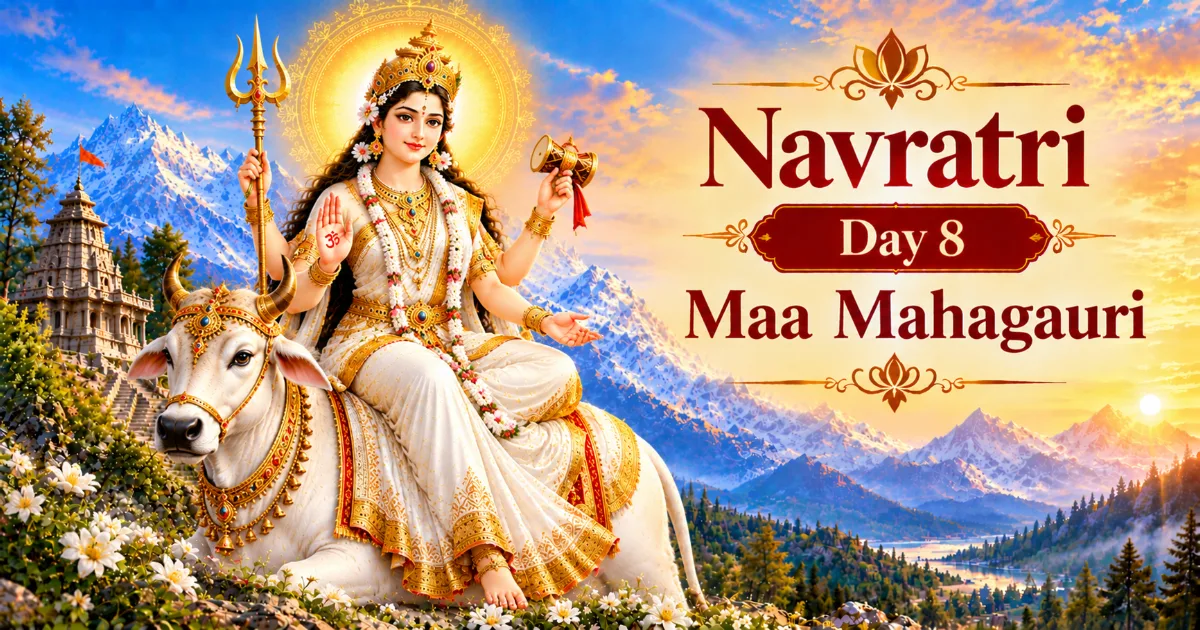
Maa Mahagauri is traditionally depicted wearing white garments and riding a bull. Her four hands are commonly shown holding a trident and a damaru, while the other two display gestures of blessing and protection. Her gentle appearance represents calmness, forgiveness, and the strength that comes from inner peace.
The worship of Maa Mahagauri reminds devotees that spiritual growth is not only about facing challenges with courage. It is also about learning to forgive, letting go of resentment, treating others with kindness, and bringing peace into everyday life.
Her message is especially meaningful during difficult periods. Life may bring disappointment, mistakes, loss, and uncertainty, but these experiences do not have to define a person's future. With self-reflection, sincere effort, and compassion, it is possible to begin again with greater wisdom and a more peaceful heart.
Continue Reading
The Meaning Behind the Name Maa Mahagauri
The name Mahagauri is commonly understood through the Sanskrit elements Maha, meaning great, and Gauri, associated with brightness, fairness, and radiance. Together, the name is often interpreted as the greatly radiant or supremely luminous Goddess.
In Hindu devotional traditions, this radiance carries a spiritual meaning beyond physical appearance. It represents purity of intention, clarity of thought, peacefulness, and freedom from harmful tendencies.
Purity in this sense does not mean that a person must never make a mistake. Human beings learn through experience, and everyone faces moments of confusion or weakness. The deeper meaning of purity is the willingness to recognize mistakes, accept responsibility, correct harmful behaviour, and move forward with sincere intentions.
Maa Mahagauri's radiant form therefore symbolizes the possibility of renewal. Just as darkness gives way to light, confusion can give way to understanding, resentment can give way to forgiveness, and despair can gradually make room for hope.
Her name encourages devotees to look beyond outward appearances and cultivate the qualities that make a person's character peaceful, honest, and compassionate.
The Story of Maa Mahagauri
One widely known Hindu tradition connects Maa Mahagauri with the spiritual journey of Goddess Parvati.
According to this account, Parvati undertook intense penance to attain Lord Shiva as her husband. She devoted herself to meditation and spiritual discipline, enduring difficult conditions with extraordinary determination. Her unwavering devotion is remembered as an example of patience, commitment, and faith.
In a popular telling of the story, her long period of austerity caused her complexion to become darkened. Pleased by her devotion, Lord Shiva eventually blessed her, and her radiant complexion was restored. In some versions, the cleansing is associated with the sacred waters of the Ganga.
Through this transformation, she came to be revered as Mahagauri, the radiant and pure form of the Goddess.
The details of this story vary across devotional accounts and regional traditions. Its central spiritual message, however, remains consistent: sincere devotion, discipline, and perseverance can lead to transformation.
The story is not simply about a change in physical appearance. It represents the inner journey through which patience strengthens faith, discipline develops character, and spiritual dedication brings clarity and peace.
Maa Mahagauri's story reminds devotees that difficult periods do not have to be permanent. With determination and a sincere heart, people can learn from their experiences and move towards a more balanced and meaningful life.
The Divine Appearance and Symbols of Maa Mahagauri
Maa Mahagauri is often portrayed with a radiant complexion, white clothing, beautiful ornaments, and a calm, compassionate expression. Her traditional imagery contains several symbols that offer lessons for everyday life.
1. White Garments: Purity and Peace
Maa Mahagauri is commonly depicted wearing white garments. White is widely associated with peace, purity, clarity, and simplicity in Hindu religious symbolism.
Her clothing reminds devotees of the importance of maintaining honest intentions and a peaceful mind. In a world filled with competition, anger, and constant distractions, it is easy to become overwhelmed by negativity.
The symbolism of white encourages people to step back from unnecessary conflict, think clearly, and approach others with fairness. It also reminds us that simplicity and sincerity can be more valuable than outward display.
2. The Bull: Patience and Steadfastness
Maa Mahagauri is traditionally associated with a bull as her vehicle. The bull represents strength, stability, patience, and endurance.
These qualities are essential for lasting progress. Meaningful achievements in education, work, relationships, and personal development rarely happen overnight. They require consistent effort and the ability to continue even when results are slow.
The bull reminds devotees that true strength is not always loud or dramatic. Sometimes, it appears as the patience to fulfil responsibilities, the discipline to keep learning, and the determination to remain steady during uncertain times.
3. The Trident: Balance and the Power to Overcome Obstacles
One of Maa Mahagauri's hands is often shown holding a trident. The trident is a familiar symbol associated with Lord Shiva and various forms of the Divine Mother.
In spiritual interpretations, it can represent the ability to confront obstacles and maintain balance in life. It may also be understood as a reminder to bring greater awareness to our thoughts, words, and actions.
The trident's symbolism encourages devotees to recognize harmful patterns and work towards changing them. Anger, jealousy, dishonesty, and pride can create difficulties within families and communities. Overcoming such tendencies requires self-awareness, patience, and discipline.
4. The Damaru: Rhythm and Harmony
In many depictions, Maa Mahagauri holds a damaru, a small two-headed drum associated with Lord Shiva. The damaru is linked with rhythm, creation, and the movement of life.
Its symbolism reminds us that life is made up of changing phases. There are periods of happiness and periods of difficulty, moments of activity and moments of rest.
Rather than expecting every day to be perfect, devotees can learn to respond to life's changes with balance. A peaceful life does not mean that problems never arise. It means developing the ability to face them without losing our sense of purpose and compassion.
5. Her Blessing Gestures: Compassion and Reassurance
Maa Mahagauri is commonly depicted with hands displaying gestures of blessing and protection. These gestures represent reassurance, generosity, and divine compassion.
They remind devotees that strength can be gentle. A kind word, an act of forgiveness, or a willingness to help someone in difficulty can have a lasting impact.
Her peaceful appearance also encourages people to become a source of comfort for others rather than adding to their worries.
Why Is Maa Mahagauri Worshipped on the Eighth Day of Navratri?
In the traditional sequence of Navdurga worship, the eighth day of Navratri is dedicated to Maa Mahagauri. This day is widely known as Durga Ashtami or Maha Ashtami in many Hindu traditions, although specific observances vary by region and calendar.
Devotees worship Maa Mahagauri to seek peace, purity of intention, forgiveness, spiritual progress, and relief from difficulties. Her worship encourages people to examine their thoughts and actions and to renew their commitment to living with honesty and compassion.
In many households and communities, the eighth day is also associated with Kanya Pujan, a ritual in which young girls are worshipped as symbolic representations of the divine feminine. The exact day for this practice varies, as some families perform it on Ashtami while others observe it on Navami.
The ritual expresses reverence for the feminine divine and reminds participants of the importance of respecting girls and women. Its deeper meaning is best reflected in everyday conduct, including protecting children's dignity, supporting their education, and ensuring that they are treated with care and fairness.
For many devotees, Ashtami is also an opportunity to complete special prayers, offer traditional food, sing devotional songs, and gather with family members.
Maa Mahagauri Mantra
One of the mantras commonly recited in the worship of Maa Mahagauri is:
ॐ देवी महागौर्यै नमः॥
Transliteration: Om Devi Mahagauryai Namah.
Meaning: Salutations to Goddess Mahagauri.
Devotees may chant this mantra during morning prayers, meditation, or Navratri rituals. The repetition of a sacred mantra can provide an opportunity to calm the mind, focus attention, and reflect on the values associated with the Goddess.
While chanting, devotees may pray for peace in their families, clarity in their decisions, and the strength to release resentment and harmful habits.
The spiritual value of prayer lies not only in repeating words but also in cultivating sincerity, gratitude, and a willingness to act according to the values one seeks.
How Is Maa Mahagauri Worshipped on Navratri Day 8?
Worship practices differ across regions, families, and Hindu traditions. Many devotees observe the eighth day through prayers, offerings, mantra chanting, and special rituals.
1. Prepare a Clean and Peaceful Prayer Space
Devotees often begin the day by bathing and cleaning the place of worship. An image or idol of Maa Mahagauri may be placed on the altar.
The prayer can begin with a request for peace, wisdom, purity of intention, and the ability to treat others with kindness.
2. Offer White Flowers and Traditional Prasad
White flowers are commonly associated with Maa Mahagauri in many devotional practices. Fruits, sweets, and other traditional offerings may also be presented according to family customs.
These offerings are expressions of devotion and gratitude. Their meaning lies in the sincerity with which they are offered, rather than their cost or quantity.
3. Chant the Maa Mahagauri Mantra
Devotees may recite the Maa Mahagauri mantra or listen to devotional hymns in her honour. A few moments of quiet prayer can help people reflect on the areas of life where they need greater patience, forgiveness, or clarity.
4. Observe Kanya Pujan According to Family Tradition
Many families perform Kanya Pujan on Ashtami or Navami. In this ritual, young girls are welcomed, honoured, and offered food and gifts according to local customs.
Practices vary, and families may follow their own religious traditions. The underlying message is respect for the divine feminine and recognition of the dignity of girls and women.
That respect should extend beyond the ritual itself. Children deserve safety, education, encouragement, and equal opportunities throughout the year.
5. Practise Forgiveness and Kindness
One of the most meaningful ways to honour Maa Mahagauri is to apply her values to everyday life.
This may involve resolving a misunderstanding, apologizing for a mistake, helping someone who feels isolated, or choosing a calm conversation instead of an argument.
Forgiveness does not mean accepting repeated mistreatment or ignoring injustice. It means releasing unnecessary resentment while maintaining appropriate boundaries and protecting one's dignity.
The Spiritual Lessons of Maa Mahagauri
Maa Mahagauri's peaceful form offers valuable lessons for people seeking a more balanced and meaningful life.
Purity Begins with Honest Intentions
Purity is not limited to outward appearance or ritual cleanliness. It also involves honesty, fairness, and sincerity in our thoughts and actions.
When people make decisions based on truth rather than selfishness, they build trust in their relationships and contribute to a healthier community.
Maa Mahagauri inspires devotees to examine their intentions and ask whether their actions reflect the values they claim to believe in.
Forgiveness Can Bring Peace
Resentment can become a heavy emotional burden. Holding on to anger for long periods may affect relationships and prevent people from moving forward.
Forgiveness can help release that burden and create space for healing. It does not require forgetting what happened or allowing harmful behaviour to continue. Instead, it can mean acknowledging the hurt, learning from the experience, and choosing not to let bitterness control the future.
Maa Mahagauri's gentle symbolism encourages this kind of thoughtful and self-respecting forgiveness.
Inner Peace Is More Valuable Than Constant Approval
Modern life often encourages people to compare themselves with others and seek approval through achievements, possessions, or public recognition.
Such comparisons can create unnecessary anxiety and dissatisfaction. Maa Mahagauri's serene appearance reminds devotees that a peaceful mind and a clear conscience are valuable in their own right.
Success becomes more meaningful when it is accompanied by contentment, integrity, and respect for others.
Change Is Possible After Difficult Experiences
The traditional story associated with Maa Mahagauri reflects transformation after a long period of hardship and penance.
In everyday life, people may also need time to recover from mistakes, disappointment, or challenging circumstances. Personal growth often requires acknowledging what went wrong, learning new skills, seeking support, and making better choices.
The Goddess's story encourages hope without suggesting that change happens automatically. Renewal requires both sincere intention and sustained effort.
Kindness Is a Form of Strength
People sometimes mistake kindness for weakness. In reality, treating others well during difficult situations can require patience, emotional control, and courage.
A person who listens carefully, responds respectfully, and offers help without seeking praise can make a meaningful difference in the lives of others.
Maa Mahagauri represents a form of strength that brings comfort rather than fear. Her symbolism encourages devotees to create peace wherever possible.
Maa Mahagauri and the Importance of Women and Girls
Maa Mahagauri is a revered representation of the divine feminine. Her worship, particularly during Ashtami and Kanya Pujan, provides an opportunity to reflect on the dignity and value of girls and women.
Respect for the feminine divine becomes meaningful when it is reflected in everyday behaviour. Girls should have access to education, safety, healthcare, encouragement, and opportunities to develop their abilities. Women should be treated with dignity and allowed to participate fully in family, professional, and public life.
Kanya Pujan can serve as a reminder that every child deserves respect and care. Its deeper message should extend beyond a single day of celebration to the way children are treated at home, in schools, and in society.
By connecting devotion with compassion and fairness, communities can give practical meaning to the values represented by Maa Mahagauri.
The Relevance of Maa Mahagauri in Modern Life
The teachings associated with Maa Mahagauri remain relevant in today's fast-moving world.
Students may draw inspiration from her peaceful nature when dealing with examination pressure or uncertainty about their future. Professionals may reflect on her symbolism when navigating workplace disagreements or making difficult decisions. Families may use the occasion to encourage understanding, forgiveness, and respectful communication.
Her message is also valuable in a society where online arguments, comparisons, and constant exposure to negative information can affect peace of mind. Taking time to reflect, setting healthy boundaries, and responding thoughtfully rather than impulsively can help people maintain emotional balance.
Maa Mahagauri reminds us that peace is not achieved by avoiding every difficult conversation. Sometimes, it requires speaking honestly, accepting responsibility, and working patiently to resolve disagreements.
Her example encourages people to combine calmness with courage, kindness with self-respect, and faith with responsible action.
Conclusion: May Maa Mahagauri Bless You with Peace and Purity
Maa Mahagauri, the eighth form of Goddess Durga, represents purity, peace, forgiveness, and spiritual renewal. Her radiant appearance and compassionate nature remind devotees that true beauty is reflected in the quality of our character and the kindness we show to others.
As we celebrate the eighth day of Navratri, we can reflect on the importance of letting go of unnecessary resentment, correcting our mistakes, and approaching life with honesty and compassion. We can also renew our commitment to respecting girls and women, supporting those in need, and creating peaceful relationships within our families and communities.
May Maa Mahagauri bless us with clarity in our thoughts, kindness in our actions, patience during difficult times, and the wisdom to choose peace without compromising what is right.
Jai Maa Mahagauri!
#ShubhoMahalaya #MaaDurga #DurgaPuja2026 #DivineFeminine #Shakti #CulturesOfIndia