Navratri is a sacred Hindu festival dedicated to the nine forms of Goddess Durga, collectively known as Navdurga. Each form represents a distinct divine quality and teaches devotees valuable lessons about faith, discipline, courage, wisdom, and the victory of good over evil.
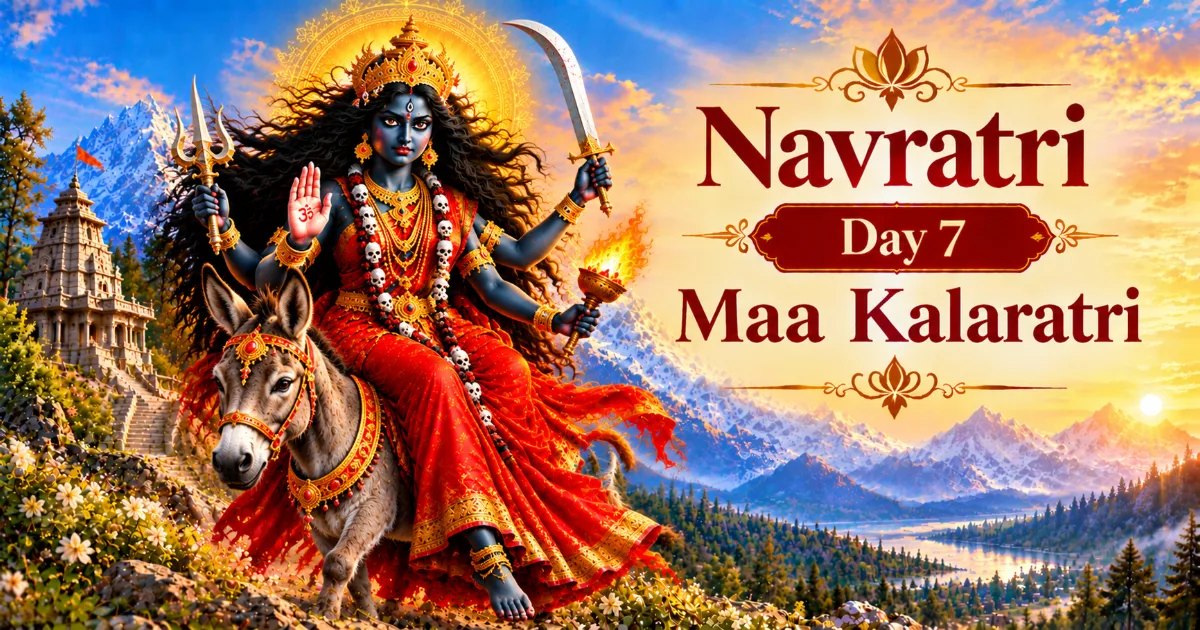
The seventh day of Navratri is dedicated to Maa Kalaratri, one of the most fierce and powerful manifestations of Goddess Durga. Her dark complexion, flowing hair, radiant eyes, and formidable appearance distinguish her from the other forms of the Goddess. She represents the force that destroys darkness, removes fear, and protects devotees from harmful influences.
Although her appearance may seem frightening, Maa Kalaratri is worshipped as a compassionate mother who protects those who approach her with sincere devotion. Her fierce form is directed towards destructive forces, ignorance, and evil, while her blessings offer courage and reassurance to her devotees.
Maa Kalaratri reminds us that not every challenge can be overcome by avoiding it. Sometimes, we must face our deepest fears, recognize the truth, and find the strength to move forward. Her worship on the seventh day of Navratri inspires people to develop inner courage and trust in the power of righteousness.
Continue Reading
The Meaning Behind the Name Maa Kalaratri
The name Kalaratri is commonly understood through two Sanskrit elements: Kala, associated with time and, in some interpretations, darkness or death, and Ratri, meaning night. The name is therefore often interpreted as the dark night or the power that confronts darkness and destruction.
In Hindu spiritual traditions, darkness can have several meanings. It may represent fear, ignorance, confusion, negative tendencies, or the difficulties that make people feel lost. Maa Kalaratri symbolizes the divine force that confronts these challenges.
Her name also reminds devotees that darkness is not necessarily the end of a journey. The darkest moments can become opportunities for courage, self-reflection, and transformation. By facing difficulties with faith and wisdom, people may discover strengths they did not realize they possessed.
Maa Kalaratri's symbolism is therefore not simply about destruction. It is about removing what is harmful so that truth, peace, and righteousness can flourish.
The Story and Divine Power of Maa Kalaratri
According to Hindu devotional traditions, Maa Kalaratri emerged as a fierce manifestation of Goddess Durga to confront powerful demonic forces that threatened peace and righteousness.
The wider tradition of Goddess Durga describes repeated battles between the divine forces and demons who attempted to establish their power through arrogance, cruelty, and disorder. The Goddess took different forms to meet these challenges, demonstrating that divine power can appear in many ways according to the nature of the threat.
Maa Kalaratri represents one of the most formidable expressions of this protective power. Her fierce appearance symbolizes her determination to destroy evil and defend the cosmic order. In devotional accounts associated with Navdurga, her form is especially connected with the removal of fear and the destruction of negative forces.
Different Hindu texts and regional traditions describe the Goddess's battles in different ways. Stories involving demons such as Shumbha and Nishumbha, Chanda and Munda, and Raktabija belong to the broader narratives of Goddess Durga and her fierce manifestations. These stories should not all be treated as one identical episode, but they share a central message: destructive power cannot ultimately overcome divine righteousness.
The deeper lesson of Maa Kalaratri's story is that goodness does not always appear gentle or quiet. Sometimes, protecting the innocent requires determination, firm action, and the willingness to confront wrongdoing.
The Divine Appearance and Symbols of Maa Kalaratri
Maa Kalaratri is commonly depicted with a dark complexion, dishevelled or flowing hair, a radiant third eye in some artistic representations, and a powerful expression. She is traditionally shown riding a donkey and carrying divine weapons. Her imagery is rich with symbolic meaning.
1. Her Dark Complexion: The Mystery of the Divine
Maa Kalaratri's dark appearance is one of her most distinctive features. It represents the immense and mysterious power of the divine, which cannot always be understood through ordinary appearances.
Darkness in this context is not a symbol of moral evil. Instead, it may represent the vastness of the universe, the unknown, and the power that exists beyond human understanding.
Her form teaches devotees not to judge spiritual truth by outward appearance. What seems frightening at first may represent protection, transformation, and the destruction of harmful forces.
2. The Donkey: Humility and Steadfastness
Maa Kalaratri is traditionally associated with a donkey as her mount. Unlike the majestic lion or tiger associated with some other forms of the Goddess, the donkey is a humble animal.
This symbol can remind devotees that spiritual strength does not depend on outward grandeur. Humility, patience, endurance, and a willingness to continue through difficult circumstances are also powerful qualities.
The donkey's association with Maa Kalaratri encourages people to remain steady even when life does not appear impressive or easy. Real progress often comes through consistent effort rather than dramatic achievements.
3. Her Weapons: The Power to Confront Evil
Maa Kalaratri is commonly portrayed with four arms. Her hands may hold a sword or similar weapon and a thunderbolt-like implement, while the remaining hands display gestures of protection and blessing. Details can vary between images and regional traditions.
Her weapons symbolize the ability to confront destructive forces and remove obstacles. At a personal level, they can represent the determination needed to overcome dishonesty, harmful habits, prejudice, and uncontrolled anger.
Her gestures of protection and blessing remind devotees that her fierce strength is not directed against the innocent. It exists to defend and reassure those who seek refuge in her.
4. Her Fiery Eyes: Awareness and Vigilance
The intense eyes associated with Maa Kalaratri symbolize alertness, clarity, and the ability to recognize danger.
In everyday life, this can be understood as the importance of remaining aware of our actions, decisions, and surroundings. People who ignore warning signs or refuse to acknowledge the truth may allow problems to grow.
Maa Kalaratri's imagery encourages vigilance without unnecessary suspicion. It teaches people to recognize harmful situations clearly and respond with wisdom.
Why Is Maa Kalaratri Worshipped on the Seventh Day of Navratri?
In the traditional sequence of Navdurga worship, the seventh day of Navratri is dedicated to Maa Kalaratri. Devotees pray to her for courage, protection, peace of mind, and the strength to face difficult circumstances.
Her worship is especially meaningful for those who feel anxious, uncertain, or overwhelmed by personal challenges. The Goddess's fierce yet protective form reminds them that fear does not have to control their lives.
Many devotees believe that sincere prayer helps them develop confidence and spiritual discipline. For them, the seventh day is an opportunity to reflect on the fears they carry, the habits they need to change, and the responsibilities they must fulfil.
Maa Kalaratri is also associated in devotional traditions with the removal of negative influences and the protection of the household. These beliefs are part of religious faith and should not be confused with a guarantee of particular worldly outcomes.
The central purpose of worship is to deepen devotion, strengthen moral resolve, and cultivate the courage to act wisely.
Maa Kalaratri Mantra
The following mantra is commonly recited in the worship of Maa Kalaratri:
ॐ देवी कालरात्र्यै नमः॥
Transliteration: Om Devi Kalaratryai Namah.
Meaning: Salutations to Goddess Kalaratri.
Devotees may chant this mantra during morning prayers, meditation, or Navratri rituals. Some choose to repeat it quietly while reflecting on their personal fears and asking for the courage to face them.
The mantra serves as a reminder that faith and courage can work together. Prayer can provide a moment of calm and reflection, while thoughtful action helps people address the practical challenges in their lives.
The number of repetitions and the precise method of worship may differ according to family traditions and personal practice.
How Is Maa Kalaratri Worshipped on Navratri Day 7?
Worship practices vary across regions, communities, and families. Many devotees observe the seventh day with prayer, offerings, mantra chanting, and the reading of sacred stories.
1. Begin with a Clean and Peaceful Prayer Space
Devotees often wake early, bathe, and prepare a clean place for worship. An image or idol of Maa Kalaratri may be placed on the altar.
The prayer may begin with a request for courage, clarity, protection, and the wisdom to distinguish right from wrong.
2. Offer Flowers and Prasad
Flowers, fruits, sweets, and other traditional offerings may be presented according to local and family customs. Dark-coloured flowers or other specific offerings are used in some traditions, but practices are not uniform everywhere.
The purpose of the offering is to express gratitude and devotion. Sincerity and respect matter more than the cost or quantity of the items.
3. Recite the Sacred Mantra
Devotees may chant the Maa Kalaratri mantra or listen to devotional hymns in her honour. Quiet repetition can help focus the mind and provide time for reflection.
During prayer, devotees may think about the fears that hold them back and the steps they can take to become more courageous and responsible.
4. Read Stories of Goddess Durga
Reading or listening to stories about Maa Durga's battles against evil helps devotees understand the spiritual themes associated with Navratri.
These stories invite reflection on the consequences of arrogance, cruelty, and uncontrolled ambition. They also highlight the importance of defending righteousness and protecting those who are vulnerable.
5. Practise Courage in Everyday Life
One meaningful way to honour Maa Kalaratri is to put the values associated with her worship into practice.
This may mean speaking honestly, seeking help when necessary, standing beside someone who is being mistreated, or making a difficult but responsible decision. It can also mean acknowledging a personal mistake and taking steps to correct it.
Devotees should follow their family and community traditions according to their beliefs and circumstances.
The Spiritual Lessons of Maa Kalaratri
Maa Kalaratri's symbolism offers lessons that extend beyond the rituals of Navratri. Her form encourages people to understand fear, develop resilience, and act with integrity.
Courage Begins When We Face Our Fears
Fear is a natural human response. It may arise when people face uncertainty, change, failure, illness in the family, financial pressure, or difficult relationships.
Courage does not mean pretending that fear does not exist. It means recognizing the fear and choosing a sensible next step despite it.
Maa Kalaratri inspires devotees to face challenges rather than allowing anxiety to make every decision for them.
Darkness Can Become an Opportunity for Growth
There are times when life feels confusing or uncertain. People may struggle to understand why difficulties have arisen or how to move forward.
Maa Kalaratri's association with darkness reminds us that difficult periods can encourage reflection and change. A setback may reveal the need for a new approach, while a mistake may provide an opportunity to learn.
This does not mean that suffering is always necessary or that every hardship has an obvious purpose. It means that people can seek meaning, support, and constructive action even during difficult experiences.
Remove Negative Tendencies Within Yourself
The destruction of evil can also be understood as an inner process. Jealousy, dishonesty, hatred, prejudice, and uncontrolled anger can damage relationships and weaken communities.
Recognizing these tendencies requires honesty. Changing them requires patience and discipline.
Maa Kalaratri's symbolism encourages devotees to confront these weaknesses instead of hiding behind excuses or blaming others for every problem.
Protect Others Without Becoming Cruel
The Goddess's fierce form represents protection and the willingness to confront wrongdoing. Yet strength should not become an excuse for cruelty or revenge.
Protecting others may require firm boundaries, timely intervention, and appropriate action. It should also be guided by fairness and respect for human dignity.
This balance is essential in families, schools, workplaces, and communities.
Faith Should Strengthen Responsible Action
Prayer can provide hope, comfort, and a sense of connection with the divine. However, faith and practical action can complement each other.
A student who prays for success must also study. A person seeking peace in a relationship may need honest communication. Someone facing a serious problem may need support from family members or qualified professionals.
Maa Kalaratri's message can inspire devotees to combine faith with effort, reflection, and responsible decisions.
Maa Kalaratri and the Power of Women
Maa Kalaratri is a powerful representation of the divine feminine. Her image shows that strength, protection, and the ability to challenge injustice are not limited to one gender.
Her fierce form can inspire respect for women who speak up against mistreatment, protect their families, pursue education, lead communities, and make independent decisions.
The Goddess's symbolism also invites families to think about the difference between protection and control. Supporting women means respecting their choices, listening to their concerns, and helping create environments where they can live and work without fear.
Celebrating Maa Kalaratri becomes more meaningful when society reflects the values of dignity, fairness, safety, and equal opportunity in everyday life.
The Relevance of Maa Kalaratri in the Modern World
The values associated with Maa Kalaratri remain relevant even in a world shaped by technology, rapid change, and modern lifestyles.
Students may find inspiration in her symbolism when facing examinations or uncertainty about their future. Professionals may draw strength from her example when they need to speak against unethical practices. Parents may reflect on how to protect children while helping them develop confidence and independence.
Communities can also learn from her message. Ignoring bullying, discrimination, exploitation, or violence allows harmful behaviour to continue. Addressing these problems requires awareness, collective responsibility, and the courage to act through appropriate means.
Maa Kalaratri also encourages people to examine their own behaviour. Before trying to correct the world around us, we can begin by becoming more honest, patient, fair, and considerate in our own lives.
Her message is not that every difficulty can be removed immediately. Rather, it is that fear need not become our master, and that even difficult circumstances can be approached with courage, wisdom, and faith.
Conclusion: May Maa Kalaratri Fill Your Life with Courage and Peace
Maa Kalaratri, the seventh form of Goddess Durga, represents the power to confront darkness, destroy harmful forces, and protect those who seek refuge in the divine. Her fierce appearance carries a message of courage, while her role as a compassionate mother offers comfort and reassurance.
As we celebrate the seventh day of Navratri, we can reflect on the fears that hold us back, the negative tendencies we need to overcome, and the responsibilities we must fulfil with honesty and determination.
May Maa Kalaratri bless us with courage during difficult times, wisdom when making decisions, and compassion when dealing with others. May her teachings inspire us to stand against injustice, strengthen our inner character, and work towards a more peaceful and righteous world.
Jai Maa Kalaratri!
#ShubhoMahalaya #MaaDurga #DurgaPuja2026 #DivineFeminine #Shakti #CulturesOfIndia