How One Teacher's Ideas About Virtue, Education, Family, and Responsible Leadership Became a Lasting Influence on Chinese Civilization
The Teacher Who Changed Chinese Thought
Confucius is one of the most influential thinkers in world history. His teachings shaped Chinese education, family relationships, political philosophy, ethical conduct, and the traditions through which generations understood their responsibilities to society. Although he lived more than 2,500 years ago, the questions associated with his philosophy remain relevant: What makes a person morally good? What qualities should a ruler possess? How should people treat their parents, elders, friends, and neighbors? Can a society achieve stability through moral example rather than fear and punishment alone?
Confucius, known in Chinese as Kongzi, was traditionally born in 551 BCE in the state of Lu, in what is now Shandong Province, China. He lived during the Eastern Zhou period, when the authority of the Zhou royal house had weakened and regional rulers competed for influence. The political order inherited from earlier generations was under pressure, and warfare, court rivalry, and changing social relationships raised difficult questions about government and human conduct.
Confucius believed that a stable society required more than military strength or administrative rules. It depended on people cultivating moral character and fulfilling their responsibilities toward others. Rulers should govern through virtue and example, officials should act with integrity, children should treat their parents with respect, and individuals should continually improve themselves through learning and reflection.
His philosophy did not offer a single technical solution to every political problem. Instead, it emphasized the gradual development of ethical habits, thoughtful judgment, education, and responsible relationships. Confucius believed that institutions could not function well if the people within them lacked character. A ruler might possess an army and legal authority, but without moral credibility, that ruler would struggle to inspire genuine loyalty.
Confucius did not establish a religion in the modern institutional sense, nor did he claim to be inventing an entirely new way of life. He frequently presented himself as a teacher who sought to recover and reinterpret the wisdom of earlier traditions. His approach gave renewed importance to ritual, historical learning, moral conduct, and the responsibilities associated with social position.
His immediate political ambitions were largely unsuccessful. Although he hoped to advise rulers and improve government, he did not establish a lasting position of authority during his lifetime. His influence grew primarily through teaching, the transmission of ideas, and the later work of scholars who preserved and interpreted his thought.
This article explores the life of Confucius, the historical conditions that shaped his philosophy, and the major principles associated with his teachings. It also examines how his ideas were preserved, how they became influential in later Chinese government and education, and why they continue to attract interest around the world.
1. The World Into Which Confucius Was Born
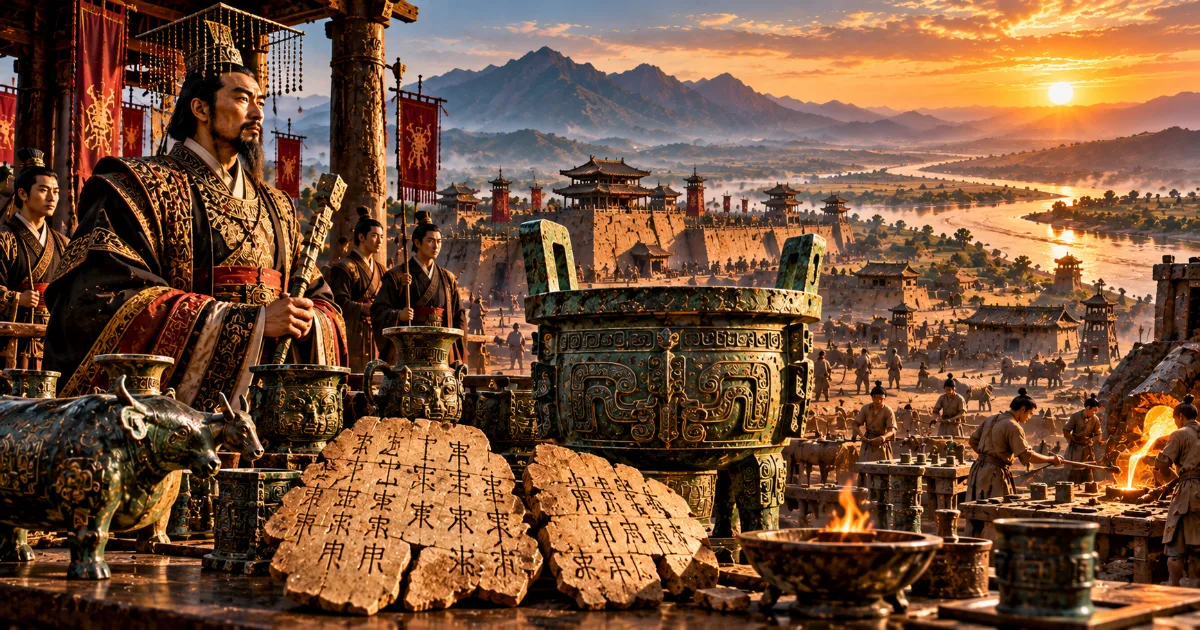
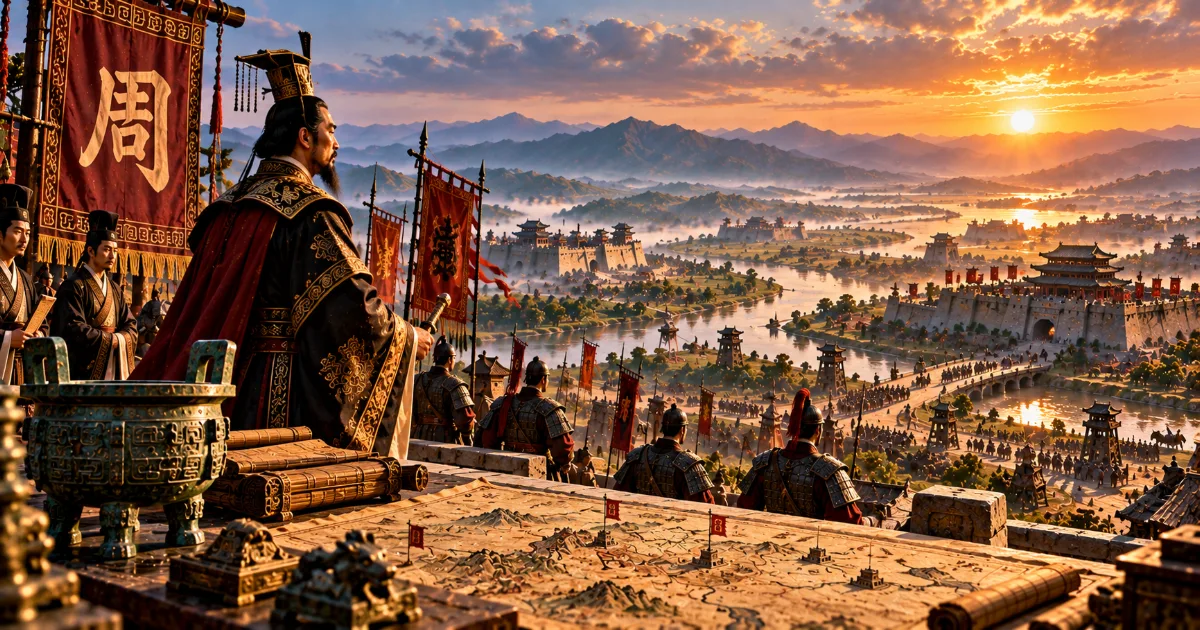
Confucius lived during the Eastern Zhou period, an era of political fragmentation and changing social relationships. The Zhou royal court retained ceremonial importance, but its ability to control powerful regional states had declined. Local rulers pursued their own interests, formed alliances, and fought wars that disrupted the older political order.
The political system established by the early Zhou depended heavily on relationships among ruling families and regional elites. Over time, some regional states developed greater military and economic strength, making them less dependent on the royal court. Political loyalty became more complicated, and the ability to govern effectively increasingly depended on the resources and organization of individual states.
These changes created uncertainty about the proper foundations of authority. If traditional institutions were weakening, what principles should guide rulers and officials? Was political order best maintained through inherited rank, military strength, moral example, or strict laws? How could people preserve social responsibility when political leaders themselves often appeared to act in pursuit of power?
Such questions formed the wider background of Confucius's teaching. He lived in a world where traditional rituals and inherited political relationships remained important, but their ability to maintain stability was increasingly challenged.
The state of Lu, where Confucius was born and spent much of his life, was associated with Zhou cultural traditions. Its political environment included aristocratic families, court officials, ritual practices, and a continuing respect for the heritage of the Zhou founders. This setting helped shape Confucius's interest in proper conduct, ceremonial obligations, and the moral responsibilities of leadership.
Confucius believed that the problems of his time could not be solved simply by strengthening armies or issuing more commands. Political stability required a deeper transformation in the conduct of rulers and officials. People needed to understand their duties, cultivate good judgment, and recognize that authority carried obligations.
His interest in the past was therefore not merely an attempt to preserve old customs without question. He sought to identify principles that could restore order in a changing world. By studying earlier traditions and examining human behavior, he hoped to show how ethical conduct could support a more harmonious society.
The instability of the Eastern Zhou period made these ideas particularly significant. Confucius's philosophy emerged from a real historical crisis, but its concerns extended beyond the circumstances of his own lifetime.
2. The Early Life of Confucius
Traditional accounts place the birth of Confucius in 551 BCE in the state of Lu, in the area of modern Qufu in Shandong Province. His family was associated with a declining branch of the local aristocracy, although details of his early life are preserved mainly through later accounts and should be treated with appropriate caution.
Confucius is traditionally said to have experienced financial difficulties during his youth. These circumstances are often used to explain his emphasis on learning, personal discipline, and the cultivation of character rather than the mere possession of wealth or high birth. The precise details of his childhood remain uncertain, but his later teachings clearly place considerable importance on education as a means of personal development.
He developed a deep interest in the rituals, historical traditions, and social practices associated with earlier Chinese rulers. Rather than treating learning as a way to accumulate information alone, he understood it as a means of improving one's judgment and behavior. Knowledge was valuable when it helped a person become more responsible and capable of fulfilling social obligations.
Confucius's approach to education emphasized sustained effort. A student needed to study, reflect, ask questions, and examine personal conduct. Memorizing teachings without applying them to life was insufficient. Genuine learning required a person to consider how knowledge should influence decisions and relationships.
He became known as a teacher who attracted students from different backgrounds. The tradition surrounding him emphasizes that education should not be restricted entirely to those born into the highest ranks of society. Although the extent of access to his teaching cannot be reconstructed precisely, his reputation as a teacher helped establish an enduring connection between learning and moral improvement.
Confucius also sought to apply his principles to government. He believed that political institutions could be improved when rulers and officials cultivated integrity and understood their responsibilities. His interest in public service was therefore closely related to his educational work.
The image of Confucius that emerged through later tradition is that of a teacher who combined learning, discipline, reflection, and practical concern for society. Although many biographical details remain uncertain, these qualities are consistent with the ethical priorities preserved in the Confucian tradition.
3. Confucius as a Teacher and Political Thinker
Confucius did not separate education from public life. He believed that the cultivation of character could improve not only individuals but also the institutions through which society was governed.
His teaching emphasized the development of judgment rather than blind obedience to rules. A person needed to understand why a particular action was appropriate and how it affected others. Moral conduct required attention to circumstances, relationships, intentions, and consequences.
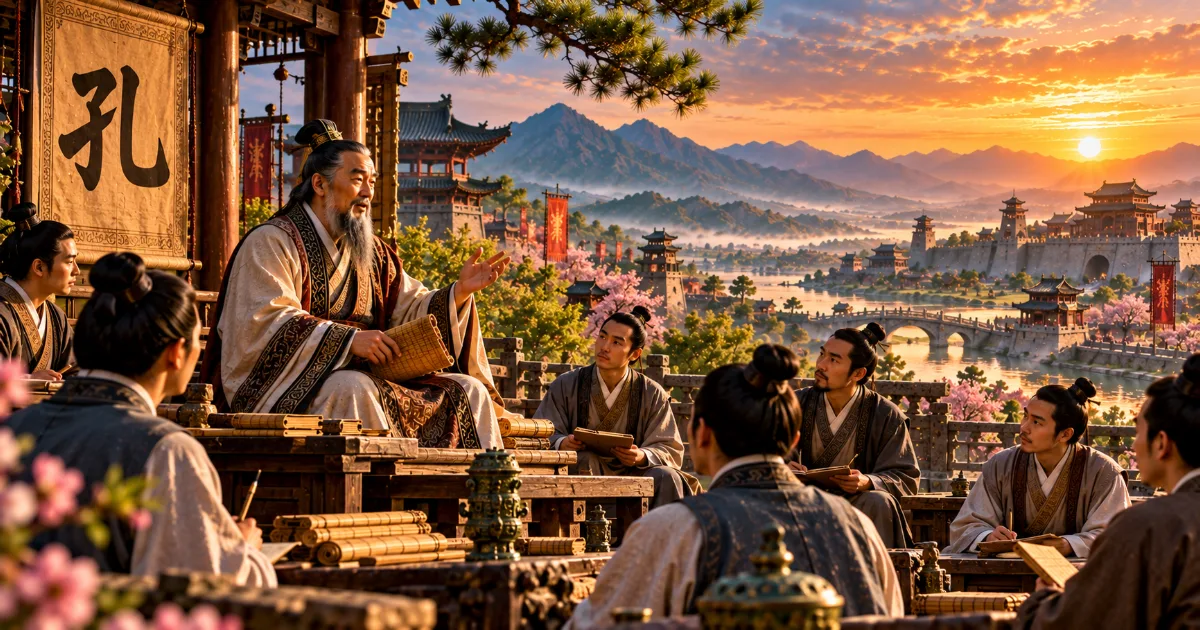
Confucius's students learned through discussion, questions, examples, and reflection. The teachings later preserved in the Analects frequently present short exchanges in which a student asks a question and Confucius responds with guidance suited to the situation. The collection is not a systematic philosophical textbook written by Confucius himself. It was compiled and transmitted by later generations, and its contents reflect a developing tradition.
This teaching method encouraged students to think carefully about ethical problems. Rather than offering the same answer in every situation, Confucius could emphasize different aspects of a principle depending on the student's character or question. The goal was to develop people capable of sound judgment rather than individuals who merely repeated instructions.
His political thought followed a similar approach. A government needed laws and institutions, but their effectiveness depended partly on the qualities of the people responsible for administering them. Officials who acted selfishly or dishonestly could undermine public confidence even if the formal rules appeared sound.
Confucius therefore placed moral example at the center of leadership. A ruler who demonstrated integrity and responsibility could encourage similar behavior among officials and subjects. Government was not simply the exercise of force. It was also a moral relationship in which people observed the conduct of those above them.
This position did not mean that Confucius rejected every form of punishment or administration. Rather, he argued that fear alone was an inadequate foundation for lasting order. A society governed only through threats might produce outward compliance without encouraging people to develop an internal understanding of right conduct.
His approach made education and ethical cultivation essential to public life. A good official needed knowledge, discipline, and a commitment to the wider community. A good ruler needed to recognize that power brought responsibilities and that personal conduct could affect the entire state.
4. Ren: The Principle of Humaneness
One of the most important concepts in Confucian thought is ren, commonly translated as humaneness, benevolence, or authoritative goodness. It refers to a quality of character expressed through concern for others, consideration, and a willingness to act in ways that support human relationships.
Ren is not simply a feeling of kindness. It involves practical behavior and the development of moral judgment. A person who possesses ren considers how actions affect other people and recognizes that social life requires more than pursuing personal advantage.
Confucius connected humaneness with everyday conduct. It could be expressed through respect, honesty, patience, fairness, and a willingness to help others. The concept encouraged people to look beyond immediate self-interest and consider the responsibilities they owed to family members, friends, colleagues, and the wider community.
The development of ren required practice. A person did not become morally mature through a single decision or by learning a definition. Character emerged through repeated choices, reflection, and the effort to correct mistakes. Ethical improvement was a lifelong process.
Confucius also recognized that humaneness had to be expressed with judgment. Treating people well did not necessarily mean treating every person in exactly the same way regardless of the relationship or circumstances. Family responsibilities, public duties, and different social roles could create distinct obligations. The challenge was to respond appropriately while maintaining a concern for human dignity and moral conduct.
This emphasis on relationships has sometimes led to misunderstandings. Confucian ethics is not simply a demand that individuals sacrifice themselves for everyone else. It asks people to consider how their actions affect others and to develop the capacity to fulfill responsibilities without abandoning moral judgment.
Ren also shaped Confucius's view of political leadership. A ruler who acted with humaneness would consider the welfare of the population rather than treating people merely as instruments of personal power. Such conduct could strengthen trust and encourage officials to act responsibly.
The concept remains important because it connects moral development with social life. It suggests that ethical behavior is not limited to private intentions. It becomes visible in the way people treat others, exercise authority, respond to conflict, and fulfill their obligations.
5. Li: Ritual, Courtesy, and Proper Conduct
Another central concept in Confucian thought is li, often translated as ritual, propriety, or the conventions of appropriate conduct. The term includes formal ceremonies, but its meaning is broader than religious ritual alone. It also concerns the everyday practices through which people express respect, maintain relationships, and recognize social responsibilities.
Confucius believed that rituals could help cultivate character by giving moral principles a practical form. Respect, gratitude, mourning, hospitality, and public responsibility could be expressed through established practices. These conventions helped people understand how to behave in situations where relationships and obligations mattered.
For example, honoring parents was not only a private feeling. It could be expressed through respectful speech, care during illness, support in old age, and appropriate conduct during mourning. Ritual provided a framework for making respect visible through actions.
Li also mattered in government. Ceremonies and official procedures helped define relationships between rulers, officials, and other members of the political community. Proper conduct could communicate respect for institutions and clarify the responsibilities associated with different positions.
Confucius did not teach that ritual should become empty performance. A person who followed formal procedures without genuine respect missed their moral purpose. The outward action needed to be connected to an appropriate attitude and an understanding of the relationship involved.
This distinction is important because it shows that Confucian thought was concerned with both behavior and intention. Ritual could help train a person in respectful conduct, but it could not replace the development of character. A ceremony performed without sincerity might preserve its outward form while losing much of its ethical value.
Li also provided a way to manage conflict. Shared expectations about speech, behavior, and social responsibilities could reduce unnecessary friction and help people respond to disagreements without immediately resorting to force. Such conventions could not eliminate conflict, but they could provide a framework for handling it.
In Confucian ethics, ritual and humaneness reinforce each other. Ren supplies the moral concern for others, while li provides practices through which that concern can be expressed. Together, they help connect individual character with the maintenance of social relationships.
6. Xiao: Filial Respect and Family Responsibility
Filial respect, known as xiao, is another major theme in Confucian teaching. It concerns the responsibilities children have toward their parents and, more broadly, the respect owed to elders and previous generations.
Confucius regarded the family as an important setting in which people learned the habits required for social life. Children could develop patience, gratitude, responsibility, and respect through their relationships with parents and other relatives. These habits could then influence how they behaved in the wider community.
Filial respect included more than obedience. It involved caring for parents, treating them with consideration, and maintaining appropriate conduct toward them. The tradition also recognizes that genuine respect can involve concern for a parent's behavior rather than unquestioning approval of every action.
This point is important because Confucian ethics is sometimes simplified into the idea that children must obey parents under all circumstances. The historical tradition places strong emphasis on family hierarchy, but it also includes discussions of remonstrance, in which a person respectfully points out mistakes made by someone in authority. Respect can therefore involve honest advice rather than silent agreement.
The family also served as a model for understanding wider social responsibilities. Just as family members owed duties to one another, officials and rulers had obligations within the political community. Confucius believed that the habits developed in personal relationships could influence the quality of public life.
However, the emphasis on family hierarchy also raises difficult questions. When family loyalty conflicts with fairness or wider public responsibilities, which obligation should take priority? Confucian thinkers have offered different interpretations, and historical societies have not always applied these principles consistently.
It is also important to recognize that traditional Confucian family systems were shaped by gender and status hierarchies that differ from many modern expectations. The tradition's emphasis on family responsibility has been interpreted in different ways, and its historical influence included both supportive relationships and restrictive social expectations.
Despite these complexities, filial respect remains one of the most recognizable aspects of Confucian ethics. It emphasizes gratitude toward previous generations and the importance of care within family relationships. Its broader significance lies in the belief that moral character begins in the way people fulfill their most immediate responsibilities.
7. Yi: Righteousness and the Difference Between Right and Advantage
Confucian thought also emphasizes yi, commonly translated as righteousness or moral appropriateness. It concerns the ability to recognize what is right in a particular situation and to act according to moral judgment rather than personal advantage alone.
Confucius believed that people often face choices between what benefits them immediately and what is ethically appropriate. A person might gain wealth, status, or influence by acting dishonestly, yet such gains could damage character and relationships. Yi encourages people to consider whether an action is morally defensible rather than asking only whether it is profitable.
This principle was particularly important for officials and rulers. Political positions offered opportunities for wealth and influence, but those opportunities created a risk that people would use public authority for private benefit. Confucius emphasized that a person entrusted with responsibility should act with integrity and resist the temptation to exploit that position.
Righteousness does not mean ignoring practical circumstances. Ethical judgment requires understanding what a situation demands and how different responsibilities should be balanced. The challenge is to make decisions that are appropriate and fair rather than mechanically applying a rule without considering its purpose.
Confucius also linked yi to the development of character. A person who consistently chooses what is right, even when doing so is difficult, strengthens moral habits. Conversely, someone who repeatedly chooses personal gain at the expense of responsibility may gradually become less capable of sound judgment.
The concept complements ren and li. Ren encourages concern for others, li provides conventions for appropriate conduct, and yi helps determine what is morally suitable when competing interests arise. Together, these principles form part of a broader approach to ethical life.
In political settings, yi offered a standard by which officials could evaluate decisions. A policy might benefit a ruler in the short term while imposing unfair burdens on the population. Confucian ethics encouraged attention to the moral responsibilities of government rather than the interests of the ruling household alone.
This principle remains relevant because it asks people to examine the relationship between success and integrity. Achieving a goal is not necessarily the same as achieving it properly. The means used to obtain power, wealth, or recognition matter because they shape character and affect the wider community.
8. The Junzi: Becoming a Person of Moral Character
The concept of junzi is often translated as the exemplary person, noble person, or person of moral character. In earlier contexts, the term could refer to someone of noble status, but Confucian thought increasingly emphasized ethical qualities rather than birth alone.
For Confucius, a person worthy of respect should demonstrate integrity, learning, responsibility, and self-discipline. High social rank did not automatically make someone morally admirable. A person needed to cultivate character through practice and reflection.
The junzi was expected to act thoughtfully, speak responsibly, and consider the consequences of decisions. Such a person would not simply follow the crowd or pursue every opportunity for personal gain. Instead, the exemplary person would use moral principles to guide behavior, even when doing so required effort or sacrifice.
This ideal connected education with ethical development. Learning was valuable because it helped a person understand history, examine conduct, and develop better judgment. The goal was not merely to accumulate facts or achieve public recognition, but to become someone capable of acting well in different circumstances.
Confucius also emphasized the importance of self-examination. People needed to consider their mistakes and recognize areas where they could improve. Moral growth required honesty about personal weaknesses rather than assuming that one had already become virtuous.
The junzi was not necessarily someone who never made mistakes. Rather, the ideal involved a continuing commitment to improvement. A person who recognized an error and worked to correct it demonstrated a quality of character that was more valuable than pretending to be perfect.
The concept also had political implications. Confucius believed that officials should cultivate the qualities required for responsible service. A person who possessed moral judgment and integrity would be better equipped to advise a ruler, administer public affairs, and maintain trust.
The junzi therefore represents a central feature of Confucian ethics: moral worth is developed through sustained effort. Character depends not simply on inherited position or public reputation, but on the choices a person makes and the habits those choices create.
9. Education as a Lifelong Responsibility
Education occupied a central place in Confucius's philosophy. He believed that learning could improve both individual character and the quality of society. Through study, reflection, and practice, people could develop the knowledge and judgment required to fulfill their responsibilities.
Confucius treated education as more than memorization. Students needed to consider what they learned and understand how it applied to real situations. Knowledge that did not influence conduct was incomplete, while action without reflection could lead to poor judgment.
His approach encouraged questions and discussion. A teacher could guide students toward understanding, but the students themselves needed to make an effort. Learning required attention, persistence, and a willingness to acknowledge what one did not know.
The tradition associated with Confucius also emphasized the value of studying historical examples. Earlier rulers and events could provide lessons about leadership, responsibility, success, and failure. The past was useful not because every ancient practice should be copied without question, but because historical experience could help people understand recurring human problems.
Education was closely connected to self-cultivation. A person needed to learn not only about government, ritual, or history, but also about personal conduct. Study could reveal weaknesses, challenge assumptions, and help develop more responsible habits.
Confucius is often associated with the idea that learning should not be restricted entirely to those born into the highest social ranks. The later Confucian tradition placed great importance on education as a route to public service, although access to learning remained unequal across historical periods and societies.
The relationship between education and government became especially important in later Chinese history. Confucian texts eventually became central to official learning and examinations for government service. These systems developed over centuries and should not be attributed fully to Confucius himself, but his emphasis on learning helped shape the tradition.
Education also remained a personal responsibility. A person could continue learning throughout life, refining judgment and correcting mistakes. Confucius's example encouraged the view that wisdom was not acquired instantly but developed through sustained effort.
This educational ideal has been influential because it connects knowledge with responsibility. Learning matters not only because it can improve career prospects or social status, but because it can help people become more thoughtful, capable, and ethical members of society.
10. Confucius's Ideas About Good Government
Confucius believed that good government depended heavily on the moral qualities of rulers and officials. A state could possess laws, armies, and administrative structures, but these institutions would function poorly if those responsible for them acted dishonestly or selfishly.
He argued that rulers should lead through virtue and example. When leaders behaved responsibly, officials and subjects would have a reason to respect them. When rulers relied mainly on punishment and threats, people might obey outwardly while failing to develop an understanding of proper conduct.
This did not mean that Confucius rejected laws or administrative procedures. He recognized that government required organization and that rulers needed practical methods to maintain order. His central argument was that coercion alone could not create the kind of moral society he hoped to achieve.
A ruler's personal conduct mattered because it influenced the political environment. If leaders treated public office as an opportunity for private gain, dishonesty could spread through the administration. If they demonstrated restraint, fairness, and responsibility, they could create expectations that encouraged similar behavior among officials.
Confucius also emphasized the importance of selecting capable people for public service. Officials needed knowledge, integrity, and an understanding of their duties. A government staffed by people who pursued personal advantage at the expense of the public would struggle to maintain trust.
The Confucian approach connected government with education. Leaders and officials required moral training as well as practical knowledge. Historical examples, ethical reflection, and the study of proper conduct could help prepare people for positions of responsibility.
Confucius's ideal government was not a modern democracy. It assumed a hierarchical political order in which rulers and officials held authority over the population. Nevertheless, it placed limits on the moral justification of that authority by insisting that leadership should be responsible and virtuous.
His political philosophy therefore offered a critique of government based solely on force. It argued that stability depended on the quality of relationships between rulers and subjects and on the example set by those who held power.
11. Why Confucius Struggled to Reform the Rulers of His Time
Despite his interest in government, Confucius did not achieve the political influence he hoped for during his lifetime. Traditional accounts describe him seeking opportunities to advise rulers and apply his ideas to public administration. However, the political leaders of his time often had immediate concerns that differed from his ethical priorities.
The Eastern Zhou world was marked by competition among states. Rulers needed to defend their territories, maintain alliances, secure resources, and respond to military threats. Some leaders may have regarded moral reform as desirable, but they also faced pressure to obtain practical advantages in a difficult political environment.
Confucius believed that ethical leadership could strengthen a state over the long term. A ruler who governed responsibly might inspire loyalty, reduce corruption, and encourage officials to fulfill their duties. Yet these benefits required sustained effort and could be difficult to demonstrate quickly in a world where military success often determined political survival.
His emphasis on moral cultivation also challenged rulers who preferred to rely on personal power or immediate political calculations. A leader might not welcome advice suggesting that personal conduct, restraint, and responsibility were more important than displays of wealth or force.
Traditional accounts describe Confucius traveling between states and seeking opportunities to serve. The precise details of his journeys and appointments remain debated, but the broader tradition reflects his commitment to applying philosophy to public life rather than limiting it to abstract discussion.
His lack of lasting political success did not end his influence. Confucius continued teaching, and his students helped preserve his ideas. Over time, later scholars developed and interpreted his thought, making it a major intellectual tradition.
The contrast between his immediate political limitations and his later influence is striking. Confucius could not transform the political system during his lifetime, but the ideas associated with him eventually shaped education, public administration, ethics, and cultural traditions across much of East Asia.
His experience also illustrates a recurring problem in political philosophy: ideas about good government may be persuasive in principle while remaining difficult to apply when leaders face immediate threats and competing interests.
12. The Analects and the Preservation of Confucian Teachings
The Analects, known in Chinese as Lunyu, is the most important collection of teachings associated with Confucius. It preserves sayings, conversations, and episodes involving Confucius and his students. The work provides a central source for understanding the ethical and political principles that became associated with his name.
The Analects was not written by Confucius as a single completed book. It developed through a process of transmission and compilation by later generations. Its passages reflect different contexts and stages in the preservation of the Confucian tradition, and scholars continue to examine its composition and interpretation.
Many passages focus on character, education, ritual, family responsibility, and leadership. Some describe the qualities of an exemplary person, while others examine the duties of rulers or the importance of correcting mistakes. The collection also presents Confucius as a teacher who responds to different students in different ways.
The conversational format gives the work a distinctive character. Rather than presenting one uninterrupted argument, it preserves short exchanges that invite interpretation. Readers must consider the context of each statement and how it relates to the broader ethical framework.
The Analects became influential partly because it could be studied and interpreted across generations. Scholars examined its language, debated the meaning of particular passages, and connected its teachings to changing political and social circumstances.
Its later importance should not lead us to assume that every passage reflects the exact words spoken by Confucius. The text preserves a tradition associated with him, but its development over time must be recognized. Historical research distinguishes the life of Confucius from the ways later communities remembered and interpreted him.
The Analects nevertheless provides an essential window into the development of Confucian ethics. It shows how the tradition linked learning, moral character, social responsibility, and political leadership. Its continued study reflects the lasting interest of these questions.
13. Confucius and the Importance of Tradition
Confucius frequently emphasized the value of earlier traditions. He believed that historical learning and ritual practices could help people understand how to live responsibly and govern effectively. His respect for the past was closely connected to his desire to improve the present.
The Zhou tradition held particular importance in his thought. Confucius regarded the institutions and practices associated with earlier rulers as sources of moral and political insight. He believed that understanding the past could help people recover principles that had been neglected in his own time.
However, respect for tradition did not necessarily mean that every old practice should be followed without reflection. Confucian learning required judgment and interpretation. Students needed to understand why a practice mattered and how it contributed to ethical conduct.
Ritual was important because it connected individuals to a wider social world. Ceremonies, mourning practices, respectful speech, and public responsibilities helped people recognize relationships and obligations. By participating thoughtfully in such practices, individuals could develop habits of consideration and self-discipline.
Tradition also provided examples of political success and failure. Historical accounts of rulers could be used to examine the consequences of good or bad leadership. The past offered a way to think about recurring questions rather than simply a collection of events to memorize.
Confucius's approach differed from the assumption that improvement always required rejecting inherited practices. He believed that societies could recover important principles from their traditions while adapting their application to present needs.
At the same time, traditions can preserve inequality as well as wisdom. The historical societies influenced by Confucian thought often maintained strict hierarchies, including gender and status distinctions. Later scholars and reformers have therefore debated which aspects of the tradition should be preserved and which should be reconsidered.
The significance of Confucius's respect for tradition lies in his attempt to connect historical memory with ethical judgment. He treated the past as a resource for learning, but the value of that resource depended on the ability to interpret it thoughtfully and apply its lessons responsibly.
14. The Growth of Confucianism After Confucius
Confucius's influence expanded gradually after his death, traditionally dated to 479 BCE. His students and later scholars preserved teachings associated with him, while new thinkers developed the tradition in response to changing political and philosophical conditions.
Two particularly important figures in the later Confucian tradition were Mencius and Xunzi. They lived after Confucius and offered different interpretations of human nature, moral development, and government. Their ideas demonstrate that Confucianism was not a fixed doctrine that remained unchanged after its founder's lifetime.
Mencius argued that human beings possess beginnings of moral goodness that can be developed through proper cultivation. He emphasized the responsibilities of rulers and suggested that oppressive government could undermine a ruler's legitimacy. His thought extended Confucian concerns about moral leadership and public welfare.
Xunzi placed greater emphasis on the need for education, ritual, and deliberate effort to shape human behavior. He argued that people required guidance and structured practices to develop appropriate conduct. His approach differed from Mencius's account of human nature, but both thinkers believed that education and social institutions were essential to moral life.
These debates helped broaden the Confucian tradition. Scholars examined how moral character developed, what obligations rulers owed to the people, and how institutions could support ethical behavior. Confucianism became a tradition of interpretation and argument rather than a simple collection of unchanging sayings.
The political influence of Confucianism grew significantly in later periods. During the Han Dynasty, Confucian learning became increasingly important to official education and political ideology. Over subsequent centuries, scholars developed commentaries, educational traditions, and philosophical systems that drew on Confucian texts.
The civil service examination system, which eventually became a major route into government service, developed over many centuries and took different forms under different dynasties. Confucian classics became central to later examination traditions, connecting the study of ethical and historical texts with official careers.
These developments should not be attributed entirely to Confucius himself. Later institutions reflected the needs of imperial governments and the work of many generations of scholars. Nevertheless, the educational and ethical emphasis associated with Confucius helped provide a foundation for the tradition's lasting influence.
15. Confucianism, Family, and Society
Confucianism became deeply influential in the organization of family and social relationships. Its emphasis on filial respect, responsibility, and proper conduct helped shape expectations concerning parents, children, elders, and other members of the household.
The family was viewed as an important setting for moral education. Children learned habits of respect and responsibility through everyday relationships, while parents and elders were expected to provide guidance and maintain the household. These relationships were understood as part of a wider social order in which individuals had responsibilities toward one another.
Confucian traditions also emphasized the importance of maintaining harmony within relationships. This did not necessarily mean avoiding every disagreement. Rather, it encouraged people to approach conflict with consideration, restraint, and attention to their obligations. Respectful advice could be appropriate when a family member or superior acted incorrectly.
The influence of Confucianism on family life varied across historical periods and social groups. Practices were shaped by economic conditions, local customs, law, religion, and the changing position of women and younger family members. The tradition should therefore not be treated as a single uniform set of rules followed identically by every Chinese household.
Confucian ideas could support care and responsibility, but they could also reinforce strict hierarchies. In many historical contexts, family authority was strongly patriarchal, and women often faced restrictions on education, property, marriage, and public participation. These practices developed through complex social and historical processes, and they cannot be explained by Confucian philosophy alone.
Modern interpretations of Confucianism vary widely. Some emphasize its teachings on care for parents, mutual responsibility, education, and ethical leadership. Others criticize historical uses of the tradition to justify inequality or excessive obedience. Contemporary scholars and communities continue to debate how its principles should be understood today.
The continuing importance of Confucianism lies partly in the questions it raises about the relationship between individuals and society. It asks how people can maintain personal integrity while fulfilling their responsibilities to others, and how social harmony can be pursued without abandoning moral judgment.
16. The Political Legacy of Confucius
Confucius did not establish a political empire, but the tradition associated with him became an important influence on Chinese government. Later rulers and scholars drew on Confucian ideas to explain the responsibilities of officials, the importance of education, and the moral qualities expected of leadership.
Confucian political thought emphasized that rulers should govern responsibly and that officials should possess integrity and knowledge. It encouraged the idea that public service required ethical preparation rather than relying exclusively on inherited rank or military ability.
The growth of imperial administration created opportunities for Confucian learning to become connected with official careers. In later periods, education in classical texts became a major component of the preparation expected of many government officials. The examination system developed gradually and changed significantly over time, but it helped establish a long-lasting relationship between classical learning and public service.
Confucianism also shaped political criticism. Scholars could use its principles to argue that rulers had failed in their responsibilities or that officials were acting improperly. Moral standards provided a language through which government could be evaluated, even in political systems where rulers held substantial power.
This influence was never complete or uncontested. Chinese governments also relied on laws, military organization, administrative institutions, and other philosophical traditions. Legalist ideas, for example, emphasized clear rules, rewards, punishments, and the organization of state power. In practice, Chinese political systems often combined different approaches rather than following a single philosophy exclusively.
Confucianism's political legacy is therefore best understood as one major strand within a complex history. It influenced the language of moral government, the education of officials, and the standards through which political behavior was judged.
Its emphasis on ethical leadership also extended beyond China. Confucian traditions influenced Korea, Japan, and Vietnam through education, political institutions, literature, and philosophical exchange. Each society adapted these ideas to its own historical circumstances.
The lasting significance of Confucius lies not in the creation of one unchanging political system but in the continuing influence of his questions about leadership, character, learning, and responsibility.
17. Confucius in the Modern World
Confucius continues to attract attention because his teachings address questions that remain important across different societies. People still debate what makes a good leader, how education should shape character, what responsibilities family members owe one another, and whether social stability depends primarily on laws or on the conduct of individuals.
His emphasis on education has influenced discussions about lifelong learning and personal development. The idea that learning should improve judgment rather than simply provide information remains relevant in societies where education is often associated with examinations, employment, and social advancement.
His political philosophy also offers a way to examine the moral responsibilities of leadership. Public officials exercise authority that affects other people, and Confucian ethics encourages attention to integrity, restraint, and the welfare of the community. These principles can be considered alongside modern ideas about accountability, rights, and democratic government, although they are not identical to them.
Confucius's emphasis on family responsibility continues to inspire discussion about care for older generations and the importance of maintaining relationships. At the same time, modern interpretations often reconsider traditional hierarchies and ask how respect can coexist with individual autonomy and equality.
The global influence of Confucianism has also encouraged comparative study. Scholars examine its similarities and differences with other philosophical traditions, including Greek ethics, Indian philosophy, and modern political thought. Such comparisons reveal that different civilizations have developed varied approaches to recurring human problems.
However, Confucius should not be reduced to a collection of inspirational sayings detached from historical context. His ideas developed in a particular society with its own political institutions, social hierarchies, and assumptions about family and authority. Understanding both the strengths and the limitations of that context makes it possible to engage with the tradition more thoughtfully.
The modern relevance of Confucius lies in the opportunity to examine his questions critically rather than accepting every historical practice associated with his name. His emphasis on learning, ethical reflection, and responsible conduct continues to provide material for discussion about how people and institutions should behave.
Conclusion: The Teacher Whose Ideas Outlived His Age
Confucius lived during a period of political fragmentation and uncertainty, when the older Zhou order was struggling to maintain stability. He believed that the problems of his time could not be solved through force alone. A better society required people who cultivated moral character, understood their responsibilities, and acted with consideration toward others.
His teachings placed humaneness, ritual propriety, righteousness, filial respect, education, and self-cultivation at the center of ethical life. These principles were connected rather than isolated. Humaneness encouraged concern for others, ritual provided forms of appropriate conduct, righteousness guided moral judgment, and education helped people develop the qualities needed to fulfill their duties.
Confucius also believed that government should be shaped by the character of its leaders. Rulers who acted responsibly could inspire trust and encourage better conduct, while those who relied only on threats and punishments risked producing outward obedience without genuine moral commitment.
His immediate political ambitions were not fully realized, but his influence grew through the work of students, scholars, and later institutions. The Analects preserved a tradition associated with him, while thinkers such as Mencius and Xunzi developed new interpretations. Over time, Confucian learning became deeply connected with Chinese education, public service, family ethics, and political thought.
The tradition also carried limitations and contradictions. Its historical applications sometimes reinforced rigid social hierarchies, and modern readers continue to debate how its principles should be interpreted in societies that place greater emphasis on equality and individual rights. Recognizing these complexities makes the study of Confucius more meaningful rather than less important.
His enduring legacy is the belief that knowledge and authority should be accompanied by responsibility. Learning should improve character, relationships should involve mutual obligations, and political leadership should be judged by more than the possession of power.
Confucius's life demonstrates how ideas developed during a time of crisis can influence societies long after the original circumstances have disappeared. His teachings became one of the most influential intellectual traditions in Chinese history and helped shape the wider East Asian world.
In the next article, we will explore Laozi, Daoism, and the Search for Harmony, examining a different philosophical response to the challenges of ancient China and the enduring idea that human life can be improved by understanding the natural way of the world.
#HistoryOfChina #Confucius #Confucianism #ChinesePhilosophy #AncientChina #ChineseEthics #WorldHistory #HistoryOfPhilosophy