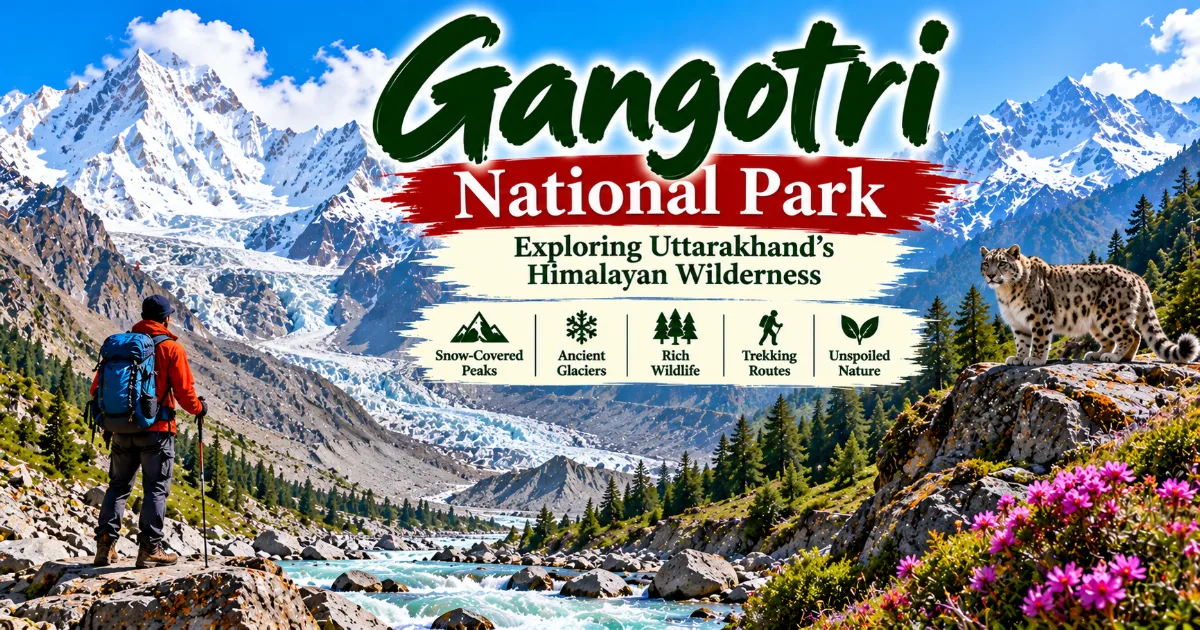
Gangotri National Park is one of Uttarakhand’s most remarkable protected landscapes, bringing together snow-covered Himalayan peaks, ancient glaciers, alpine meadows, dense forests and remote mountain valleys.
Established in 1989, the national park covers approximately 2,390 square kilometres in Uttarkashi district and protects a significant part of the upper Bhagirathi River basin. For travellers interested in Himalayan nature, high-altitude trekking, wildlife and the origins of the Ganga, this extraordinary wilderness offers a deeper experience of Uttarakhand beyond its famous pilgrimage towns.
Understanding Gangotri National Park
Located in the upper reaches of the Garhwal Himalayas, Gangotri National Park is among the largest national parks in Uttarakhand. Its landscape changes dramatically with elevation. Lower valleys contain forests and river corridors, while higher elevations open into alpine meadows, rocky mountain slopes, glaciers and permanently snow-covered peaks. This variation creates habitats for a wide range of plants and animals adapted to the demanding conditions of the Himalayas.
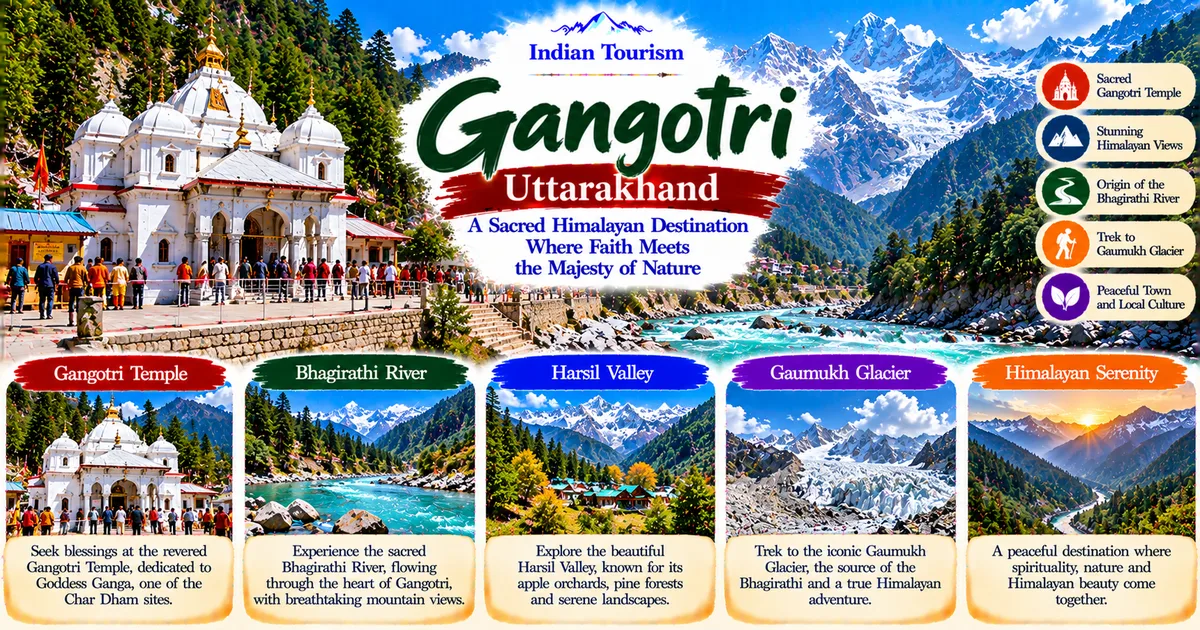
The park takes its name from Gangotri, one of the most significant pilgrimage destinations associated with the River Ganga. Gangotri town lies near the entrance to the protected landscape, and the surrounding region has a powerful spiritual identity. For generations, pilgrims, shepherds, traders, mountaineers and local communities have travelled through these mountains for different reasons. Today, the national park is important both as a conservation landscape and as a destination for carefully managed adventure tourism.
Gangotri National Park is not a conventional holiday destination with roads leading to every viewpoint. Much of its interior remains remote and accessible only on foot, with certain areas requiring permits and specialist arrangements. Travellers should therefore approach the region as a protected mountain wilderness rather than a sightseeing circuit. Its value lies in the experience of moving through a landscape where nature, altitude, weather and geography determine the pace of travel.
Continue Reading
The Geography of a Himalayan Wilderness
The national park occupies a dramatic section of the upper Bhagirathi valley. Its terrain includes steep mountain walls, narrow river valleys, glacial basins, high ridges and expansive snowfields. The Bhagirathi River, one of the principal headstreams of the Ganga, flows through this wider landscape, connecting the high Himalayan environment with settlements and agricultural areas farther downstream.
The elevation varies considerably across the park. Lower sections support forest vegetation, while higher zones become increasingly dominated by alpine plants, exposed rock, snow and ice. This vertical range is one of the reasons the region supports such varied ecosystems. A traveller moving upward from the forested valley towards the high mountains may encounter several distinct ecological zones within a relatively short geographical distance.
The scenery is shaped by geological forces that continue to influence the Himalayas. The mountains are part of a young and tectonically active range, where uplift, erosion, landslides and glacial processes have created a constantly changing landscape. Sharp ridges and deep valleys are reminders that these mountains have been shaped over immense periods of time and remain sensitive to environmental change.
For visitors, this geography creates both beauty and difficulty. Routes can become steep, paths may cross unstable slopes, and weather conditions can change rapidly. A sunny morning in the valley does not guarantee clear skies higher in the mountains. Anyone travelling into remote areas should be prepared for cold temperatures, strong winds, rain, snow and limited access to emergency assistance.
Gangotri Glacier and the Source Region of the Ganga
One of the most important natural features associated with the park is the Gangotri Glacier. This enormous body of ice occupies a high Himalayan valley and feeds the Bhagirathi River through the glacial stream emerging from its snout. The source area is widely known as Gaumukh, a name that refers to its traditional resemblance to a cow's mouth.
The journey towards Gaumukh is among the most recognised high-altitude trekking experiences in Uttarakhand. The route begins in the Gangotri region and passes through rugged mountain scenery, rocky trails and sections with views of towering peaks. The destination has religious significance for many Hindu pilgrims, who regard the source region as an important part of the sacred geography of the Ganga.
The glacier is also scientifically important. Himalayan glaciers store freshwater and release meltwater that contributes to river systems supporting communities and ecosystems downstream. Their condition is relevant to wider questions about climate, seasonal water availability, mountain hazards and the long-term stability of high-altitude environments.
However, a glacier is not simply a frozen river that remains unchanged from year to year. Its mass responds to snowfall, temperature, sunlight, debris cover and other environmental conditions. Changes in glacier extent and behaviour can affect the surrounding terrain, including the formation of meltwater channels, unstable slopes and glacial lakes.
Visitors should remember that the glacier environment can be hazardous. Ice, loose stones, falling rocks, sudden changes in weather and fast-moving meltwater all present risks. Reaching a viewpoint near the glacier does not mean that walking directly onto the ice is safe. Travel should follow authorised routes and local guidance, and visitors should never attempt glacier exploration without suitable expertise and equipment.
Why Gangotri National Park Matters for Conservation
Gangotri National Park protects a large area of high-altitude habitat in a region where ecosystems are particularly sensitive to environmental change. Mountain species must survive short growing seasons, low temperatures, steep terrain and limited food availability during winter. Even small changes in habitat conditions can influence where animals feed, breed and move.
Protected areas help preserve these habitats by limiting certain forms of development and regulating human activities. They also provide opportunities for wildlife monitoring, ecological research and conservation planning. In the upper Himalayas, these responsibilities extend beyond the protection of individual species. The integrity of forests, alpine meadows, glaciers, streams and river corridors is closely connected to the health of the wider landscape.
The park also contributes to the conservation of the upper Bhagirathi catchment. Mountain vegetation can help stabilise soil, influence local water cycles and support biodiversity. Although forests cannot prevent every landslide or flood, healthy ecosystems form an important part of the natural processes that shape mountain environments.
Conservation in this region requires balancing ecological protection with the needs of people who live in nearby settlements. Tourism, pilgrimage, livestock grazing, road access and local livelihoods all influence how the surrounding landscape is used. Long-term conservation is most effective when regulations are clear, local communities are included in decision-making and visitors understand why access restrictions may be necessary.
Wildlife of Gangotri National Park
Gangotri National Park is known for its Himalayan wildlife, including animals adapted to cold climates, steep slopes and high-altitude habitats. The species visitors might encounter depend on elevation, season, vegetation and the level of disturbance in a particular area. Wildlife sightings are never guaranteed, and the absence of visible animals does not mean a habitat lacks ecological importance.
Snow Leopard
The snow leopard is one of the most iconic animals of the high Himalayas. Its thick coat, long tail and powerful limbs help it survive in cold, rocky environments. Its pale, patterned fur provides camouflage among cliffs and boulders, allowing it to move through rugged terrain with remarkable discretion.
Snow leopards are difficult to observe because they occupy large territories and naturally avoid people. They are also threatened by pressures that can include habitat disturbance, declining prey availability and conflict with livestock owners. Their presence is an indicator of the importance of protecting extensive and connected mountain habitats.
Visitors should not approach or attempt to locate a snow leopard independently. Responsible wildlife tourism prioritises the animal's welfare and recognises that a rare sighting is never more important than protecting its natural behaviour.
Himalayan Blue Sheep
The bharal, commonly known as the Himalayan blue sheep, is an important wild herbivore of the high mountains. It is adapted to rocky slopes and open alpine terrain, where its agility helps it move across steep surfaces. Bharal feed on grasses and other mountain vegetation and form an important part of the high-altitude food web.
Because they can be seen on exposed slopes, blue sheep may be easier to spot than more elusive predators. Even so, visitors should use binoculars rather than moving closer. Disturbing a herd can force animals to expend energy escaping across difficult terrain.
Himalayan Musk Deer
Musk deer inhabit forested and subalpine environments in parts of the Himalayan region. They are generally shy and difficult to observe, relying on concealment and quiet movement to avoid threats. Their conservation is important because they have historically been affected by illegal hunting for musk, a substance obtained from specialised glands in males.
The protection of suitable forest habitat and the prevention of poaching are essential for the survival of musk deer populations. Visitors can contribute by following park rules and reporting suspicious activity to the appropriate authorities rather than attempting to intervene themselves.
Himalayan Monal and Other Birds
The Himalayan monal is a striking pheasant found in Himalayan forests and mountain slopes. The male has colourful plumage that can display iridescent shades of blue, green, copper and other tones depending on the light. The bird is associated with high-altitude forest environments and is recognised as the state bird of Uttarakhand.
The broader Himalayan region also supports other pheasants, eagles, vultures and smaller mountain birds. Birdwatching can be rewarding for visitors who move quietly, carry binoculars and allow enough time to observe the landscape. Early mornings often offer good opportunities to listen for bird calls, although sightings depend on season and weather.
Other Mountain Animals
The wider landscape supports a variety of mammals and smaller species adapted to mountain conditions. Depending on the habitat, these may include Himalayan tahr, goral, red foxes, martens and other animals recorded in the region. The distribution of wildlife varies across the park, and not every species is present in every valley.
For travellers, the most meaningful wildlife experience may be discovering signs of animal activity rather than seeing a large mammal directly. Tracks, droppings, feeding marks and bird calls can reveal the presence of wildlife without disturbing it. A responsible visitor learns to appreciate the ecosystem as a whole rather than judging a journey only by the number of animals photographed.
Forests, Alpine Meadows and Mountain Plants
The vegetation of Gangotri National Park changes with altitude and local conditions. Forested sections of the wider landscape can include conifers and broad-leaved trees, while higher areas support shrubs, grasses and alpine flowering plants. Beyond the upper vegetation limit, the landscape becomes increasingly dominated by bare rock, snow and ice.
Alpine meadows are among the most distinctive features of the Himalayan environment. During the short growing season, these areas can support grasses, herbs and flowering plants that take advantage of warmer temperatures and available moisture. Their growing period is brief, and plants must complete important stages of growth within a limited window.
These meadows provide food for herbivores and contribute to the ecological functioning of the mountains. They may also be used by pastoral communities in parts of the wider region, making the management of grazing and conservation a significant local issue.
Mountain plants can be particularly vulnerable to trampling. A shortcut across a meadow may seem harmless, but repeated foot traffic can damage vegetation, compact soil and increase erosion. Visitors should remain on established trails, avoid picking flowers and refrain from removing plants as souvenirs.
The alpine environment is also a reminder of the importance of patience. Some of the most beautiful features of the mountains are small and easily overlooked, including tiny flowers growing among stones, mosses on damp ground and plants surviving in exposed crevices. These details reveal how life adapts to conditions that may appear almost impossible.
Tapovan and the High Mountain Landscape
Tapovan is a high-altitude area associated with the landscape beyond Gaumukh and the upper Gangotri region. It is known for open mountain terrain, glacial surroundings and views of major Himalayan peaks. The area attracts experienced trekkers and mountaineering enthusiasts who want to explore the high-altitude environment beyond the main pilgrimage route.
Tapovan is not suitable for casual visitors without preparation. Reaching it involves demanding terrain, altitude exposure and conditions that can change rapidly. Depending on the route and current regulations, travellers may require permits, an experienced guide and appropriate equipment. It is important to confirm the latest access rules before making plans.
The area offers a different experience from the lower valley. Trees become sparse or disappear, the air becomes thinner and the landscape is increasingly defined by rock, ice and distant peaks. Walking becomes slower, and even simple activities can require more effort than they would at lower elevations.
Travellers should not treat a high-altitude trek as a race. Allowing enough time for acclimatisation, monitoring physical symptoms and turning back when conditions become unsafe are signs of good judgement. Reaching a particular viewpoint is never worth risking a serious altitude-related illness.
Gaumukh Trek: A Journey into the Upper Himalayas
The Gaumukh trek is one of the best-known routes associated with the Gangotri region. It combines religious significance, dramatic scenery and an opportunity to understand the connection between the glacier and the Bhagirathi River.
The trek traditionally begins at Gangotri, where visitors prepare for the journey by arranging permits, checking weather conditions and confirming the status of the route. The trail continues through mountain terrain towards areas commonly used as overnight stops. The precise arrangements depend on current rules, weather, trail conditions and the traveler's permit.
The route is physically demanding, even though its distance may appear manageable on a map. Uneven ground, loose stones, steep sections and altitude can make walking considerably harder than expected. Trekkers should be prepared to move slowly and maintain a comfortable pace rather than attempting to cover the route too quickly.
A responsible itinerary should include adequate time for rest, hydration and acclimatisation. Travellers who are not accustomed to high elevations may need to spend additional time at lower altitude before attempting the trek. Anyone with symptoms such as a persistent headache, dizziness, nausea, unusual fatigue or breathlessness at rest should stop ascending and seek appropriate medical guidance.
The route also requires careful environmental behaviour. Waste should be carried back, stream banks should be protected and visitors should avoid loud music or other activities that disturb wildlife and fellow trekkers. The landscape is both a natural environment and a place of spiritual importance, so respectful conduct matters.
Because access conditions can change, travellers should not rely entirely on old travel accounts. Permit limits, camping rules, route closures and other requirements may be revised by the relevant authorities. Verify current information before setting out.
Gangotri National Park and Hindu Pilgrimage
The relationship between Gangotri National Park and Hindu traditions is an important part of the region's identity. The Ganga is revered as a sacred river, and the Gangotri area occupies a significant place in pilgrimage traditions connected with its origin.
For many pilgrims, visiting Gangotri is not primarily an adventure holiday. It is a spiritual journey involving prayer, ritual, reflection and reverence for the river. The wider landscape is often understood through religious stories and traditions that connect the Himalayas with the descent of the Ganga to Earth.
The sacred significance of the region also creates an opportunity to reflect on the relationship between faith and environmental responsibility. A river that supports religious practice, agriculture, settlements and ecosystems also requires protection from pollution and excessive disturbance.
Visitors should be respectful when observing rituals and religious activities. Ask permission before photographing people during prayer, avoid intrusive behaviour and follow local guidance around temples and sacred locations. Respectful travel recognises that the landscape has meaning for residents and pilgrims beyond its appeal as a scenic destination.
Best Time to Visit Gangotri National Park
The most suitable period for visiting the Gangotri region depends on the purpose of the trip. Pilgrimage, day visits, trekking and high-altitude exploration have different requirements. Weather, snow cover, trail conditions and official access restrictions should guide the final decision.
Late Spring and Early Summer
Late spring and early summer can offer opportunities to experience the mountain landscape as temperatures become more favourable at lower elevations. Snow may remain at higher levels, and conditions can still be cold, particularly at night. Visitors should prepare for sudden weather changes and avoid assuming that summer conditions in the plains will be repeated in the Himalayas.
This period can be attractive for travellers who want to explore the Gangotri area before the busiest part of the pilgrimage season. However, access to high-altitude routes depends on the actual condition of the trails and the decisions of the relevant authorities.
Summer
Summer is a popular time for travel to Gangotri and for trekking in suitable areas. Daytime conditions at lower elevations can be relatively comfortable, while high-altitude locations remain cold. Rain and cloud can reduce visibility and increase the risk of slippery trails and landslides in the wider region.
Visitors should check the weather forecast and route status before departure. Carrying layered clothing, rain protection and suitable footwear is important even during the warmer months.
Monsoon
The monsoon season brings additional challenges to the Himalayan region. Heavy rainfall can trigger landslides, damage roads, increase river levels and make trekking routes unstable. Cloud cover can also reduce mountain visibility and delay travel.
Travellers should exercise particular caution during periods of heavy rain and follow official advisories. If a route is closed or authorities advise against travel, postponing the journey is the safest choice.
Autumn
Autumn can offer clear skies and impressive mountain views after the monsoon, although temperatures fall as the season progresses. It can be a rewarding period for visitors who want to appreciate the landscape without the conditions associated with the peak summer period.
High-altitude trekking becomes increasingly dependent on snowfall, temperature and the condition of the route. The fact that the weather is pleasant in Gangotri town does not necessarily mean that a remote trail is safe.
Winter
Winter brings severe conditions to much of the high-altitude landscape. Snow, ice, low temperatures and limited accessibility can make many routes unsuitable for ordinary tourism. Some roads and facilities may close, and emergency assistance can become more difficult to obtain.
Winter travel should only be considered after checking official access information and obtaining reliable local advice. The high Himalayas demand preparation and respect in every season, but winter requires particular caution.
How to Reach Gangotri National Park
The main approach to the park is through the Gangotri region in Uttarkashi district. Travellers generally reach the wider Uttarkashi area by road before continuing towards Gangotri. The journey passes through mountain valleys and settlements, with scenery that becomes increasingly dramatic as the road climbs.
By Air
The nearest commonly used airport for reaching this part of Uttarakhand is Jolly Grant Airport near Dehradun. From there, travellers need to continue by road towards Uttarkashi and Gangotri. The road journey is long and should be planned with adequate time for breaks and possible delays.
Airport availability, flight schedules and onward transport arrangements should be checked before booking. Travellers arriving late in the day may prefer to stay overnight rather than begin a long mountain drive immediately.
By Rail
Rishikesh and Dehradun are commonly used railway access points for journeys into this part of Uttarakhand. From either location, visitors continue by road. The most practical choice depends on train availability, arrival time and the planned route.
Rail travellers should allow flexibility because mountain road journeys can take longer than expected. Traffic, roadworks, landslides and weather may affect travel time.
By Road
Gangotri is connected to the wider road network through Uttarkashi and other settlements in the upper Bhagirathi valley. Visitors can use public transport where available, hire a taxi or travel in a private vehicle. Service frequency and operating conditions vary by season.
The road journey is part of the experience, but it also requires care. Mountain roads can include sharp bends, narrow sections, steep drops and areas exposed to falling rocks. Drivers should avoid rushing, particularly in poor weather or after dark.
Before travelling, check road conditions and local advisories. Carry essential medicines, water, snacks and warm clothing, especially if travelling with children or older family members.
Permits, Entry Rules and Responsible Access
Access to Gangotri National Park and its trekking routes is regulated. Visitors should confirm the permits, registration requirements, entry conditions and route restrictions that apply to their intended destination. Requirements may differ between the general Gangotri area and specific high-altitude trekking routes.
Some areas may have limits on visitor numbers, overnight stays or camping arrangements. Rules can change in response to weather, conservation priorities, safety concerns and administrative decisions. Travellers should obtain current information from the relevant forest, tourism or local authorities before departure.
Do not assume that a route described in an old travel blog remains open. A path that was accessible in one season may be closed in another, and a permit issued for one destination may not authorise travel beyond it.
Visitors should also understand the difference between reaching a popular gateway and entering remote protected areas. Staying in Gangotri town does not automatically mean that every trail or mountain destination is open to exploration. Plan only within the permissions granted and follow the instructions of officials and authorised guides.
Accommodation and Facilities
Accommodation options in the wider Gangotri region vary by location and season. Visitors may find guesthouses, lodges, religious accommodation and other basic facilities in established settlements. Availability can be limited during busy pilgrimage periods, while some services may close during winter or periods of difficult weather.
Travellers planning a trek should distinguish between accommodation in the town and arrangements permitted on the trail. Remote routes may require designated overnight stops, authorised camping arrangements or support from registered trekking operators. Facilities become more basic as the journey moves farther into the mountains.
It is wise to confirm accommodation before travelling during peak periods. Families and visitors who require reliable heating, particular food options or accessible facilities should communicate their needs in advance rather than assume that every property can provide them.
Food choices may also become more limited in remote areas. Carrying appropriate snacks and essential supplies can help, but all packaging and waste must be brought back. Do not leave food scraps or plastic containers on the trail.
What to Pack for a Visit
Packing should reflect the altitude, duration and difficulty of the planned trip. A short visit to the Gangotri area requires less equipment than a multi-day high-altitude trek, but even day visitors should prepare for cold and changing weather.
Layered clothing is more useful than relying on one heavy jacket. A warm base layer, insulating layer and wind-resistant outer layer allow visitors to adapt as conditions change. Waterproof clothing and suitable footwear are important because rain, wet stones and snow can make walking difficult.
For trekking, consider carrying a comfortable backpack, water containers, sun protection, a hat, gloves, personal medicines, a basic first-aid kit, snacks and a headlamp. Sunglasses are particularly useful in bright conditions where sunlight reflects from snow or pale rock.
High-altitude trekkers should also have appropriate navigation support and emergency arrangements. A phone may not work reliably in remote areas, so do not depend on mobile connectivity as the only means of communication.
Equipment should match the difficulty of the intended route. Travellers planning to explore glaciers or technical mountain terrain need specialist guidance and equipment rather than assuming that ordinary hiking gear is sufficient.
Understanding Altitude and Mountain Safety
Altitude is one of the most important factors to consider when travelling in Gangotri National Park. As elevation increases, the amount of oxygen available with each breath decreases. This can affect physical performance and, in some cases, cause altitude-related illness.
Travellers should ascend gradually whenever possible and allow time for acclimatisation. A person who feels comfortable at a lower elevation may experience headaches, nausea, dizziness, poor sleep or unusual fatigue at a higher altitude. Symptoms should not be ignored or treated as a normal part of trekking.
If symptoms worsen, the traveller should stop ascending and seek help. Severe breathlessness at rest, confusion, difficulty walking straight or a worsening condition may indicate a medical emergency. Descending to a lower altitude and obtaining urgent medical assistance can be critical.
Weather is another major safety factor. Conditions can deteriorate rapidly, particularly near glaciers and high mountain passes. Strong winds, rain, snowfall and poor visibility can make route finding difficult and increase exposure to cold.
Visitors should travel with a suitable guide when required or when the route exceeds their experience. Inform someone responsible about the itinerary and expected return time. Avoid trekking alone on remote routes, and do not continue simply because time, money or effort has already been invested in the journey.
River crossings and glacier areas require special caution. Meltwater can be powerful and unpredictable, while loose rock and ice may shift without warning. Keep a safe distance from unstable edges and follow official restrictions.
Photography and Nature Observation
Gangotri National Park offers remarkable opportunities for landscape photography. Snow-covered peaks, glacial valleys, river channels, alpine vegetation and changing cloud formations create scenes that vary throughout the day.
Early morning can provide clear light and quieter conditions, although weather determines what is visible. Late afternoon may create dramatic shadows across mountain ridges. Visitors should allow time to observe the landscape rather than trying to photograph every view immediately.
A telephoto lens or binoculars can help with wildlife observation without requiring a closer approach. This is particularly important in habitats used by shy mammals and nesting birds. Never chase wildlife for a photograph, block an animal's path or use food to attract it.
Photography should not compromise safety. Avoid stepping backward near cliffs, loose slopes or riverbanks while looking through a camera. Use stable ground, remain on established paths and pay attention to changing conditions.
Visitors should also respect the privacy of pilgrims and local residents. Ask before taking close-up photographs of people, especially during religious ceremonies. In sacred places, follow any restrictions on photography.
The most rewarding images often emerge from patience. A cloud moving across a distant peak, sunlight illuminating a glacial stream or a small alpine flower growing between stones can reveal the character of the landscape more effectively than a hurried collection of photographs.
Environmental Challenges Facing the Region
The upper Himalayas face a combination of natural processes and human pressures. Climate change, changing snowfall patterns, glacier retreat, extreme rainfall, landslides and increasing pressure on sensitive destinations all influence the region's long-term future.
Glacier changes are particularly important because they can affect water availability, slope stability and the formation of glacial lakes. These processes are complex, and their consequences vary between locations. No single observation can explain the future of the entire river basin, but continued monitoring is essential.
Tourism can provide income and employment, yet poorly managed visitor activity can create waste, disturb wildlife and damage fragile vegetation. The effects become more serious when waste collection, sanitation and transport services do not keep pace with the number of visitors.
Mountain hazards are also shaped by the natural geography of the region. Landslides, rockfalls and flash floods can occur even where tourism is carefully managed. Visitors should not assume that a protected area is free from natural danger.
Responsible tourism cannot eliminate these challenges, but it can reduce avoidable pressure. Visitors can follow official rules, minimise waste, use established routes, respect closures and support local businesses that operate responsibly. Small decisions become more meaningful when repeated by large numbers of travellers.
How Visitors Can Practise Responsible Tourism
Responsible travel begins before reaching the destination. Research the current rules, choose an itinerary appropriate to your fitness and experience, and avoid travelling during periods when authorities advise against access.
Carry reusable water bottles where practical and minimise disposable packaging. All waste should be carried back to appropriate disposal points. Even biodegradable waste should not be left along trekking routes because it can attract animals and alter local conditions.
Avoid collecting stones, flowers, plants or other natural objects. These may seem like harmless souvenirs, but removing them from protected habitats can damage ecosystems and encourage similar behaviour among other visitors.
Respect wildlife by keeping a safe distance and remaining quiet. Do not feed animals, leave food accessible or attempt to touch them. Human food can alter animal behaviour and create conflict.
Support local guides, transport providers, accommodation operators and small businesses where appropriate. Local knowledge can improve both safety and the quality of the travel experience. Responsible spending can also help ensure that nearby communities benefit from tourism.
Finally, understand that some destinations should remain difficult to access. Restrictions and closures may protect wildlife, reduce environmental damage or prevent accidents. Respecting those decisions is part of visiting a protected area responsibly.
Places to Explore Around Gangotri National Park
The wider Gangotri region contains several destinations that can complement a visit to the national park. The suitability of each place depends on travel time, road conditions, permits and the visitor's physical ability.
Gangotri town is a natural starting point for many journeys. It combines pilgrimage traditions, mountain scenery and access to the upper Bhagirathi valley. Visitors can spend time understanding the religious significance of the region before undertaking a more demanding trek.
Harsil Valley offers a contrasting experience, with its settlement, river landscape, forested slopes and mountain views. It is suited to travellers interested in Himalayan village life and scenic road journeys. It also provides an opportunity to appreciate the inhabited valleys that connect the upper mountains with the rest of Uttarakhand.
Uttarkashi is an important regional town with religious, cultural and practical significance. Travellers may use it to arrange transport, purchase supplies or spend time exploring local temples and markets. It offers a different perspective from the remote high-altitude environment of the park.
The wider upper Bhagirathi valley also contains smaller settlements and natural viewpoints that may be accessible depending on local conditions. Visitors should plan these excursions carefully rather than attempting to cover every destination in a single journey.
When combining locations, allow enough time for the road journey. Mountain distances can be misleading because travel speeds are affected by bends, gradients, traffic and weather. A relaxed itinerary is generally safer and more enjoyable than trying to visit too many places in one day.
A Suggested Three-Day Visit
A short visit can provide an introduction to the Gangotri region, although it will not allow time for every destination or high-altitude route.
On the first day, travel towards Gangotri and spend time settling into the town. Use the afternoon to explore the accessible surroundings, understand local customs and confirm the current conditions for any planned trek. Avoid strenuous activity immediately after a long journey, particularly if you have gained significant altitude.
On the second day, explore the destinations that are open and appropriate for your fitness level. Travellers with the necessary permissions and preparation may consider beginning an authorised trek. Others can focus on the surrounding landscape, the river valley and the cultural significance of the area. Keep the schedule flexible because weather and route conditions may change.
On the third day, enjoy a quieter morning, take photographs from safe viewpoints and prepare for the return journey. If the itinerary includes a multi-day trek, the number of days should be increased according to the route, required overnight stops and acclimatisation needs.
This itinerary is only a general planning framework. A trek to Gaumukh or a more remote destination may require additional days and specific permits. Always follow the current regulations and choose a schedule that leaves sufficient time for safe travel.
Who Should Visit Gangotri National Park?
Gangotri National Park can appeal to nature enthusiasts, landscape photographers, birdwatchers, experienced trekkers, pilgrims and travellers interested in Himalayan geography. It offers a chance to explore the relationship between mountains, glaciers, rivers, wildlife and human traditions.
However, the region is not equally suitable for every traveller. Remote treks may be physically demanding and may involve significant altitude exposure. People who prefer comfortable transport, extensive facilities and easy access to attractions may find the more developed areas around Gangotri and the wider valley more suitable than the park's interior.
Families travelling with children should select activities carefully and avoid routes that exceed the children's abilities. Older travellers and people with existing medical concerns should seek appropriate medical advice before planning high-altitude activities.
Visitors who cannot undertake demanding treks can still appreciate the region's cultural and natural significance from accessible locations. A meaningful Himalayan journey does not require reaching the highest point or travelling the greatest distance.
The best visitor is not necessarily the person who walks farthest. It is the person who prepares properly, respects the environment and returns with a deeper understanding of the mountains.
Final Thoughts
Gangotri National Park represents the extraordinary natural and cultural richness of Uttarakhand. Its glaciers feed rivers that sustain life far beyond the high Himalayas, its alpine habitats shelter specialised wildlife, and its valleys form part of a landscape deeply connected with spiritual traditions. From the forested approaches to the high-altitude terrain near Gaumukh, the region offers a powerful reminder of the complexity and fragility of mountain environments.
Visiting this wilderness requires more than an interest in beautiful scenery. Travellers must prepare for altitude, understand access regulations, respect local traditions and minimise their environmental impact. The mountains reward patience and thoughtful planning, but they can be unforgiving when their conditions are underestimated.
For those willing to travel responsibly, Gangotri National Park offers a memorable opportunity to experience the Himalayas as a living ecosystem rather than simply a backdrop for photographs. Protecting this landscape is essential not only for wildlife and glaciers but also for the communities, rivers and cultural traditions connected to it.
#GangotriNationalPark #UttarakhandTourism #HimalayanTrekking #IndianWildlife #ResponsibleTourism