
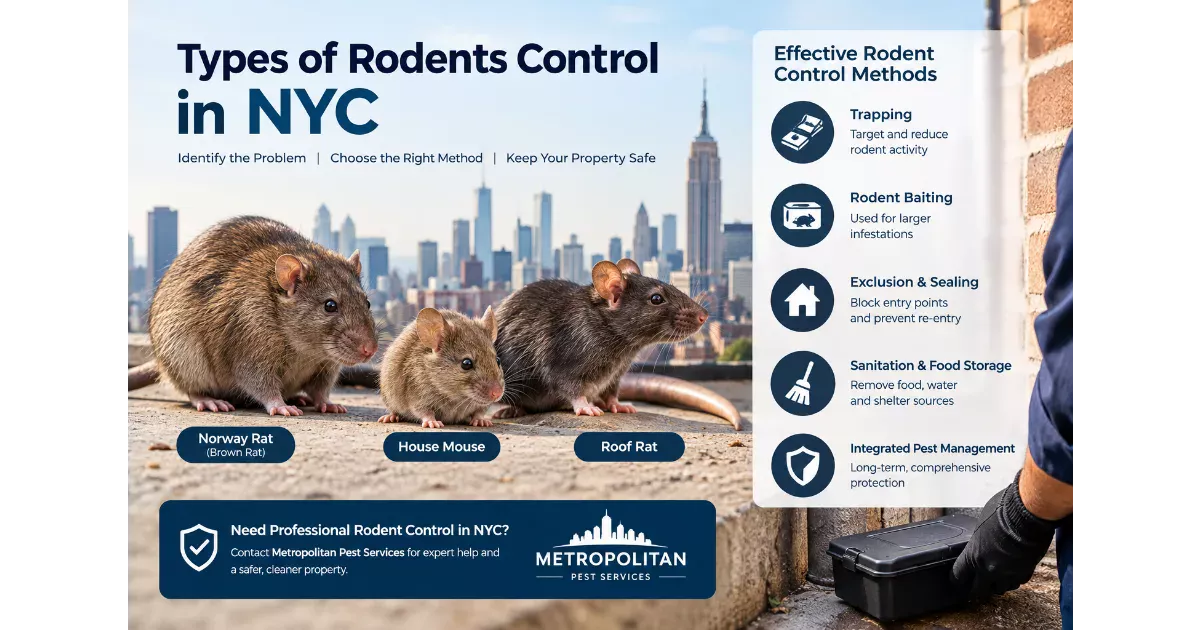
Effective Ways to Protect Your Home and Business From Rats and Mice
Rats and mice can create serious problems for homeowners and businesses across New York City. From contaminated food and damaged property to droppings in storage areas, rodent activity can affect cleanliness, safety, and peace of mind. Older buildings, shared walls, utility openings, poorly managed garbage, and clutter can give rodents opportunities to enter and settle inside a property.
Effective pest control involves more than removing the rats or mice you can see. It also requires identifying entry points, limiting food and water sources, reducing hiding places, and monitoring areas where rodents may return. Understanding these steps can help you protect your property and recognize when professional rodent control and removal in NYC may be necessary.
Why Rats and Mice Are a Concern in New York City
New York City properties can present several challenges for rodent prevention. Apartment buildings may have shared walls and utility openings, while restaurants, offices, retail stores, and warehouses may provide accessible food, water, and storage areas.
Once inside, rats and mice may chew packaging, damage stored materials, contaminate surfaces, and gnaw on wiring. Their droppings and urine can also create health concerns.
For businesses, rodent activity can create additional challenges involving food storage, sanitation, customer confidence, and building maintenance. Preventing access and addressing early warning signs are important steps toward maintaining a clean and well-managed property.
7 Effective Ways to Prevent Rats and Mice
1. Seal Entry Points Around Your Property
One of the most effective ways to prevent rodents is to stop them from entering the building.
Inspect your property for gaps and cracks around:
Doors, windows, and exterior walls
Plumbing pipes and electrical lines
Kitchen cabinets and utility areas
Basement and foundation openings
Roof vents, attic openings, and garage doors
Floor drains and other structural gaps
Seal small openings with suitable rodent-resistant materials. Larger gaps may require metal mesh, hardware cloth, sheet metal, cement, or other durable repairs, depending on the location.
Pay particular attention to gaps beneath exterior doors. Properly fitted door sweeps and weatherstripping can help close access points.
In NYC apartment buildings and commercial properties, rodents may move through shared structural spaces. Inspecting only the room where activity occurs may not reveal the original entry point.
2. Store Food and Garbage Securely
Rats and mice remain near locations where they can find reliable food. Even small crumbs, spilled ingredients, and uncovered garbage can attract them.
To reduce these opportunities:
Store dry food in sealed, rodent-resistant containers.
Clean crumbs and food spills promptly.
Keep kitchen counters and floors clean.
Use sturdy garbage containers with tight-fitting lids.
Empty indoor waste bins regularly.
Avoid leaving pet food out overnight.
Clean areas beneath refrigerators, ovens, and storage shelves.
Businesses that handle food should pay special attention to food storage, waste handling, and cleaning schedules. Restaurants, grocery stores, and other food-related facilities may need documented sanitation and pest-monitoring procedures.
Consistent housekeeping helps reduce the resources that support rodent activity.
3. Remove Water Sources and Moisture
Rodents need water to survive, so moisture problems can make a building more attractive to them.
Check for leaking faucets, damaged plumbing, dripping pipes, condensation, and standing water around utility areas. Repair leaks promptly and keep sinks, floors, and storage spaces as dry as practical.
Outside the building, inspect drainage areas and locations where water collects. Correcting these problems can help make the property less attractive to rodents.
Moisture control should be part of a broader prevention plan rather than a substitute for sealing entry points or removing an existing infestation.
4. Reduce Clutter and Rodent Hiding Places
Clutter creates sheltered spaces where rodents can hide and build nests. Cardboard boxes, unused equipment, piles of paper, and stored items can make it harder to identify early signs of activity.
Keep basements, attics, garages, storage rooms, and utility areas organized. Store supplies in suitable containers, leave space for inspection and cleaning, and avoid piling materials directly against walls.
Outdoor maintenance is equally important. Remove accumulated rubbish, keep vegetation trimmed, and organize stored materials away from building walls where practical.
For commercial properties, regular inspections of stockrooms, loading areas, and waste-storage spaces can help reveal problems before they become more difficult to manage.
5. Recognize Early Signs of Rodent Activity
You do not need to see a rat or mouse to know that rodents may be present.
Common warning signs include:
Small, dark droppings in cabinets or along walls
Gnaw marks on food packaging, wood, or plastic
Scratching sounds in ceilings and walls
Shredded paper or other nesting materials
Damaged food containers
Unusual odors in enclosed spaces
Tracks or signs of movement along dusty areas
Droppings and gnaw marks are especially useful clues. The CDC recommends inspecting buildings regularly because early detection can make rodent control more manageable.
If you find repeated signs in the same area, investigate nearby entry points and possible food or water sources. Avoid touching droppings or nesting materials without taking appropriate precautions.
6. Use Rodent Traps Safely and Strategically
Traps may help control rodents when placed in areas of known activity. However, choosing the appropriate trap and positioning it correctly are important.
The CDC recommends traditional snap traps for household rodent control. Place suitable traps near walls and areas where rodents have been observed, while keeping traps and bait inaccessible to children and pets. Follow the manufacturer's instructions.
Avoid relying on randomly placed traps without investigating how rodents are entering the building. Trapping may reduce the number of rodents inside, but an untreated entry point can allow the problem to continue.
Rodenticide products also require caution because they can harm children, pets, and non-target animals if used incorrectly. Follow applicable product labels and safety requirements. For persistent or widespread activity, professional assessment may be more appropriate than repeated do-it-yourself attempts.
7. Maintain a Regular Inspection Routine
Rodent prevention works best when it becomes part of normal property maintenance.
Create a simple inspection routine covering kitchens, basements, storage rooms, exterior walls, garbage areas, and utility openings. Look for fresh droppings, damaged packaging, new gaps, water leaks, and signs of nesting.
Homeowners can inspect their properties periodically and after noticing warning signs. Businesses may benefit from scheduled inspections, cleaning records, and a clear procedure for reporting suspected rodent activity.
In multi-unit buildings, coordination between residents, property managers, maintenance staff, and neighboring properties can be particularly important.
What Should You Do If You Find Rats or Mice Indoors?
Finding a rodent does not always reveal the size of the problem. A single sighting may indicate an entry point, while repeated sightings and fresh droppings may suggest ongoing activity.
Start by securing food, removing accessible rubbish, and identifying the area where the rodent was seen. Look for nearby gaps and signs of movement without disturbing possible nesting areas.
Clean rodent droppings safely. Do not sweep or vacuum droppings while they are dry. The CDC advises wearing gloves, thoroughly wetting the droppings with an appropriate disinfectant, allowing the recommended contact time, and wiping them up with paper towels. Follow the product label and the CDC's
Large infestations, extensive contamination, and inaccessible nesting areas may require specialized precautions. Avoid disturbing heavily contaminated areas yourself.
If rodents continue to appear despite cleaning, trapping, and sealing accessible gaps, consider professional pest control. A more complete assessment can help identify entry routes and conditions that support continued activity.
Professional Rodent Control and Removal in NYC
When rodent activity persists, a professional approach can help address both the immediate problem and the conditions that allow it to continue.
Metropolitan Pest Services lists rodent control among its services, alongside bed bug treatment and roach control. For homeowners, landlords, and businesses dealing with rats or mice, professional rodent control may be worth considering when:
Rodents repeatedly appear in the same areas.
Droppings or gnaw marks continue after initial prevention efforts.
Entry points are difficult to locate.
Rodents are present in walls, ceilings, basements, or storage areas.
The infestation affects food storage or business operations.
Effective management should consider the building's entry points, available food and water, signs of rodent activity, and appropriate control methods. The specific treatment required depends on the property and the extent of the problem.
To learn more about Metropolitan Pest Services, visit the . Contact the company to discuss your rodent concerns and confirm service availability for your property.
Frequently Asked Questions
1. What is the best way to prevent rats and mice in NYC?
Seal entry points, store food securely, manage garbage, repair leaks, remove clutter, and inspect regularly for rodent activity. Combining these steps is more effective than relying on a single prevention method.
2. How do rats and mice enter homes and businesses?
They can enter through gaps around doors, windows, pipes, vents, foundations, and utility lines. Mice can fit through openings about one-quarter inch wide.
3. How can I tell if I have a rodent infestation?
Common signs include droppings, gnaw marks, damaged food packaging, nesting materials, scratching sounds, and repeated sightings. Continued signs after cleaning may indicate ongoing activity.
4. Are rats and mice dangerous to people?
Rodents can contaminate food and surfaces, damage property, and spread certain diseases through contact with rodents or their urine, droppings, and saliva. Safe cleanup and prevention are important.
5. Should I use rat poison or traps?
Traditional snap traps are recommended by the CDC for household rodent control. Rodenticides require careful handling and must be used according to their labels. Consider professional assistance if the problem persists.
6. When should I contact a rodent control professional?
Seek professional help when rodent signs continue, entry points are difficult to identify, or activity affects food-storage areas, workplaces, or multiple parts of a building.
Conclusion
Protecting your property from rats and mice requires a consistent combination of prevention, inspection, sanitation, and appropriate removal methods. Sealing gaps, securing food, reducing clutter, repairing leaks, and responding to early warning signs can help reduce the risk of rodent activity.
For persistent problems, professional rodent control and removal in NYC may help you identify the source of the issue and determine suitable next steps. Metropolitan Pest Services offers rodent control as part of its pest management services.
Visit the Metropolitan Pest Services website to learn more and inquire about assistance with rodent concerns at your home or busines

