
A Festive Season, a Surprising Sales Trend
Navratri is widely associated with devotion, fasting, traditional music and energetic Garba and Dandiya celebrations. Across Gujarat and other parts of India, the nine nights bring communities together through dance, cultural programmes and celebrations that often continue late into the night. Yet behind the festival's familiar public image lies another story about changing consumer behaviour, sexual health awareness and the way Indians approach conversations that have traditionally been considered private.
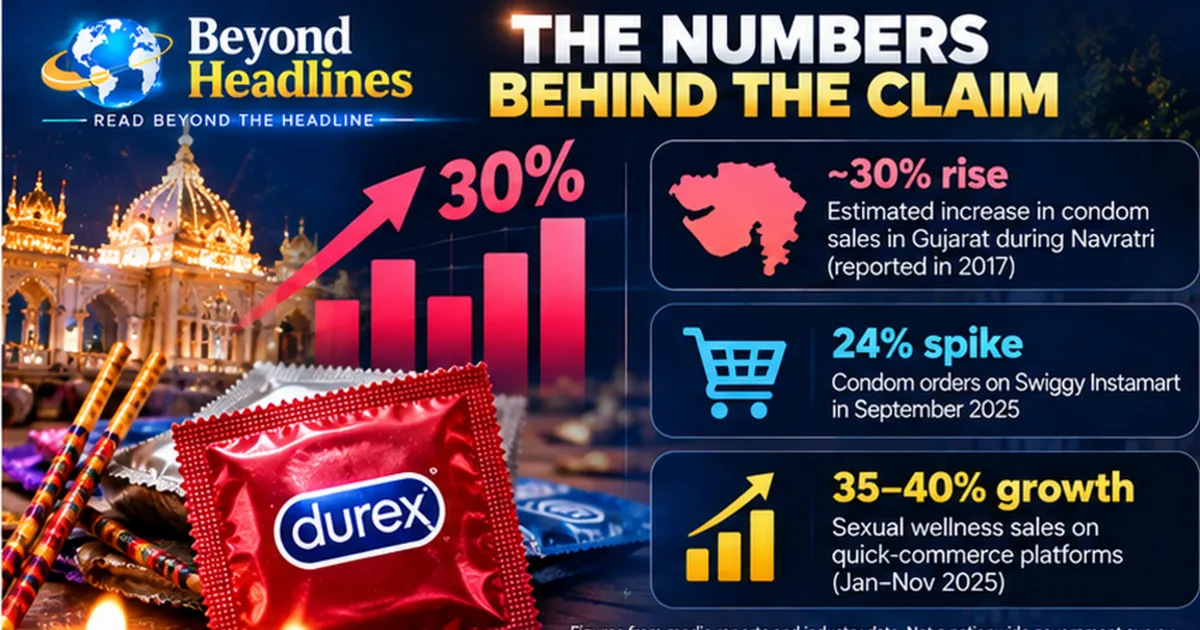
Reports from Gujarat have repeatedly drawn attention to an estimated increase in condom sales during Navratri. In September 2017, Indian media reported that the Gujarat State Federation of Chemists and Druggists Association had estimated that condom and contraceptive sales rose by around 30% during the festival. Some contemporary reports cited estimates as high as 35%. The figures were attributed to industry representatives and the chemists' association, rather than to a nationwide government sales survey.
The number attracted attention because it appeared to connect a major religious and cultural festival with a measurable shift in purchases of sexual wellness products. It also reopened a wider discussion about young adults, relationships, contraception and the difference between India's public conversations about tradition and the realities of modern life.
However, the headline needs context. The 30% estimate was reported several years ago and concerned the Navratri period in Gujarat. It should not be interpreted as proof that condom sales rise by the same percentage across India every year, or that the same increase has been independently verified for Navratri 2026.
The more meaningful story is about what these reports suggest, what they cannot establish and how consumer behaviour is changing as sexual wellness products become easier to access through pharmacies, online retailers and quick-commerce services.
What the 30% Figure Actually Means
The reported increase originated in comments attributed to representatives of Gujarat's chemists and druggists association. The estimate compared condom sales during Navratri with sales during other periods. Separate reporting in 2017 described an increase of approximately 35% in condom and contraceptive sales during the festive season. These figures were industry estimates, not a detailed nationwide study covering every retailer, brand and distribution channel.
That distinction matters because sales statistics can be interpreted in several different ways. An increase of 30% may refer to the number of products sold, the value of sales, purchases through selected pharmacies or an estimate covering a particular regional market. Without a clearly defined baseline, sample size and measurement period, the number cannot automatically be applied to the entire country.
For example, if a group of pharmacies normally sells 100 condom packets during a particular period, a 30% increase would mean 130 packets. But if the comparison is with a different season, a different group of shops or a period when sales were unusually low, the result may change considerably.
Sales can also rise because retailers stock more products, brands launch promotional campaigns or consumers shift from one purchasing channel to another. A rise in sales is not necessarily an equal rise in the number of people purchasing condoms, and it does not directly measure how frequently people engage in sexual activity.
The figure is therefore best treated as a reported regional estimate that attracted public attention, rather than a definitive measure of sexual behaviour across India.
That does not make the trend unimportant. Even a regional increase can reveal something about how retailers anticipate demand, how consumers make purchasing decisions and how brands respond to cultural events. It simply means the numbers need to be presented responsibly.
Why Navratri Became Part of the Conversation
Navratri occupies a distinctive place in Gujarat's social calendar. During the festival, Garba and Dandiya events bring people into shared public spaces, often creating opportunities to meet friends, form new connections and spend time outside the routines of everyday life. Large events, late-night celebrations and community gatherings can make the festival an important social occasion, particularly for younger adults.
That social dimension is one reason Navratri has repeatedly appeared in discussions about relationships and sexual wellness. The festival creates a setting in which people who might otherwise have limited opportunities to socialise can meet through organised events and celebrations. However, it would be misleading to assume that every participant experiences the festival in the same way or that attendance at Garba events necessarily leads to romantic or sexual relationships.
For many families, Navratri remains primarily a religious observance. People fast, visit temples, participate in prayers and celebrate the goddess Durga. Others place greater emphasis on its cultural and social dimensions. Both experiences can exist alongside one another without reducing the meaning of the festival to a single explanation.
The media attention surrounding condom sales illustrates how a public celebration can have several dimensions at once. A festival can be spiritually significant, culturally vibrant and commercially important. Businesses routinely plan for seasonal changes in demand, whether those changes involve traditional clothing, food, travel, entertainment or other consumer products.
Sexual wellness products are part of that commercial picture, although their sales are more sensitive to privacy and social attitudes than many ordinary festive purchases. The reported Navratri increase became newsworthy partly because it challenged the assumption that a religious occasion and demand for contraception are necessarily incompatible.
The central point is not that Navratri changes everyone's behaviour. It is that a large social event can influence consumer demand, and that the public conversation surrounding the festival offers an opportunity to discuss contraception without shame or sensationalism.
From Public Controversy to Sexual Health Awareness
In 2017, a condom advertisement associated with actor Sunny Leone and the Manforce brand became controversial in Gujarat ahead of Navratri. The campaign used a Gujarati message commonly translated as an invitation to celebrate the festival with love. Some trade bodies and organisations objected to the advertising, arguing that it was inappropriate for a religious occasion. The controversy brought renewed attention to both the campaign and the reported increase in contraceptive sales.
The episode revealed a tension in public attitudes. Advertising sexual wellness products during a major festival was considered objectionable by some groups, while retailers and industry representatives were simultaneously discussing increased demand for those products.
This tension is not unique to Gujarat. In many societies, sexual health is treated as a private matter even when relationships, marriage and family life are openly discussed. People may recognise the importance of contraception in principle while feeling uncomfortable buying it in public or speaking about it with friends and relatives.
Advertising can make these tensions more visible because it places a private subject in a public setting. A billboard or festival campaign invites people to discuss something that might otherwise remain unspoken. That attention can lead to useful conversations about protection and consent, but it can also create controversy when the message is perceived as conflicting with cultural expectations.
The commercial motive should also be acknowledged. A company launching a seasonal advertisement is trying to build brand awareness and increase sales. Connecting a product with a popular festival may help a brand reach consumers at a time when it expects demand to increase. Such a campaign is not, by itself, evidence of a public health improvement.
At the same time, commercial advertising and health education are not necessarily opposing forces. When messages are accurate and responsible, they can make people more aware of contraception and encourage safer choices. The key question is whether the message provides useful information or simply relies on controversy to attract attention.
The 2017 debate remains relevant because India continues to negotiate the boundaries between public morality, personal privacy, commercial advertising and sexual health education. The objective should be to make informed choices easier, rather than to shame consumers or turn a religious festival into a stereotype about sexual behaviour.
The Bigger Question: Are Indians Becoming More Comfortable With Contraception?
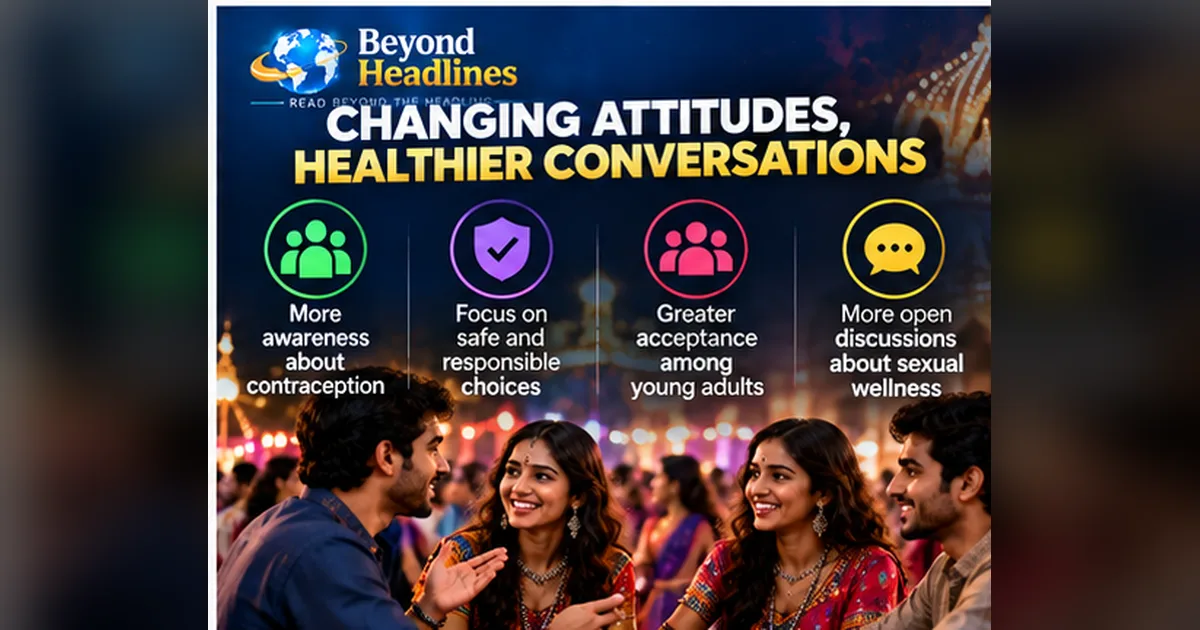
Changes in condom sales can reflect several developments, including greater awareness of contraception, easier access to products, changing attitudes toward relationships and improvements in retail availability. It is difficult to separate these influences using sales figures alone, but they help frame a broader discussion about how sexual wellness is becoming more visible in India's consumer economy.
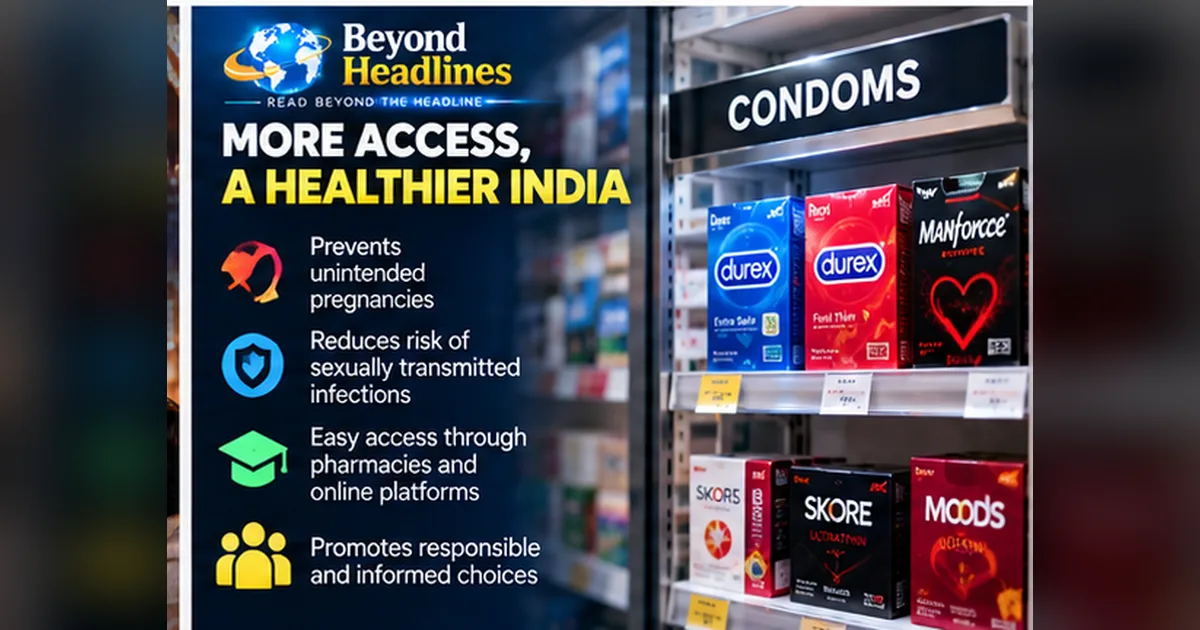
Condoms serve more than one purpose. When used correctly and consistently, they can help prevent unintended pregnancies and reduce the risk of transmitting many sexually transmitted infections. Their accessibility is therefore important not only for individuals and couples but also for public health.
Yet the decision to purchase condoms can still involve social discomfort. A customer may worry about being recognised at a pharmacy, judged by a shopkeeper or questioned by someone nearby. These concerns can be especially significant for younger adults, unmarried people and anyone living in a community where conversations about sex remain sensitive.
When a product is difficult to buy privately, the barrier is not necessarily its price or physical availability. It may be the fear of embarrassment. Reducing that barrier can make it easier for people to take responsibility for their sexual health.
The reported Navratri figures may be consistent with a situation in which consumers plan ahead for a period of social activity and make sure contraception is available when needed. But it would be inaccurate to claim that the data proves a particular change in attitudes among all young Indians. Reliable conclusions about behaviour require broader surveys, health research and data that distinguish between different groups and regions.
It is also important not to equate condom purchases with irresponsible behaviour. Buying contraception can be a sign of planning and awareness. People who anticipate the possibility of sexual activity and prepare accordingly may be taking a practical step toward reducing health risks.
A mature public conversation should treat such preparation as ordinary, responsible behaviour rather than a source of shame.
Quick Commerce Is Changing How People Buy Sexual Wellness Products
One of the clearest changes in India's sexual wellness market is the growth of online purchasing. Digital retail has given consumers alternatives to buying sensitive products in a physical shop, while quick-commerce platforms have made delivery faster in many urban areas.
A report published by The Economic Times in December 2025 cited IQVIA data showing that sales of sexual wellness products, including condoms, lubricants and creams, rose by approximately 35% to 40% on quick-commerce platforms during January to November 2025. The comparable growth reported for general trade, including pharmacies, was around 22%. A Swiggy Instamart spokesperson also said condom purchases on the platform increased by nearly 29% year over year.
These figures describe a wider retail trend rather than a Navratri-specific increase. Nevertheless, they help explain why seasonal demand is now being discussed in a different commercial environment from the one that existed when the 30% Gujarat estimate first attracted attention.
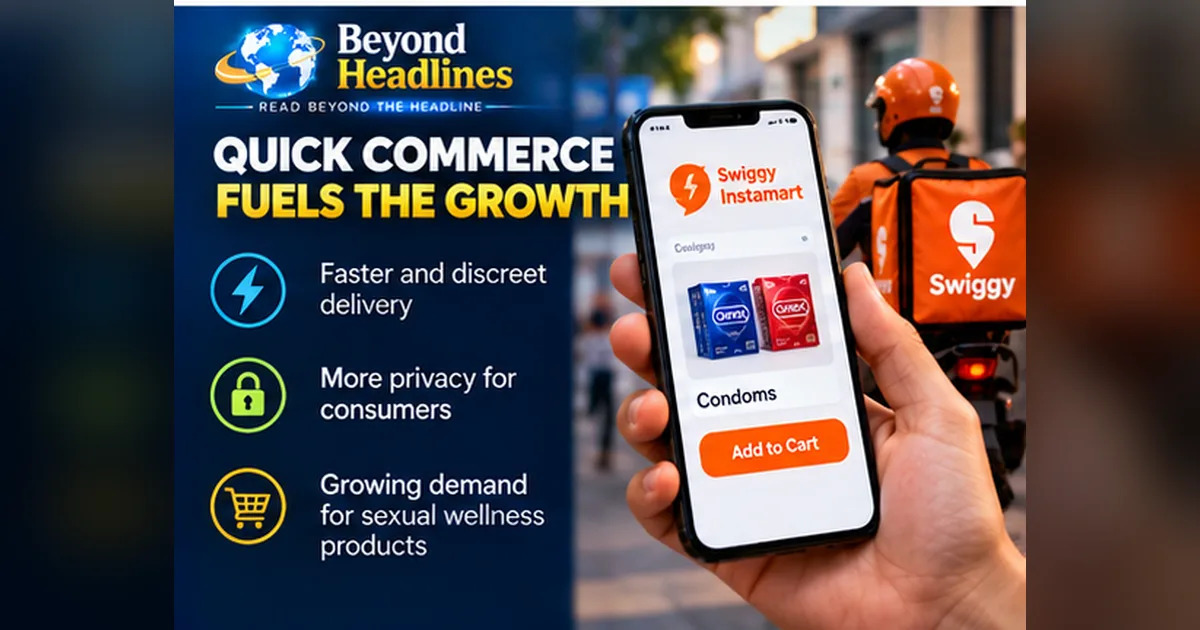
Quick commerce changes the purchasing experience. A customer can search for a product through an app, compare available options and place an order without having to ask for it at a counter. Delivery to the home can reduce the discomfort some people associate with purchasing sexual wellness products in person.
Convenience is another factor. Consumers may be able to obtain products late at night or during periods when nearby shops are closed, depending on local availability. This can make planning easier and reduce the need to postpone a purchase.
The growth of online sales also gives retailers more detailed information about consumer demand. Platforms may be able to identify patterns in order timing, product preferences and regional purchasing activity. Such data can help companies manage inventory and delivery operations, although it should be handled with appropriate privacy protections.
However, fast delivery is not a substitute for sexual health education. Access to products is valuable, but people also need accurate information about correct use, contraception, consent and the prevention of sexually transmitted infections.
The strongest public health outcome would combine convenient access with trustworthy information. Retail technology can remove some practical barriers, while schools, healthcare providers and public awareness programmes can help address gaps in knowledge.
September Sales and the Limits of Seasonal Explanations
The connection between Navratri and condom sales has gained a new dimension as online shopping data has become more widely reported. Swiggy Instamart's annual shopping summary for 2025 identified September as a peak month for condom purchases on its platform, reporting a 24% increase in orders during that month. The company also said that one in every 127 orders on Instamart included a condom over the year.
The September figure is notable because Navratri often falls in September or October, depending on the Hindu lunar calendar. Yet the timing alone does not prove that the festival caused the increase. A monthly sales pattern can be influenced by several factors, including seasonal travel, consumer promotions, changes in the customer base, weather, holidays and general purchasing trends.
A single month can also contain a different number of festival days from one year to another. Navratri dates change annually, and regional celebrations do not always follow identical patterns. To establish a direct relationship, researchers would need to compare sales across multiple years, align the data with festival dates and examine whether similar changes occur in comparable periods without Navratri.
The distinction is especially important when interpreting quick-commerce figures. Online platforms serve a particular segment of the market, and their customers may differ from people who buy products through neighbourhood pharmacies or other retail channels. A surge on one platform cannot automatically be generalised to all Indian consumers.
The figures nevertheless offer a useful starting point. They suggest that September can be an important month for condom orders on at least one major delivery platform. Combined with the older Gujarat reports, they raise a reasonable question about the relationship between festivals, social activity and seasonal consumer demand.
Answering that question properly would require transparent data from retailers, brands and public health researchers. It would also require a willingness to distinguish between a plausible explanation and a proven cause.
Why Sales Can Increase Without a Corresponding Rise in Risky Behaviour
A rise in condom sales is sometimes presented as evidence that people are becoming more sexually active. That conclusion may be possible in some circumstances, but sales data by itself cannot establish it.
People may buy more condoms because they are planning ahead, purchasing larger quantities, switching brands or moving from physical stores to online platforms. Retailers may also increase their stock in anticipation of demand. If a brand launches a promotion or expands its distribution, its sales may increase even if the number of customers remains relatively stable.
Another possibility is that people who previously avoided purchasing condoms begin buying them because access becomes easier or because they feel more comfortable doing so. In that situation, an increase in sales could reflect reduced embarrassment and improved preparation rather than a dramatic change in sexual behaviour.
The distinction matters for public health. If more people who are sexually active use condoms correctly and consistently, that can be beneficial even if the overall frequency of sexual activity does not change. Conversely, high sales do not guarantee that every user is protected, because correct use and consistent use remain essential.
Condoms also do not eliminate every sexual health risk. Their effectiveness depends on appropriate use, and they do not provide complete protection against every infection that can be transmitted through intimate contact. People may need additional advice from qualified healthcare professionals depending on their circumstances.
Public discussion should therefore focus on informed decision-making rather than drawing moral conclusions from purchasing statistics. Consumers should not be portrayed as irresponsible because they buy contraception, nor should higher sales automatically be celebrated as proof that public health has improved.
The most useful measure is whether people have the knowledge, resources and confidence to make safer choices. Sales figures can provide one small part of that picture, but they cannot replace research into health outcomes, awareness and access to services.
Young Adults, Relationships and the Importance of Consent
Navratri celebrations can bring together large numbers of young people in public and social settings. As with concerts, college festivals, weddings and other gatherings, people may use these occasions to meet friends, form relationships or spend time with someone they are attracted to.
There is nothing inherently unusual about social interaction during a festival. What matters is how individuals treat one another and whether decisions involving intimacy are voluntary, informed and respectful.
Consent must remain central to any conversation about sexual wellness. It means that everyone involved freely agrees to the activity in question. It cannot be assumed from someone's clothing, participation in a dance event, friendliness or decision to spend time with another person. Consent can also be withdrawn, and people should feel able to communicate boundaries without pressure.
Contraception and consent address different but related aspects of sexual health. Condoms can reduce the risk of pregnancy and many sexually transmitted infections when used correctly, but they do not make an encounter consensual. Similarly, mutual consent does not remove the need to consider contraception and health risks.
These distinctions are important because sensational headlines can turn a discussion about condom sales into assumptions about the behaviour of young people. A responsible article should avoid suggesting that everyone who attends Garba or Dandiya is sexually active, or that a festival inevitably leads to particular outcomes.
Young adults need access to clear information that treats them as capable of making responsible decisions. This includes understanding contraception, recognising pressure or coercion, respecting boundaries and knowing where to obtain reliable healthcare advice.
Families, educators, community organisations and healthcare professionals all have a role to play. Conversations about sexual health need not undermine cultural or religious traditions. They can instead help people understand how to protect themselves and others while making personal decisions responsibly.
The Business of Seasonal Demand
For condom manufacturers and retailers, seasonal patterns can influence marketing, inventory planning and distribution. If a business believes that demand may rise during a particular festival, it may ensure that more products are available at pharmacies, convenience stores and online marketplaces.
This is a familiar commercial practice. Retailers increase the availability of festive clothing before major celebrations, stock additional sweets during Diwali and prepare for higher travel demand during holiday periods. Sexual wellness products can also experience seasonal changes, although consumer privacy and social sensitivities make the category different from many ordinary goods.
The 2017 Navratri advertising controversy demonstrated how seasonal marketing can attract attention beyond its intended audience. A campaign intended to promote a product may become a public debate about cultural values, commercial messaging and acceptable advertising. The resulting attention can make the campaign more visible, but controversy should not be mistaken for evidence of effective public health communication.
Companies have a responsibility to ensure that advertising is accurate, respectful and compliant with applicable regulations. Sexual wellness marketing can use humour or cultural references, but it should avoid misinformation and should not imply that a festival is an invitation to disregard consent or personal boundaries.
Retailers also need to handle customer information carefully. Sexual wellness purchases are personal, and the collection or use of purchase data should respect applicable privacy requirements. Consumers should be able to obtain lawful products without being exposed to unnecessary disclosure or judgement.
The commercial opportunity is real, but it should be approached with care. Products can be made easier to access without turning private purchasing habits into a spectacle.
What Public Health Authorities Should Take From the Trend
The discussion around Navratri and condom sales offers an opportunity to look beyond commercial headlines and consider how sexual health information reaches the public. If consumers are purchasing more contraception during certain periods, public health organisations can use that interest to reinforce messages about correct use, consent, pregnancy prevention and sexually transmitted infections.
Awareness campaigns are most useful when they provide practical information without shaming people. People need to know where to obtain reliable advice, how to use condoms correctly and what to do if contraception fails. They should also understand that condoms are an important protective option but do not replace other healthcare services when those services are needed.
Access matters as much as awareness. Products should be available through legitimate retail channels, and people should be able to obtain them without unnecessary embarrassment. Pharmacies, healthcare providers and online platforms can all contribute to improving access, provided they offer accurate information and handle customer privacy responsibly.
Education is particularly important for younger adults. Information about sexual health should be factual, age-appropriate and free from sensational claims. When people are equipped with accurate knowledge, they are better placed to make decisions that reflect their circumstances and respect the rights of others.
Public health authorities should also avoid treating sales figures as a substitute for meaningful health indicators. An increase in condom purchases does not directly reveal how many people use them correctly, whether unintended pregnancies have declined or whether rates of sexually transmitted infections have changed.
Better assessment would combine retail data with surveys on awareness, research into contraceptive use and reliable health statistics. Researchers could examine whether seasonal patterns persist over time and whether particular regions or age groups experience different changes.
Such an approach would help separate a genuine public health trend from a temporary commercial increase. It would also allow campaigns to focus on the needs of particular communities instead of relying on broad assumptions about behaviour during festivals.
What the Headline Tells Us, and What It Does Not
The reported 30% increase in condom sales during Navratri is a compelling headline because it brings together culture, relationships, commerce and a subject that remains sensitive in many parts of India. It challenges the idea that sexual wellness is disconnected from ordinary consumer behaviour and shows how seasonal demand can become a topic of public debate.
But the figure needs to be handled carefully. It originated in regional reporting from Gujarat, and other reports around the same period cited estimates of approximately 35%. A separate industry analysis in 2016 questioned some of the larger claims and suggested that increases for certain brands could be closer to 10% to 20%. The variation shows why estimates should be presented with their source, date and limitations.
More recent online retail data offers additional evidence that condom purchases can rise during particular periods. Swiggy Instamart reported a 24% increase in condom orders during September 2025, while industry data published in December 2025 described substantial growth in sexual wellness sales through quick-commerce platforms. Neither figure independently establishes a 30% Navratri increase across India in 2026.
The responsible conclusion is that seasonal changes in condom sales have been reported in Gujarat, and newer retail data suggests that online purchasing is becoming an important part of the sexual wellness market. The precise size of the Navratri effect, however, remains uncertain without comparable, festival-specific data collected across multiple years.
This distinction does not diminish the story. It makes it more useful. Instead of repeating a dramatic percentage without context, the discussion can examine why consumers may purchase contraception, how digital retail changes access and why reliable sexual health information remains important.
Conclusion: A Conversation Bigger Than Sales
The story of Navratri and condom sales is ultimately about more than a percentage. It reflects the meeting of cultural celebrations, personal relationships, commercial opportunity and a gradual shift in how sexual wellness products are discussed and purchased.
For businesses, seasonal demand can influence stocking decisions, distribution and advertising. For consumers, pharmacies and digital platforms can offer different ways to obtain contraception. For public health organisations, the attention surrounding these reports creates an opportunity to share accurate information about protection, consent and responsible decision-making.
At the same time, headlines must not turn an estimate from Gujarat into a nationwide claim or imply that every festival participant behaves in the same way. Sales data can identify a pattern, but it cannot explain every motivation behind a purchase or establish a direct relationship between a festival and sexual activity.
India's changing retail environment makes this subject increasingly relevant. Online ordering can reduce the discomfort associated with buying private products, while better education can help people understand how to use them responsibly. Both developments are valuable when supported by accurate information and respect for individual privacy.
Navratri will continue to be a festival of devotion, dance, community and celebration. Discussions about sexual wellness do not have to diminish those traditions. They can instead recognise that public celebrations and private decisions are both parts of modern life.
The most important takeaway is not that condom sales supposedly rise by a fixed percentage every Navratri. It is that access to contraception, honest health education and respectful conversations should remain important throughout the year, regardless of the festival calendar.
#BeyondHeadlines #Navratri #CondomSales #SexualWellness #SexualHealth #IndiaNews #Gujarat #ConsumerBehaviour #QuickCommerce #SwiggyInstamart #PublicHealth #Contraception #HealthAwareness #SafeSex #DigitalCommerce #ChangingIndia #BeyondTheHeadline
 Mayank Singh