Navratri is a time when devotees across India come together to worship Goddess Durga and celebrate the power of the divine feminine. Each of the nine days is associated with a different form of the Goddess, and the first day is dedicated to Maa Shailputri.
Maa Shailputri holds a special place in Hindu tradition because she represents the beginning of the spiritual journey of Navratri. Her story teaches us about devotion, patience, inner strength and the importance of staying true to our values.
Who Is Maa Shailputri?
The name Shailputri comes from two Sanskrit words. Shaila means mountain, and Putri means daughter. Maa Shailputri is therefore known as the daughter of Himavan, the personification of the Himalayan mountains.
According to Hindu tradition, Maa Shailputri is a form of Goddess Parvati. Her story is connected with Goddess Sati, who was the first consort of Lord Shiva. After Sati gave up her life in the story associated with Daksha's yajna, she was reborn as Parvati, the daughter of Himavan. Through her devotion and determination, Parvati eventually became the consort of Lord Shiva.
This story is an important part of Hindu mythology and reflects the themes of spiritual transformation, devotion and perseverance.
The Divine Appearance of Maa Shailputri
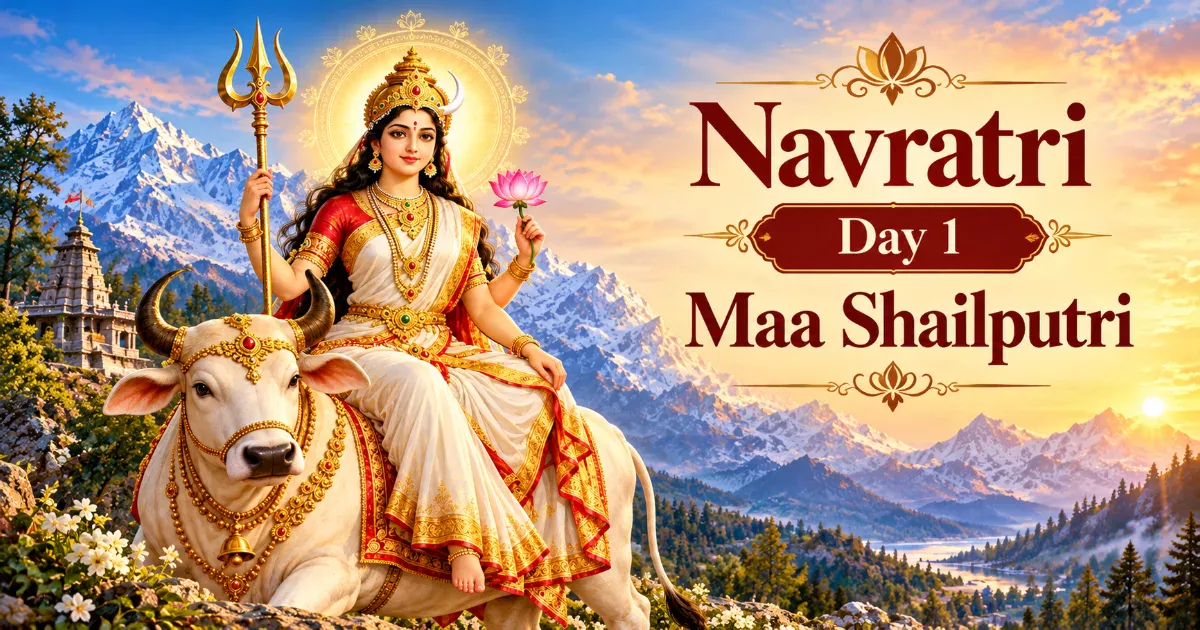
Maa Shailputri is usually depicted riding a bull, holding a trident in one hand and a lotus flower in the other. A crescent moon adorns her forehead.
Each element of her appearance carries a symbolic meaning.
The bull represents strength, patience and stability. It reminds devotees to remain grounded and steady when facing difficulties.
The trident represents divine power and the ability to overcome challenges. It is also closely associated with Lord Shiva, connecting Maa Shailputri with her identity as Goddess Parvati.
The lotus symbolises purity and spiritual growth. Although the lotus grows in muddy water, it blooms beautifully. This is often understood as a reminder that people can maintain their values even when life becomes difficult.
The crescent moon reflects the sacred connection between Goddess Parvati and Lord Shiva.
Together, these symbols portray Maa Shailputri as a goddess who combines strength with grace and determination with devotion.
Why Is Maa Shailputri Worshipped on the First Day of Navratri?
Maa Shailputri is the first of the nine forms of Goddess Durga worshipped during Navratri. Her position at the beginning of the festival represents the importance of building a strong foundation before beginning a spiritual journey.
Devotees pray to her for strength, peace, stability and well-being. Many people begin Navratri by visiting temples, performing puja at home, offering flowers and reciting devotional mantras.
The exact rituals differ across regions and families. Some devotees observe a fast, while others participate in community prayers or follow their household traditions.
Beyond the rituals, the worship of Maa Shailputri encourages people to begin the nine days with a clear mind and a sincere heart.
The Spiritual Lessons of Maa Shailputri
Maa Shailputri's story offers lessons that are meaningful in everyday life.
Strength during difficult times
Life does not always move according to our plans. Difficulties, disappointments and unexpected changes are part of the human experience. Maa Shailputri's association with the mountains reminds us to remain steady and face challenges with courage.
Patience and determination
The story of Goddess Parvati is associated with devotion and perseverance. It teaches us that meaningful goals often require time, discipline and consistent effort. Whether we are studying, working or pursuing a personal dream, patience can help us continue even when progress seems slow.
Respect for our values
A strong foundation is not built only through material success. Honesty, kindness, responsibility and respect for others are equally important. Maa Shailputri's symbolism encourages us to remain connected to our principles while growing as individuals.
The courage to begin again
The first day of Navratri is also a reminder that new beginnings are always possible. We may not be able to change the past, but we can learn from our experiences and make better choices in the future.
Maa Shailputri Mantra
One of the commonly recited mantras dedicated to Maa Shailputri is:
ॐ देवी शैलपुत्र्यै नमः॥
Meaning: Salutations to Goddess Shailputri.
Devotees chant this mantra during prayer as an expression of faith and devotion. It is often included in the worship performed on the first day of Navratri.
The mantra also offers a moment of quiet reflection, helping devotees focus their thoughts and begin the festival with a sense of peace.
How Do People Worship Maa Shailputri?
Worship practices vary according to family traditions and regional customs. A typical home puja may involve cleaning the prayer area, placing an image of the Goddess, lighting a lamp, offering flowers and reciting prayers.
Some families also offer fruits or other traditional items as part of their worship. Many devotees observe fasting during Navratri, although the rules and practices differ from one community to another.
For many people, these traditions are also an opportunity to spend time with family, teach children about religious heritage and pass cultural practices on to the next generation.
Maa Shailputri and the Cultural Traditions of India
Navratri is celebrated in different ways across India. In Gujarat, the festival is known for Garba and Dandiya Raas. In West Bengal, Durga Puja is celebrated with elaborate pandals, artistic idols and community gatherings. In several northern Indian regions, devotees worship the nine forms of Durga and observe traditional fasts.
These celebrations have their own customs, music, food and rituals. Together, they show how India's cultural diversity is expressed through festivals.
The worship of Maa Shailputri is part of this wider heritage. Learning about her story helps us understand not only a religious tradition but also the values, art and customs that families have preserved over generations.
Conclusion
Maa Shailputri represents strength, purity, devotion and the courage to begin a new journey. As the first form of Navdurga, she reminds devotees to build their lives on a foundation of faith, patience and strong values.
Her story encourages us to remain steady during difficult times, continue working towards our goals and approach new beginnings with hope.
May Maa Shailputri bless everyone with peace, wisdom, strength and determination.
Jai Maa Shailputri! Jai Mata Di!
Share Your Thoughts
Which quality of Maa Shailputri inspires you the most: strength, patience, devotion or determination? Share your thoughts and Navratri traditions with the Cultures of India community.
Cultures of India: Discover our traditions, celebrate our diversity and keep our heritage alive.
#ShubhoMahalaya #MaaDurga #DurgaPuja2026 #DivineFeminine #Shakti #CulturesOfIndia